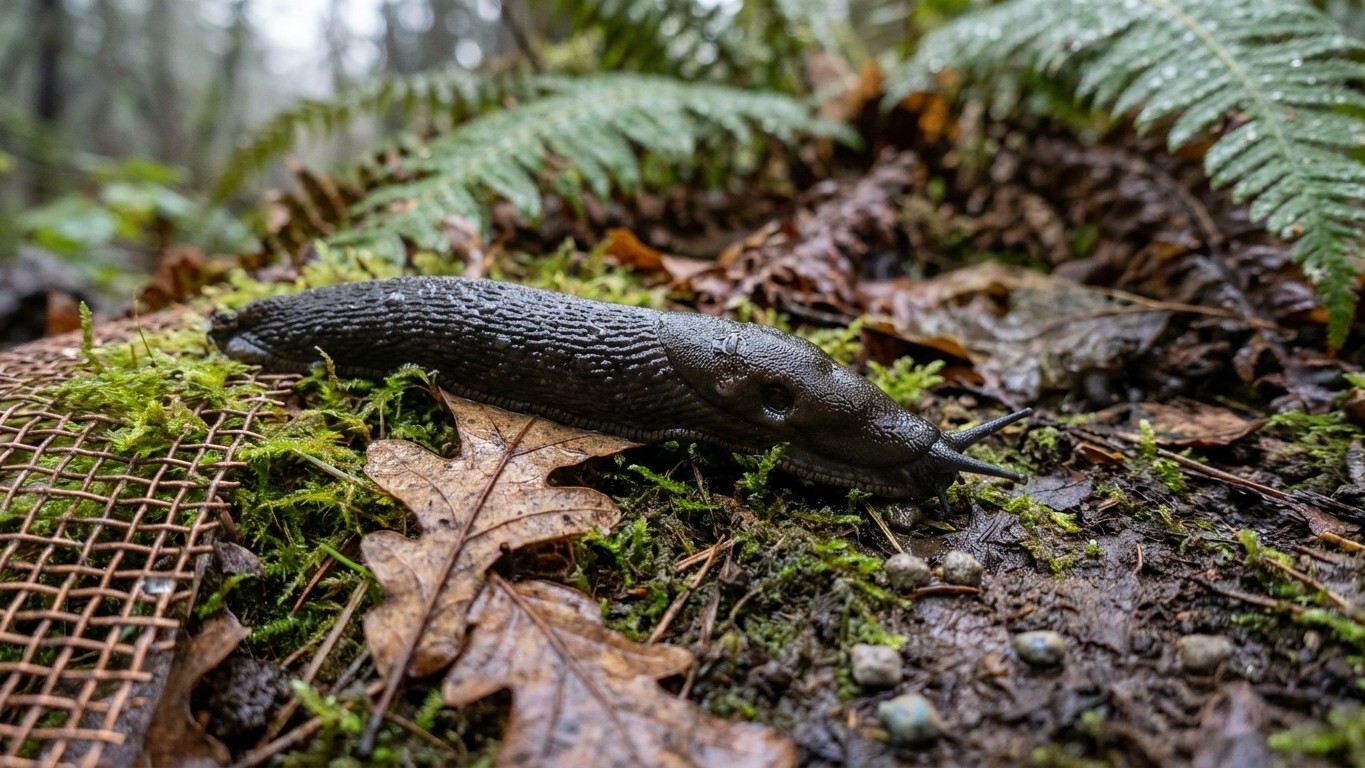

Slugs show up in Oregon almost year-round, but they hit hardest during the wet, mild stretches of fall (September through November) and again in spring (March through May), when soil temperatures sit between 45 and 65 degrees and rain keeps the ground soft. They slow down during summer dry spells and disappear from sight during hard winter frosts, but they don’t actually go away. Iron phosphate bait, copper barriers, and removing daytime hiding spots are what actually reduce numbers, not the beer traps most people try first.
Why Oregon Is Basically Slug Paradise

Western Oregon gets over 40 inches of rain a year in many valleys, and the Coast Range can see well over 80. That moisture, paired with mild winters where the ground rarely freezes solid for long, gives slugs something they can’t get in drier states: near-constant access to damp soil and decaying plant matter. Slugs breathe through a single lung-like opening called a pneumostome, and they lose water fast through their skin. A dry summer week in the Willamette Valley can knock populations back hard, but a wet October brings them roaring back within days.
Portland’s average humidity and the persistent low cloud cover across the valley floor create a kind of slug incubator that inland, drier states like Idaho or eastern Washington simply don’t have. East of the Cascades, in places like Bend or Pendleton, slug pressure drops off sharply because the climate flips to arid steppe. This is why slug problems in Oregon are overwhelmingly a west-of-the-mountains story.
Native Banana Slugs vs. the Invasive Species Doing the Damage
Oregon’s most famous slug is the Pacific banana slug (Ariolimax columbianus), the bright yellow, sometimes speckled giant that can stretch close to 10 inches long. It’s a native decomposer that mostly eats fallen leaves, mushrooms, and dead plant material in forested areas. Gardeners rarely have a real fight with banana slugs, they’re slow-moving, not especially numerous in cultivated beds, and they play a genuine role in forest nutrient cycling.
The species actually chewing through lettuce beds and hosta leaves are imports. The gray field slug (Deroceras reticulatum) and the Spanish slug (Arion vulgaris, sometimes still labeled Arion lusitanicus) arrived through nursery stock and produce shipments decades ago and now dominate garden populations in the Willamette Valley and coastal counties. These species reproduce faster than the banana slug, tolerate disturbed soil in vegetable beds, and are the ones responsible for the ragged holes people find in seedlings each spring.
Telling them apart matters for how much you should worry. A single large banana slug gliding across a shady path isn’t a garden threat. A cluster of small, mottled gray or brown slugs clustered under a board near your lettuce rows is the invasive species doing real crop damage, and that’s the population worth managing.
When Slugs Actually Peak in Oregon
Slug activity in Oregon follows a two-peak pattern tied directly to rainfall and temperature, not a single “slug season.” Fall is usually worse than spring in the Willamette Valley, because summer-dried soil rehydrates with the first steady rains while temperatures are still mild enough for slugs to move and feed heavily before winter. Spring brings a second surge as soil warms past the mid-40s and rain continues, right when seedlings and transplants are at their most vulnerable.
Coastal Oregon runs on a slightly different clock. Because fog and marine moisture keep the ground damp through much of the summer, coastal gardens in places like Newport or Astoria can see slug pressure that barely lets up, even in July and August, unlike inland valley gardens where a dry summer offers a real reprieve.
Nighttime and early morning are when slugs feed, regardless of season. They avoid direct sun and dry air, tucking into mulch, under pots, beneath boards, or into the base of dense groundcover during daylight. A flashlight check two hours after sunset, especially after a rain, is the single most reliable way to confirm how bad a slug problem actually is before deciding on treatment.
Weather Patterns That Trigger a Slug Surge
Three conditions reliably bring slugs out in force: a rain event after a dry stretch, three or more consecutive overcast humid days, and nighttime temperatures staying above 45 degrees. Oregon’s typical fall pattern, a dry September followed by the first real October rains, checks every one of those boxes at once, which is why so many gardeners describe slugs “appearing overnight.”
What Actually Stops Slugs
Iron phosphate bait is the option most Oregon State University Extension guidance and commercial pest programs point to first, because it’s effective against gray field slugs and Spanish slugs, breaks down into soil nutrients, and doesn’t carry the pet and wildlife risks of older metaldehyde-based products. It works by causing the slug to stop feeding and retreat to die underground within a few days, which also means you won’t see dramatic dead-slug piles as proof it’s working, patience is part of the process.
Copper strips or copper mesh around raised beds and pots create a barrier slugs won’t cross, since the metal reacts with their mucus to produce a mild electric-like deterrent. It’s a good option for containers and small beds but impractical for anything larger than a backyard garden plot.
Beyond bait and barriers, a handful of habitat changes make a measurable difference:
- Water in the morning instead of evening, so soil surfaces dry out before slugs become active at night
- Clear away boards, dense mulch piles, and low-lying debris where slugs shelter during the day
- Space plants to improve airflow, since dense, low foliage traps the humidity slugs need
- Handpick after dark with a flashlight during heavy rain periods, when populations are most concentrated and visible
Diatomaceous earth and crushed eggshells get recommended often, but their effect is inconsistent, especially once rain wets them down and cancels the abrasive barrier they’re supposed to create. In Oregon’s wet fall and spring windows, that limitation shows up fast, meaning these methods work best as a dry-season supplement rather than a primary defense.
Beer traps do attract and drown some slugs, but research from extension programs across the Pacific Northwest has generally found they draw slugs in from a wider area than they kill, sometimes making a localized problem look worse rather than better. They’re a reasonable monitoring tool to gauge population size, less reliable as a standalone control strategy.
Regional Differences Within Oregon
Slug pressure isn’t uniform across the state, and knowing which zone a property sits in changes the strategy. The Willamette Valley, with its combination of rich soil, irrigation, and heavy fall and spring rain, sees the state’s highest garden slug pressure and the widest presence of invasive Spanish slugs. Coastal counties deal with near-constant moisture and correspondingly steady slug activity, but often lower overall density than valley gardens because sandy soils drain faster. East of the Cascades, in the high desert around Bend, Redmond, and points further east, slug problems are rare enough that most gardeners never need to treat for them at all, the arid climate simply doesn’t support sustained populations.
This regional split matters for anyone moving property or planning a garden layout, since a control routine built for a Eugene backyard is largely wasted effort east of the mountains, and a Bend gardener transplanting to Corvallis should expect to add slug management to their routine for the first time.
For a broader look at how pest pressure shifts state by state across the Pacific Northwest, see our companion guide on slugs in Washington and the regional overview of common garden pests across the Pacific Northwest.
Related guides
- Slugs in Washington: When It Shows Up and What Stops It
- Slugs in Utah: When It Shows Up and What Stops It
- Slugs in West Virginia: When It Shows Up and What Stops It
- Cucumber beetles in Oregon
- Symphylans in Oregon
- Slugs in Ontario: When It Shows Up and What Stops It
- Slugs in Alaska: When It Shows Up and What Stops It