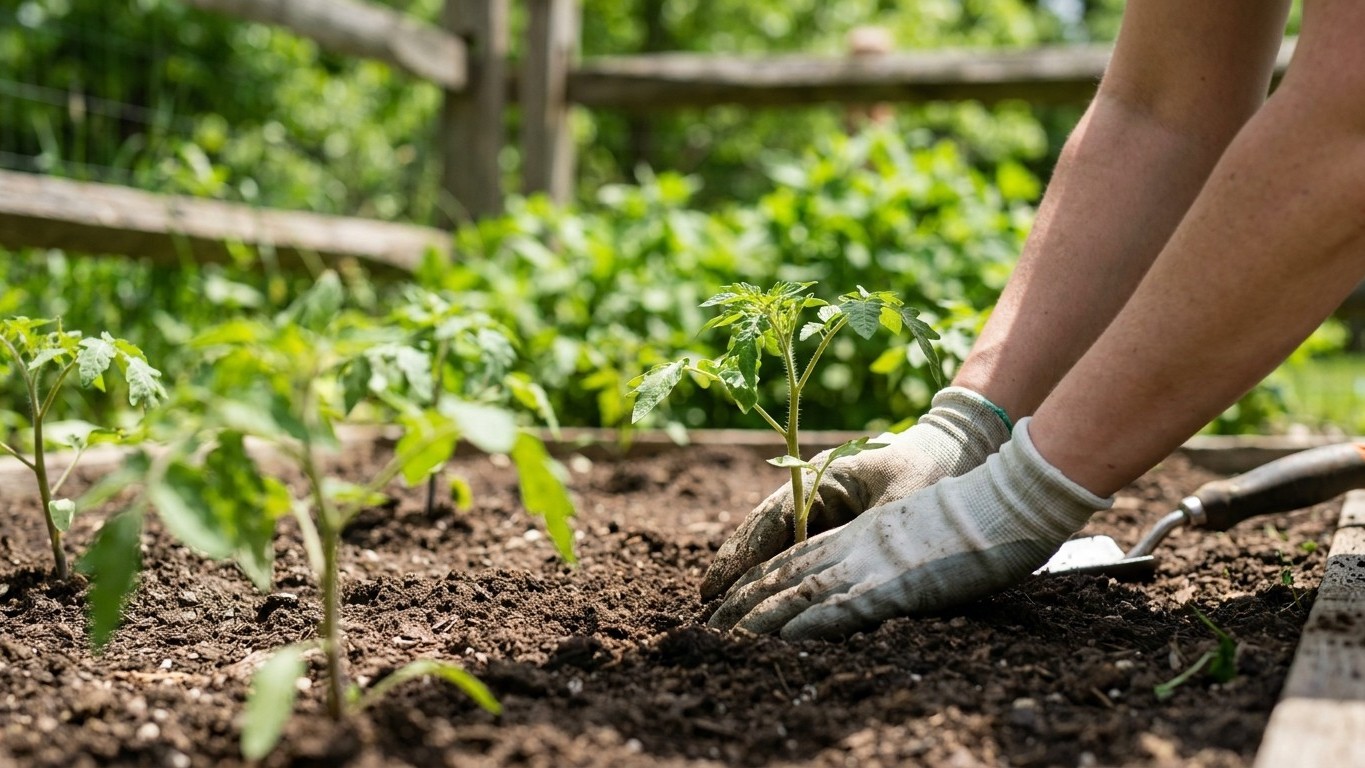

June in western Oregon lands well after the last frost window, so this is the month for setting out tomatoes, peppers, and squash without a backup plan for a cold snap. East of the Cascades, in the high desert, the season is shorter and the same calendar page doesn’t apply the same way. Here’s what actually goes in the ground, what to start for fall, and what to skip.
What goes in the ground in June
The last spring frost across the western valleys, based on the 30-70% freeze probability band at the Portland reporting station, falls between March 6 and March 21. By June, that window is nearly three months behind, and soil temperatures have caught up with the calendar. This is the month soil temperature stops being a limiting factor for most crops west of the Cascades, which is a different situation than April or early May, when a warm afternoon could fool a gardener into planting too soon.
Direct-sow bush and pole beans, sweet corn, summer squash, winter squash, cucumbers, melons, and sunflowers now. Soil has usually warmed enough for these seeds to germinate without rotting in the ground, which is the main risk earlier in spring. Basil, another crop that sulks in cold soil, can also go in as seed or transplant.
Tender transplants, tomatoes, peppers, eggplant, and squash starts raised indoors, are safe to move outside this month if they haven’t been already. Harden them off over a week of increasing outdoor exposure rather than moving them straight from a porch to open ground; a sudden shift in sun and wind stresses the plants more than any residual cold at this point in the season.
Keep succession-sowing quicker crops too: bush beans every two to three weeks, lettuce in partial shade to slow bolting, beets, carrots, and summer radishes. Alliums like leeks can still go in as transplants early in the month for a fall harvest.
Central and eastern Oregon sit in a different climate entirely. The USDA Plant Hardiness Zone Map places parts of that high desert region as cold as zone 4a, against zone 9b in warmer western pockets, a spread built on one measure: average annual extreme minimum winter temperature. That gap means frost risk can linger later into spring at elevation, and the growing season closes earlier in fall, so a gardener in Bend or Burns should treat June planting with more caution than one in the Willamette Valley.
What to start under cover
June is also the start of fall-crop planning, and the math runs backward from the first fall frost rather than forward from today. The first fall frost across the western valleys, using the same 30-70% freeze probability band, falls between November 11 and November 27. Count back from that window by the number of days a crop needs to mature, then add two to three weeks of buffer for slower fall growth as daylight shortens.
Fall broccoli, cabbage, and cauliflower started under cover now, then transplanted out in July, generally reach harvest before the frost window closes. Storage carrots and beets sown directly in early summer follow the same logic. Second plantings of bush beans can still fit if started under cover mid-month for an early-to-mid-summer transplant.
The two ways this goes wrong are predictable. Start seedlings too early under cover and they outgrow their containers before the ground or the weather is ready, becoming rootbound and leggy, stretching for light and never fully recovering once transplanted. Start too late and the arithmetic simply doesn’t work: the plant needs more days to mature than remain before that November frost window, and a partially grown crop gets caught by the cold.
A cold frame or unheated hoop tunnel is enough cover for most of this seed-starting work in June; the goal is protection from slugs and heavy rain more than from cold at this point in the season.
What is ready to pick
June harvests reward the gardener who planted early. Peas sown in late winter or early spring are usually finishing their run by mid-month, and picking daily once pods fill out keeps the vines producing longer instead of bolting to seed. Spring-planted lettuce and spinach are ready in succession, but check them daily in warm stretches: both bolt fast once temperatures climb, turning bitter within days.
Strawberries hit their peak in June across most of western Oregon, and a berry is ready when it pulls free with a light tug rather than needing to be cut. Garlic scapes, the curling flower stalks on hardneck garlic, are worth cutting now too; removing them redirects energy to the bulb and gives an early, mild harvest of their own.
Asparagus beds that have been cutting since spring should be winding down by June, and letting the spears grow into ferns from here on rebuilds the crown’s energy for next year rather than weakening it. Rhubarb stalks can still be harvested through the month, though thinner, later stalks are a sign to ease off and let the plant recover.
Overwintered kale, if any is still standing from a fall planting, tends to turn bitter and go to flower under June’s longer days; better to pull it and free the space for a summer crop than to keep picking leaves past their prime.
The jobs that matter this month
Staking and caging tomatoes now, before they sprawl, saves hours of untangling stems later and keeps fruit off the ground where slugs and rot take hold. The same goes for peas and pole beans still climbing; a trellis put up after the vines have flopped does far less good than one set at planting.
Mulching beds this month locks in the soil moisture that June’s longer, warmer days start pulling out fast. A two- to three-inch layer of straw or shredded leaves around tomatoes, squash, and peppers also keeps weed pressure down at the exact point in the season when weeds are growing as fast as the vegetables.
Watering rhythm matters more in June than it did in May. Deep, infrequent watering, aimed at the root zone rather than a daily light sprinkle, trains roots to grow down instead of staying shallow and vulnerable to the first dry spell. Raised beds and container plantings dry out fastest and need the closest attention.
Pest scouting pays off now too. Aphid colonies build quickly on new growth in warm weather, and catching them early with a strong water spray or insecticidal soap beats a full infestation later. Slugs stay active in the Willamette Valley’s damp mornings even as days warm, so checking under mulch and leaf litter is worth the five minutes.
Keep succession sowing on schedule rather than letting it slip; a two-week gap in planting bush beans or lettuce becomes a two-week gap in harvest later, and there’s no way to make that time back once the calendar moves on.
What not to do in June
The most common mistake this month is treating hardening off as optional. A tomato or pepper start moved straight from a warm porch into full sun and wind can scorch or stall within a day, even though the air temperature itself is no longer the problem by June. Give transplants a week of graduated outdoor exposure before they go into open ground for good.
Overwatering is another quiet failure. Once early summer heat arrives, it’s tempting to water daily, but shallow, frequent watering encourages roots to stay near the surface, where they dry out fast in the next hot stretch. Deep watering two or three times a week generally serves plants better than a light daily pass, though sandy soils and containers are exceptions that need more frequent attention.
Heavy nitrogen feeding on tomatoes and peppers at this stage tends to push leafy growth at the expense of flowers and fruit. A balanced feed, or a switch to something lower in nitrogen once plants start flowering, generally serves fruiting crops better than continuing the same feeding schedule used for young seedlings.
Letting direct-sown seedbeds dry out is an easy way to lose a planting of beans or squash right after germination; a dry crust on the surface can stop tender seedlings before they’ve even broken through.
Checking this against your own county
A statewide frost window is a starting point, not a fixed instruction. Elevation shifts these dates by weeks: a garden a few hundred feet higher than the valley floor can see frost linger later in spring and arrive earlier in fall than the March 6 to March 21 and November 11 to November 27 windows cited here, which are drawn from the Portland station. Areas east of the Cascades run on an entirely different, shorter season.
For a planting calendar built around a specific county, and current frost and soil guidance, the Oregon State University Extension Service is the reliable next stop.
Common questions
Is it too late to plant tomatoes in Oregon in June?
No. June is well within the window for setting out tomato transplants across western Oregon, since the last frost window (March 6 to March 21) has long passed. A slightly later start simply means a slightly later first harvest.
Can I still direct-sow vegetable seeds in June in Oregon?
Yes, especially heat-loving crops like beans, squash, cucumbers, and sweet corn, which do better sown directly into warm June soil than started earlier when the ground was still cool.
Why does eastern Oregon have a different planting schedule than western Oregon?
The USDA Plant Hardiness Zone Map places parts of eastern Oregon’s high desert as cold as zone 4a, compared with zone 9b in some western areas, a spread based on average annual extreme minimum temperature. That difference means a shorter frost-free season and later, more cautious planting timelines east of the Cascades.
What should I be starting indoors in June for a fall garden?
Fall broccoli, cabbage, cauliflower, and storage beets or carrots are worth starting under cover this month, counting backward from the first fall frost window of November 11 to November 27 to make sure they mature before cold weather sets in.