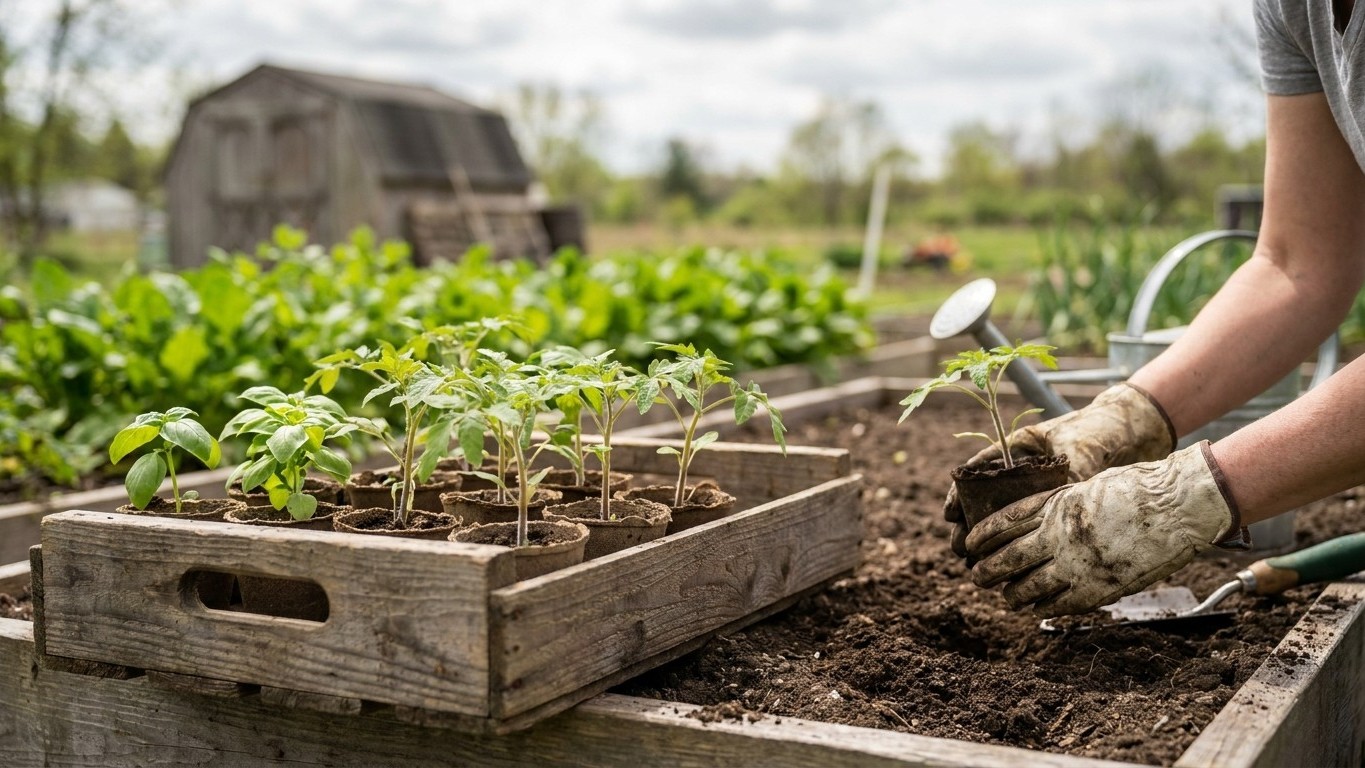

May is the month when Oregon’s growing season actually opens up west of the Cascades, but the calendar itself is not what makes that true. What makes it true is soil temperature catching up with air temperature, and that gap closes at very different speeds depending on which side of the mountains a garden sits on. The same last-frost data that clears a Willamette Valley bed for tomatoes says almost nothing about a high desert garden three hours east.
What goes in the ground in May
For the Portland reference station, the last spring freeze falls in the March 6 to March 21 window, based on NOAA NCEI’s 1991-2020 climate normals for 32°F freeze probability. By May, that window is long closed for the Willamette Valley and most of western Oregon, which means the frost question is largely settled and the real question becomes soil warmth, not air temperature.
That distinction matters because soil lags behind the thermometer by weeks. Beans, sweet corn, squash, cucumbers and sunflowers can go straight into the ground once soil has warmed, and May is typically the point where that happens across the valley floor. Tomatoes, peppers, eggplant and basil transplants go out once nights hold reliably above the mid-50s, not simply because the calendar says the frost date has passed. A warm afternoon following a cold, wet stretch is exactly the trap that catches gardeners who plant by date instead of by soil feel.
Cool-season crops are not finished just because the calendar has moved past their usual window. Lettuce, spinach, peas, beets, carrots and brassicas like broccoli and cabbage can still go in during early May for a spring harvest, and many of them can be resown again in succession through the month. Alliums planted earlier in spring continue to bulk up in the ground.
None of this applies evenly across the state. Central and eastern Oregon sit in high desert country with a hardiness range that runs from 4a up to 9b across the state as a whole, according to the USDA Plant Hardiness Zone Map. That spread is enormous, and it means a garden in Bend or Burns can still be carrying real frost risk while a Portland garden is well past it. Treat the Portland-based window as a starting reference for the west side only, never as a statewide instruction.
What to start under cover
Because frost risk has largely passed for western Oregon by this point, starting seeds under cover in May is less about dodging cold and more about timing transplants so they are not sitting in pots outgrowing their space. Winter squash, melons and pumpkins are often started indoors in flats a few weeks before their outdoor transplant date, since they resent root disturbance and do better moved once, not twice.
The arithmetic works backward from when a gardener actually plans to set plants outside, not from a fixed date on a seed packet. A squash variety that needs three to four weeks indoors before transplant should go into trays roughly a month before the garden bed is ready for it. Start it earlier than that and the roots crowd the container, the stems stretch and lean toward the light, and the plant sulks for two weeks after transplant while it recovers. Start it later and there is not enough runway left before the plant needs to be flowering and setting fruit ahead of fall’s shorter days.
Brassicas destined for a fall harvest, like broccoli, cabbage and Brussels sprouts, are also commonly started under cover in May for transplant in early summer. That second wave is easy to forget because it feels early to be thinking about fall while the spring garden is still filling in, but skipping it is the single most common reason gardeners end up with a fall garden that never quite materializes.
What is ready to pick
May harvests in Oregon lean heavily on what was planted or held over from earlier in spring. Asparagus beds that are at least a few years established are typically in full production, and rhubarb stalks are usually thick enough to pull regularly. Overwintered kale and leeks that made it through the cold months are often finishing their run now, sending up flower stalks that signal it is time to pull them before the leaves turn bitter.
Spring-planted lettuce, spinach, radishes and green onions from succession sowings earlier in the season are usually ready in waves through the month, which is exactly why staggering those plantings pays off rather than putting in one large block at once. Peas planted in late winter or very early spring often start producing pods toward the end of May in the Willamette Valley, though timing varies with how cold the spring ran.
Strawberries planted in prior seasons are approaching their first flush by late May in many western Oregon gardens, though the bulk of the harvest usually lands in June. Anyone still working through stored winter squash, potatoes or onions from the pantry should check them now: soft spots, sprouting eyes on potatoes and any squash with a give at the stem end mean using it soon rather than letting it sit.
The jobs that matter this month
Hardening off transplants is the job most likely to get skipped and most likely to cost a gardener the plants they started weeks earlier. Seedlings raised indoors or in a greenhouse need several days of gradually increasing outdoor exposure before they go into the ground full-time, and skipping that step often shows up as scorched or wilted leaves within a day of transplant.
Mulching beds once soil has warmed locks in moisture before the dry stretch of summer arrives, and it does double duty by suppressing the weeds that grow fastest in warm, disturbed soil. Staking tomatoes, peas and anything else that will eventually sprawl is far easier done now, while plants are small, than after they have already flopped over their neighbors.
Watering rhythm needs adjusting as temperatures climb: shallow, frequent watering trains roots to stay near the surface, while deeper, less frequent watering encourages roots to grow down where they can find moisture on their own during a dry spell. Succession sowing of lettuce, radishes, beets and beans every couple of weeks keeps harvests coming instead of arriving all at once and overwhelming the kitchen.
Pest scouting matters more in May than almost any other month in western Oregon, largely because of slugs and snails, which thrive in the same cool, damp conditions that make the region good for gardening in the first place. Checking the undersides of leaves and around the base of transplants for slug damage, aphid clusters or early signs of cabbage worm gives a gardener time to act before a small problem becomes a ruined bed.
What not to do in May
The most common mistake is transplanting tomatoes, peppers or basil into the ground because the air finally feels warm, without checking that the soil itself has caught up. Cold soil stalls root growth even when the plant looks fine above ground for the first week, and a stunted start often shows up later as a smaller, later harvest that never fully catches up.
Uncovering cold frames, row covers or greenhouse plants too early after a mild stretch is another familiar trap. A few warm days in a row do not guarantee the next week will hold, and tender growth exposed too soon can be set back hard by a cold night that arrives without much warning.
Feeding nitrogen heavily at the wrong point in the season causes its own problems, particularly with tomatoes and peppers. Too much nitrogen early pushes lush green foliage at the expense of flowering and fruit set, leaving a gardener with a big, leafy plant that takes longer to produce anything worth picking. A balanced feed, or one leaning toward phosphorus and potassium once plants are established, generally serves fruiting crops better than a nitrogen-heavy start.
Skipping slug control counts as a mistake in its own right in much of western Oregon. Seedlings can disappear overnight in a wet spring, and by the time the damage is obvious, the plant is often already gone.
Checking this against your own county
A statewide frost window is a starting point, not an instruction specific to any one garden. Elevation changes things fast in Oregon: a few hundred feet of gain can push a frost window later by weeks, and the divide between the Cascades’ west and east sides separates two genuinely different climates rather than two versions of the same one. Coastal fog, valley cold pockets and high desert exposure all shift these numbers further still.
For a planting window tied to a specific county, the Oregon State University Extension Service publishes local guidance and planting calendars built around regional conditions rather than a single statewide date.
Common questions
Is it too late to plant tomatoes in Oregon in May?
No. May is generally considered prime tomato transplant timing for western Oregon, since it falls well after the Portland-area last frost window of March 6 to March 21. Central and eastern Oregon gardeners should check local soil conditions before transplanting, since their frost risk can run longer.
Can I still direct-sow lettuce and peas in May?
Yes, both tolerate cooler soil and can be sown in succession through the month for staggered harvests, rather than planted all at once.
Why do my tomato transplants wilt after I put them outside?
This usually points to skipping the hardening-off process, where seedlings need several days of gradual outdoor exposure before a full-time move into the garden.
Does the March frost window apply to all of Oregon?
No. That window comes from a Portland-area weather station and reflects conditions west of the Cascades. Central and eastern Oregon’s high desert climate runs on a different, generally later and shorter, growing season that this data does not capture.