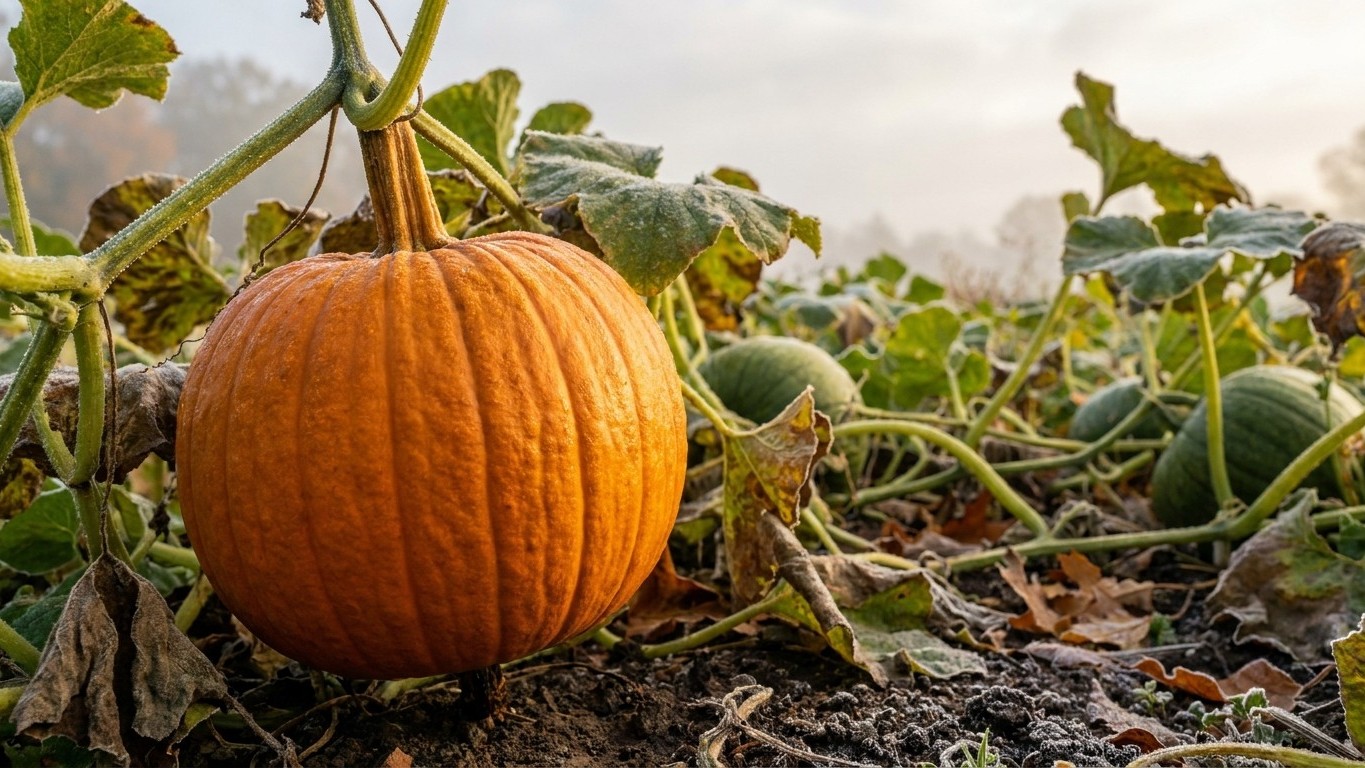

In western Oregon, a pumpkin flower needs to open by roughly mid-September to mid-October to ripen before the season’s first freeze. That window comes from working backward from the region’s fall frost dates using the 45- to 55-day maturation period pumpkins need after their flowers open, not after seeds go into the ground. Miss that window and the vine is racing a clock it usually loses.
The short answer
West of the Cascades, in the Willamette Valley and the Portland metro area, the first fall frost typically lands somewhere between November 11 and November 27, according to NOAA’s 1991-2020 climate normals for that station. That’s a 16-day spread, and it’s the anchor point everything else in this calculation works backward from.
Pumpkins need 45 to 55 days after their flowers open, not after the seed goes into the ground, to finish ripening on the vine, according to Utah State University Extension. Because both the frost date and the maturation period are ranges rather than fixed numbers, the “safe cutoff” for the last flower to open moves depending on which end of each range you land on.
Run the strict version of the math: an early frost on November 11 paired with the longer 55-day maturation period pushes the last safe flowering date back to around September 17. Run the generous version: a later frost on November 27 paired with the shorter 45-day window allows a flower opening as late as roughly October 13.
The honest answer is a window, not a single date. Will Pumpkins Ripen Before Frost in Oregon? It depends on timing: a flower opening somewhere between mid-September and mid-October has a real shot at becoming a harvestable, colored pumpkin before the ground freezes. Anything blooming later than that is a gamble the calendar usually wins.
Because a healthy vine keeps producing new flowers all summer, it doesn’t stop blooming just because the math says it should. Flowers that open after this window can still set small fruit, but those are the ones most likely to still be green and soft-skinned when the first hard frost arrives, good for compost, not for a porch step.
This window is specific to the station data behind it, which covers land west of the Cascades. Central and eastern Oregon are high desert country with a noticeably shorter growing season and an earlier frost arrival, so none of these dates transfer directly east of the mountains. A patch outside Bend or Burns is working a tighter margin than one outside Salem or Eugene, and needs its own local numbers rather than this one.
When to sow here
- Let the last frost window pass first. The last spring frost in this same west-of-Cascades zone typically falls between March 6 and March 21, per NOAA’s climate normals for the station. That date only tells you when the air has stopped freezing. It says nothing about the ground. For a full breakdown of When to Sow Pumpkins in Oregon, the soil temperature check below matters just as much as the frost date.
- Check soil temperature directly. Pumpkin seed wants soil at 65 F before it goes in the ground, according to Utah State University Extension. Soil warms more slowly than air, especially under grass, mulch, or heavy clay, so that 65 F mark often isn’t reached until weeks after the last frost window has already closed. No figure for exactly how many weeks is published here, so treat the frost date as a starting point for watching soil temperature, not a stand-in for it.
- Use a probe thermometer instead of guessing. Push it several inches into the bed at midday for a real reading. Guessing by air temperature or the date on the calendar is a common way seed ends up sitting in cold, wet soil where it rots rather than germinates.
- Consider row covers to buy time. Floating row covers laid over a bed can advance planting by roughly two weeks by trapping warmth in the soil underneath, letting a gardener get seed or transplants in earlier while still waiting on natural soil warming to catch up.
- Count forward from your actual sowing date, then check it against the frost window above. This is where the last-frost date, the 65 F soil threshold, and the 45- to 55-day flowering-to-harvest window all meet. Sowing late doesn’t just delay harvest by a few days. It can push the plant’s flowering into the fall past the safe cutoff entirely, which is the real risk in this climate.
What goes wrong here
- A late flower opens and the fruit never colors up. Once a vine is blooming past the safe cutoff calculated above, any fruit it sets is running out of season length before it starts. The remedy is to stop counting on new blooms once the calendar crosses into the risky window and instead put the plant’s energy into fruit that’s already set, by pinching off new flowers and removing new growth at the vine tips.
- An early frost catches a still-green fruit. Fall frost in this region can arrive as early as November 11 some years, well before a late-set pumpkin has finished ripening. Watching the forecast and covering exposed fruit with a blanket or row cover on threatened nights can buy a few extra days. If frost is unavoidable, cut the fruit with the stem attached and bring it indoors somewhere it won’t freeze, which is the harvest guidance Utah State University Extension gives for pumpkins caught by weather.
- The vine dies back before the skin hardens. Powdery mildew and general late-season decline can shut a vine down early, ending the photosynthesis a pumpkin needs to finish hardening its rind, even on fruit that has already turned orange. Removing mildewed leaves promptly, watering at the soil line rather than overhead, and keeping the root zone healthy through the final weeks all help the vine keep working until the fruit is actually ready to cut.
- Squash bugs or cucumber beetles stress the vine right when it can least afford it. A weakened vine in September has less capacity to finish ripening fruit on schedule. Both pests have their own dedicated pages on this site covering identification and control specific to squash and pumpkin plants, worth checking directly rather than treating the symptoms here.
Checking this against your own county
Everything above comes from one weather station’s data, and Oregon’s terrain means conditions shift fast over short distances. A backyard in the Willamette Valley, a garden along the coast, and a plot in the Columbia Gorge can all see meaningfully different frost timing even within the same general region the NOAA station represents.
The most reliable way to pin down local numbers is to contact Oregon State University Extension directly. County-level extension offices track local frost data, soil conditions, and variety performance specific to their area, and can tell a gardener in Douglas County or Umatilla County something a statewide average never will. That local check matters more the further a garden sits from the Willamette Valley, where the numbers in this article were calculated.
Common questions
Can I speed up ripening by cutting the vine back in late summer?
Trimming new growth and removing unopened flowers late in the season redirects the plant’s energy toward fruit already set rather than starting new ones that won’t have time to mature. It won’t speed up the 45- to 55-day clock on existing fruit, but it stops the vine from wasting effort on flowers doomed by the calendar.
What if my pumpkin is orange but still hard to cut through the stem?
Color change and stem hardening don’t always happen on the same day. A fully colored pumpkin with a stem that hasn’t hardened yet usually just needs a bit more time on the vine, weather permitting, before it’s ready to cut.
Does starting seeds indoors instead of direct sowing change any of this math?
Starting seed indoors moves the germination step off the soil temperature requirement, but the transplant still needs warm soil to establish outside, and the flowering-to-harvest window described above still runs from whenever the plant actually blooms, not from the indoor start date.
Is there a published storage temperature for keeping harvested pumpkins?
Utah State University Extension’s guidance on this point is limited to storing pumpkins “where they will not freeze.” No specific storage temperature, humidity level, or keeping-time figure is published in that source, so any more precise number circulating elsewhere isn’t backed by this reference.