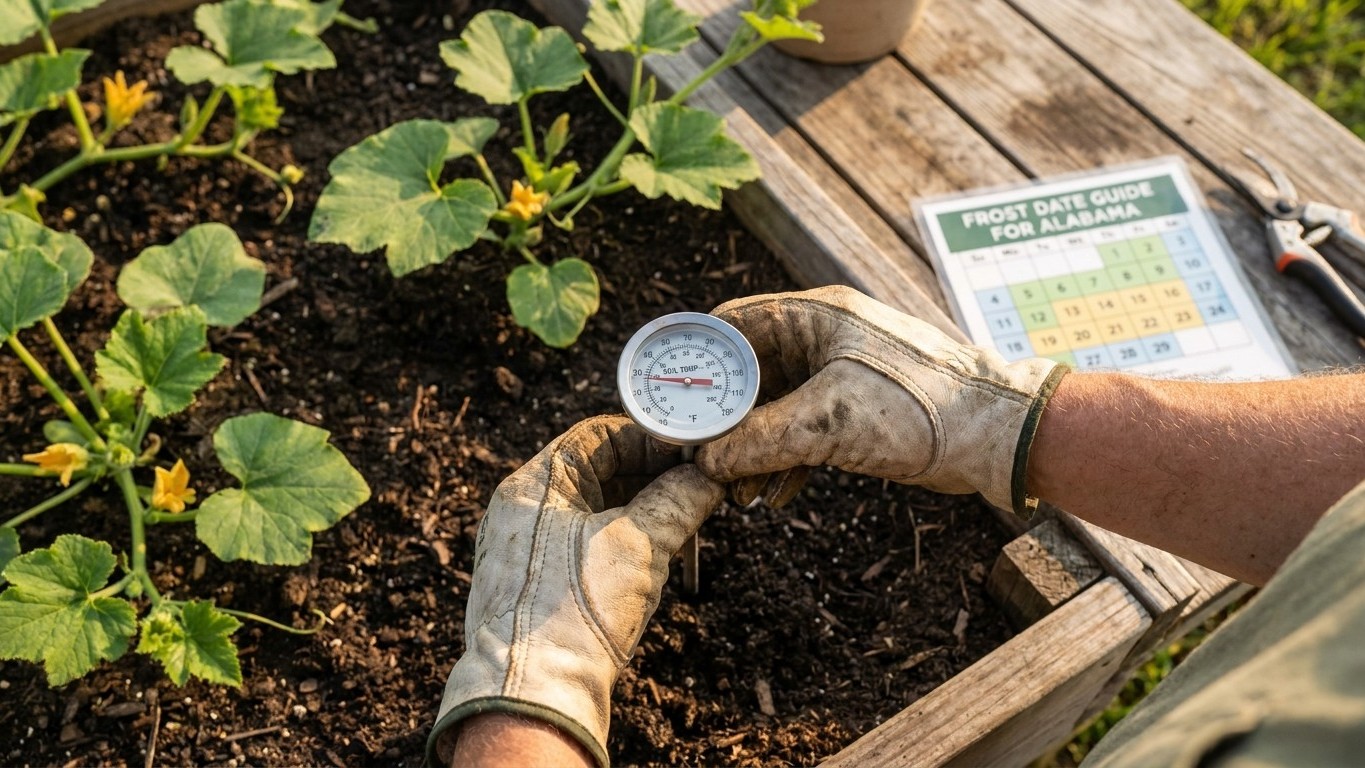

Western Oregon gardeners sow pumpkin seed outdoors once soil temperature holds at 65°F, which usually lands several weeks after the last spring frost (March 6 to March 21). That timing has to leave enough runway for flowers to open, set fruit, and ripen a full 45 to 55 days before the first fall frost arrives, somewhere between November 11 and November 27. Miss that math and you’re picking green pumpkins.
The short answer
West of the Cascades, first fall frost lands somewhere between November 11 and November 27, depending on whether you’re gardening near the coast, on a valley floor, or tucked into a foothill pocket that collects cold air. That sixteen-day-wide window isn’t one deadline, it’s two, and pumpkin math treats them differently depending on which end you’re closer to.
A pumpkin needs 45 to 55 days from the day its flower opens to the day the fruit is ready to pick, according to Utah State University Extension. So the real deadline isn’t frost itself, it’s frost minus that maturation window, and the two ends of Oregon’s frost range give very different answers.
Run the arithmetic from the earlier edge of frost season, November 11, and subtract the longer 55-day path some vines take, and you land on September 17. Run it from the later edge, November 27, and subtract the shorter 45-day path, and you land on October 13. That’s the real spread gardeners are working with: somewhere between mid-September and mid-October, the last flowers on a vine need to open and start sizing fruit if you want orange pumpkins instead of green ones hiding under a frost blanket in November.
Where your yard sits inside that November 11-27 range changes which end of the math applies to you. A garden near the coast or in a low pocket that frosts early should treat mid-September as the real flowering deadline, no cushion. A garden that reliably holds off until late November has room to let flowering run into early October and still finish cleanly. Either way, it’s the flowering deadline, not the sowing date, that trips most backyard growers up. They count backward from the day seed went into the ground, when the number that actually matters is the day the vine blooms and sets its last fruit.
That’s also why two neighbors sowing the same week can get different results. A vine that stalls in cool, wet soil takes longer to reach its first flower, and every day lost there is a day pulled straight out of that September-to-October window. The flowering deadline doesn’t move to accommodate a slow start.
When to sow here
- Start with soil, not the calendar. Pumpkin seed needs soil temperature at 65°F to germinate reliably. Air temperature crossing the last frost mark, March 6 to March 21 in western Oregon, doesn’t mean the ground underneath has caught up.
- Expect a real lag between frost and workable soil. Soil in the Willamette Valley and similar western Oregon ground warms slowly through spring rain and cloud cover, so a bed can sit well below 65°F for weeks after the air has cleared frost risk. Gardeners who sow on the frost date alone often watch seed rot in cold, wet soil instead of germinating.
- Check soil with a thermometer, not a guess. A simple soil thermometer pushed a couple inches deep, checked over a few mornings, tells you more than any calendar date. Once it holds steady at 65°F, not just spikes on a warm afternoon, seed can go in.
- Use row covers to buy time, not skip the wait. Row covers or cold frames trap daytime heat and buffer soil against overnight chill, and can move a sowing date up by about two weeks. They don’t replace actual soil warmth, though, they just get you there faster.
- Work the flowering deadline backward from whatever sow date you land on. Once seed goes in, count the weeks a vine typically spends growing before its first flowers open, then check that flowering date against the September 17 to October 13 window from the section above. If the numbers don’t leave room, sowing later isn’t an option, only sowing earlier under cover buys back the days you need.
Variety choice factors into this arithmetic too, even without hard maturity figures attached to each name. Growers in western Oregon commonly choose among ‘Connecticut Field’, ‘Howden’, ‘Cinderella’, ‘Rouge Vif d’Etampes’, ‘Big Max’, ‘Sugar Pie’, ‘Baby Boo’, ‘Jack Be Little’, and ‘Autumn Gold’. No verified days-to-maturity or size data is being claimed here for any of them, just the names gardeners in this region tend to reach for when planning a season this short.
What goes wrong here
- A late flower that never colors up. This happens when the last female flowers open after that mid-September to mid-October window closes, leaving the fruit stuck green when frost hits. The remedy is tracking your own flowering dates against the arithmetic above rather than trusting the calendar, and sowing under row cover early enough that flowering finishes on the safe side of the deadline.
- A fruit caught by frost before it hardens. A pumpkin that’s colored but still soft-skinned when frost threatens needs to come off the vine now, not later. Harvest with the stem attached and move it somewhere it will not freeze; no storage temperature or keeping time is published for this beyond that basic instruction, so treat “won’t freeze” as the standard to meet, not a specific number.
- A vine that dies back before the skin hardens. Sudden vine collapse midseason is often pest damage rather than weather. If you’re seeing wilting sections or chewed stems, check the state pages on squash bugs and cucumber beetles for identification and control specific to Oregon growers, rather than guessing at the cause.
- Poor fruit set from a cool, late-summer stretch. Flowers that open into a run of cool, overcast days sometimes don’t get visited by enough pollinators to set fruit at all. Hand-pollinating female flowers with a small brush, moving pollen from a freshly opened male flower, keeps that narrow window from being wasted on flowers that bloom and drop without ever setting a pumpkin.
Common questions
How late can I sow pumpkin seed in Oregon and still get a ripe crop?
It depends less on the sowing date than on whether flowering finishes before mid-September to mid-October, depending on where you are inside Oregon’s November 11-27 frost window. Count backward from that flowering deadline rather than picking a sowing date first.
Does the last frost date tell me when to sow?
No. The last spring frost (March 6 to March 21) is an air-temperature marker. Soil needs to separately reach 65°F, and that often happens weeks later, so treat the two dates as unrelated checkpoints.
What should I do if fall frost hits before my pumpkins turn fully orange?
Harvest with the stem attached right away and move the fruit somewhere it will not freeze. No specific storage temperature or keeping time is published beyond that guidance, so err toward moving fruit indoors or into an unheated but frost-free space.
Which pumpkin varieties work best for Oregon’s growing season?
Names commonly grown in the region include ‘Connecticut Field’, ‘Howden’, ‘Cinderella’, ‘Rouge Vif d’Etampes’, ‘Big Max’, ‘Sugar Pie’, ‘Baby Boo’, ‘Jack Be Little’, and ‘Autumn Gold’. No verified maturity or size data is attached to any of them here, so match the choice to your own flowering-deadline math rather than a specific days-to-harvest number.