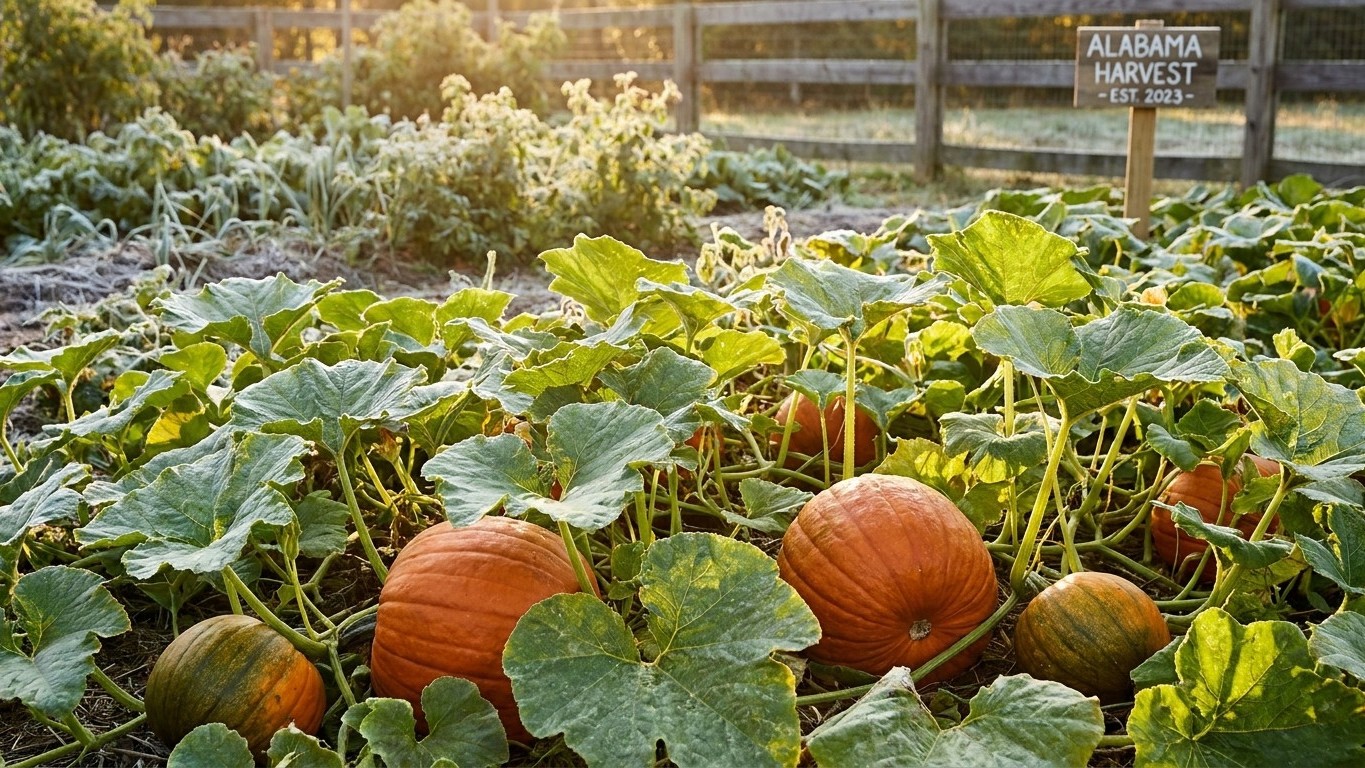

West of the Cascades, where most Oregon pumpkin patches sit, the first fall frost lands somewhere between November 11 and November 27. Count backward 45 to 55 days from that window and you get the real deadline: the date by which a female flower has to open and set fruit. For most gardeners in the Willamette Valley, that means flowering by mid-to-late September gives a safe cushion. Flowering that slips into mid-October is a gamble.
The short answer
Frost dates are ranges, not appointments. NOAA’s 1991-2020 climate normals put the first fall freeze for this station somewhere between November 11 and November 27, a two-and-a-half week spread that depends on the particular year, the site’s elevation, and how close it sits to the moderating influence of the coast or the Willamette River. That spread matters more than gardeners usually realize, because the pumpkin clock doesn’t start at sowing. It starts at flowering.
Utah State University Extension is direct about this: pumpkins need 45 to 55 days from the opening of the flower to a mature, ripe fruit. Not from the seed going into the ground. Not from the vine sprawling across the bed. From the flower. That distinction is the single most common source of confusion, and it’s the reason two gardeners with identical planting dates can end up with very different results come October.
Run the math against Oregon’s frost window and here’s what falls out:
| Frost scenario | Frost date | Latest safe flowering (45 days) | Latest safe flowering (55 days) |
|---|---|---|---|
| Early frost year | November 11 | September 27 | September 17 |
| Late frost year | November 27 | October 13 | October 3 |
The takeaway: a flower opening anywhere from mid-September to the first days of October has a real shot at ripening before frost, across the full range of how this fall’s freeze might play out. Push flowering into the second week of October and you’re now depending on a late-frost year to bail you out. That’s not a bet worth building a whole patch on.
This window applies to the Willamette Valley and the rest of western Oregon, where the frost data above comes from. Central and eastern Oregon sit in high desert country with a noticeably shorter growing season, and the November window described here does not carry over to those regions. If you’re gardening east of the Cascades, treat every date in this piece as too generous for your site.
When to sow here
Sowing date and frost date get confused constantly, and the confusion costs gardeners weeks of growing time they didn’t need to lose. The last spring frost here falls between March 6 and March 21. Soil temperature is a separate measurement, and it lags well behind the air. Pumpkin seed needs soil at 65°F to germinate reliably, and that threshold typically isn’t reached until well after the last frost has passed, sometimes not until the soil has had a full extra stretch of sun to warm through. Treating the last-frost date as your sowing date is the fastest way to plant into cold, damp ground where seed rots instead of sprouting.
- Track soil temperature directly, not the calendar. A simple soil thermometer pushed 2 to 3 inches down tells you more than any frost-date chart. Wait for a consistent 65°F reading rather than guessing from the air temperature outside your window.
- Use row cover to close the gap. Black plastic mulch or a floating row cover over the bed can warm the soil faster, buying roughly two weeks against an open, uncovered bed. That’s two weeks of flowering time you get back on the other end of the season.
- Sow directly once soil hits 65°F. Pumpkins don’t transplant well once roots are disturbed, so direct-seeding after the soil threshold is met, rather than starting indoors and moving plants later, avoids a setback right when the clock is already tight.
- Count forward from germination to expected flowering. Vines typically spend several weeks in vegetative growth before the first female flowers appear. Adding that stretch to your sowing date gives you a realistic flowering estimate, which is the number that actually determines your harvest date.
- Compare that flowering estimate against the frost window above. If the arithmetic lands your expected flowering after early October, the row cover isn’t optional. It’s the difference between a ripe pumpkin and a green one.
What goes wrong here
- A late flower that never colors up. When the first strong female flowers don’t open until mid-October, the fruit is still small and pale green when frost arrives. There isn’t a fix once the flower opens that late in the season; the remedy is upstream, at sowing time, by hitting that 65°F soil mark as early as reasonably possible and using cover to push the schedule earlier.
- A fruit caught mid-ripening by an early frost. Since the fall frost window opens as early as November 11 in some years, a fruit that’s colored but still soft can get nipped before it fully hardens. If frost threatens and the pumpkin has good color, harvest it with the stem attached rather than leaving it exposed overnight; a stem left on the fruit is part of what keeps it from rotting in storage.
- A vine that collapses before the skin hardens. Powdery mildew and general vine decline in cool, damp fall weather can kill the foliage weeks before the fruit is ready, cutting off the plant’s ability to finish ripening the pumpkin. Removing badly diseased leaves promptly and keeping the vine as healthy as possible into September gives the fruit its best shot at finishing on schedule.
- Insect pressure stalling the vine earlier in summer. Squash bugs and cucumber beetles can weaken vines enough to delay flowering, which pushes the whole clock later and closer to frost. Both pests have their own detailed pages on this site covering identification and control; if either shows up in the patch, that’s where to go for specifics rather than guessing at treatment.
- Storing an unripe fruit and expecting it to finish indoors. Pumpkins don’t ripen further once cut from the vine the way tomatoes do. If frost forces an early harvest on a green fruit, that pumpkin stays green. The only guidance on record for keeping pumpkins after harvest is to store them somewhere they won’t freeze; no specific storage temperature or keeping time is published for this crop, so treat that as the limit of what’s documented rather than filling in a number.
Common questions
Can I still get a ripe pumpkin if I sow in June?
It depends entirely on when the flowers open, not the sowing date itself. A June sowing that reaches 65°F soil promptly and flowers by mid-September still fits comfortably inside the 45-to-55-day window ahead of the November frost range. A June sowing delayed by cool soil or poor germination, pushing flowering into October, is cutting it close.
Does a light frost kill the vine outright?
The data available here covers the first fall freeze window (November 11 to 27) from NOAA’s climate normals, not a separate light-frost threshold. No second frost category is published in the sourced data for this region, so don’t plan around an assumed “light frost” date that isn’t documented.
How many named pumpkin varieties should I consider for this timeline?
Extension guidance references varieties by name only, without days-to-maturity or size figures attached in the sourced material. Rather than picking by name alone, match your chosen variety’s seed packet timing against the flowering math above for your specific site.
What if my soil never reaches 65°F reliably before June?
That’s a strong argument for row cover or black plastic mulch specifically, since the roughly two-week head start it provides can be what separates a September flower from an October one. Without that boost, a consistently slow-to-warm bed pushes the entire schedule closer to the frost window described above.