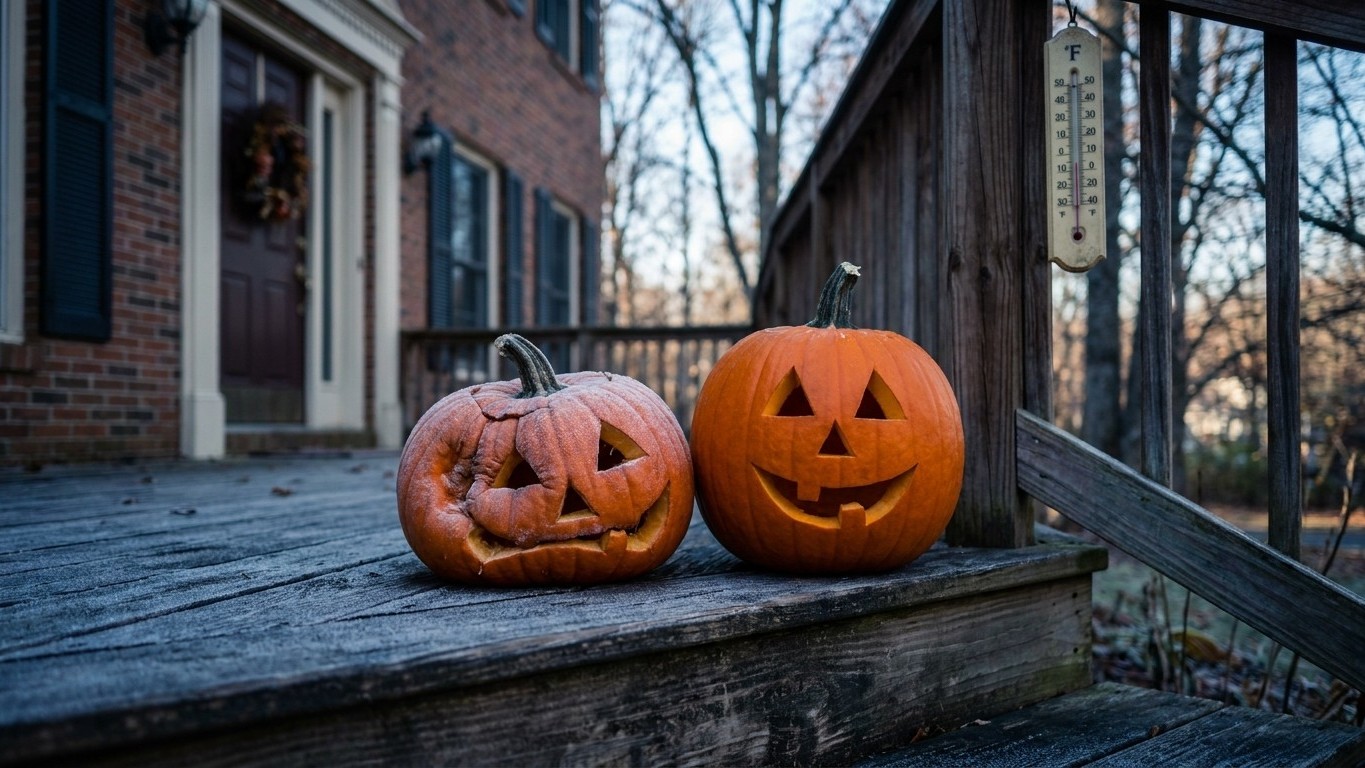

Frost is the one predator that keeps a fixed schedule. In the Portland area, the first 32 F freeze arrives between November 11 and November 27. A pumpkin flower has to open between roughly September 17 and October 13 at the latest to ripen before it. Squash bugs and cucumber beetles chew on the crop too, but this page has no published calendar for them. The flower clock does the heavy lifting.
The short answer
Start with the frost. The NOAA NCEI U.S. Climate Normals for 1991-2020 put the first fall 32 F freeze in the Portland area between November 11 and November 27. That is the 30 to 70 percent probability band, so some autumns will land outside it. Portland sits west of the Cascades. Central and eastern Oregon are high desert, with a far shorter season, and this window does not carry over to them. No frost figure for those regions is published here.
Working backward from the freeze
Utah State University Extension says pumpkins take 45 to 55 days to mature after flowering. Subtract that from the frost window. Take the early edge first: 55 days before November 11 is September 17. Now the late edge: 45 days before November 27 is October 13. The latest a flower can open and still give a ripe pumpkin is therefore somewhere between about September 17 and October 13.
The two edges describe different bets. September 17 assumes a slow fruit and an early freeze. October 13 assumes a fast fruit and a late one. If you want a single working rule, plan around the early edge and treat anything after it as a gamble.
Today is October 3, so the numbers are easy to check. A flower opening this morning needs until somewhere between November 17 and November 27 to finish, and the frost window opens on November 11. That is a coin flip at best.
The count starts at the flower
The 45 to 55 days run from the day a flower opens. They do not run from seeding or transplanting. A vine can be sown in spring and still flower late, and the late flower is the one that sets the deadline. Count the weeks from the seed packet and the whole calculation lands in the wrong month.
Harvest with the stem attached, and do it before frost. For how color and rind behave as the window closes, see Will Pumpkins Ripen Before Frost in Oregon? The broader picture lives in Growing Pumpkins in Oregon.
When to sow here
Sowing is a separate clock from ripening, and it runs on soil temperature. Utah State University Extension says to sow when the soil reaches 65 F. In the Portland area the last spring 32 F freeze falls between March 6 and March 21 (same NOAA NCEI normals). The soil does not reach 65 F on that date. It lags the air by weeks, and the exact day is not published here, so a soil thermometer is the only honest guide.
- Note the last-frost window, March 6 to March 21. This is when the air stops freezing, not when the soil is ready.
- Add the lag. Soil trails the air by weeks, so the sowing date lands well after March 21, not on it.
- Push a thermometer a few inches into the bed and wait for 65 F. Row covers can buy about two weeks on that wait, which means sowing about two weeks sooner than the open bed allows.
- Put the arithmetic in words: last frost, plus weeks of soil lag, minus two weeks if you use row covers, gives your sowing day. Then the vine grows, and the real deadline arrives later, at the flower.
- Check the other end. A flower must open by about September 17 to October 13. The seeding-to-first-flower stretch is not published in the sources used here, so watch the vine rather than a calendar.
The Portland season looks generous on paper, with March frosts behind you and November ones ahead. The pinch comes in the middle, when a cool spring pushes soil warming late and the vine flowers late too. Regional sowing detail is on When to Sow Pumpkins in Oregon.
What goes wrong here
Most pumpkin losses in a season like this one come from timing rather than from anything the plant did badly. Here are three failures, each with its fix.
- A late flower that never colors. A blossom that opens after the window cannot finish 45 to 55 days before the freeze, so the fruit stays green. Remedy: stop counting on blossoms after about September 17, and pinch off new ones so the vine’s energy goes to fruit already set. Pumpkins well past that point are still worth picking, though they will not color.
- A fruit caught by frost. A freeze before the pumpkin is harvested damages it, and a frosted fruit is a poor candidate for storage. Remedy: watch the forecast from early November, since the window opens on the 11th, and harvest with the stem attached before it. Keep harvested fruit where it will not freeze, which is the only storage guidance Utah State University Extension gives.
- A vine that dies back before the skin hardens. When the leaves go, the pumpkin loses its supply line while the rind is still soft. Remedy: do not wait on a dying vine. Cut the fruit with the stem attached and bring it in from the cold. The sources used here give no curing temperature or time, so I will not offer one.
Squash bugs and cucumber beetles are the other wear on a vine. Each already has its own Oregon page on this site, so they are not re-described here.
Common questions
Do I count 45 to 55 days from seeding?
No. The count starts when a flower opens. From seeding, the sources used here publish no figure. Count forward from the flower, then check the result against the frost window of November 11 to November 27.
Does the Portland window apply to Bend or Pendleton?
No. Portland is west of the Cascades. Central and eastern Oregon are high desert with a far shorter season, and no frost window for them is published on this page. The September 17 to October 13 flower deadline should not be used there.
What eats pumpkin plants besides frost?
Squash bugs and cucumber beetles are the two named on this site, and each has its own Oregon page. No seasonal timing for either appears in the facts used here, so this page does not give dates for them.
How long does a harvested pumpkin keep?
University of Illinois Extension says a whole pumpkin keeps three to six months in a cool, dark spot between 45 and 50 F. Keep it away from ripening fruit and vegetables such as apples, potatoes, or tomatoes. They give off a gas that ages the pumpkin, which makes the porch beside the apple crate a poor choice. That range applies to a whole pumpkin only. It says nothing about a carved one.