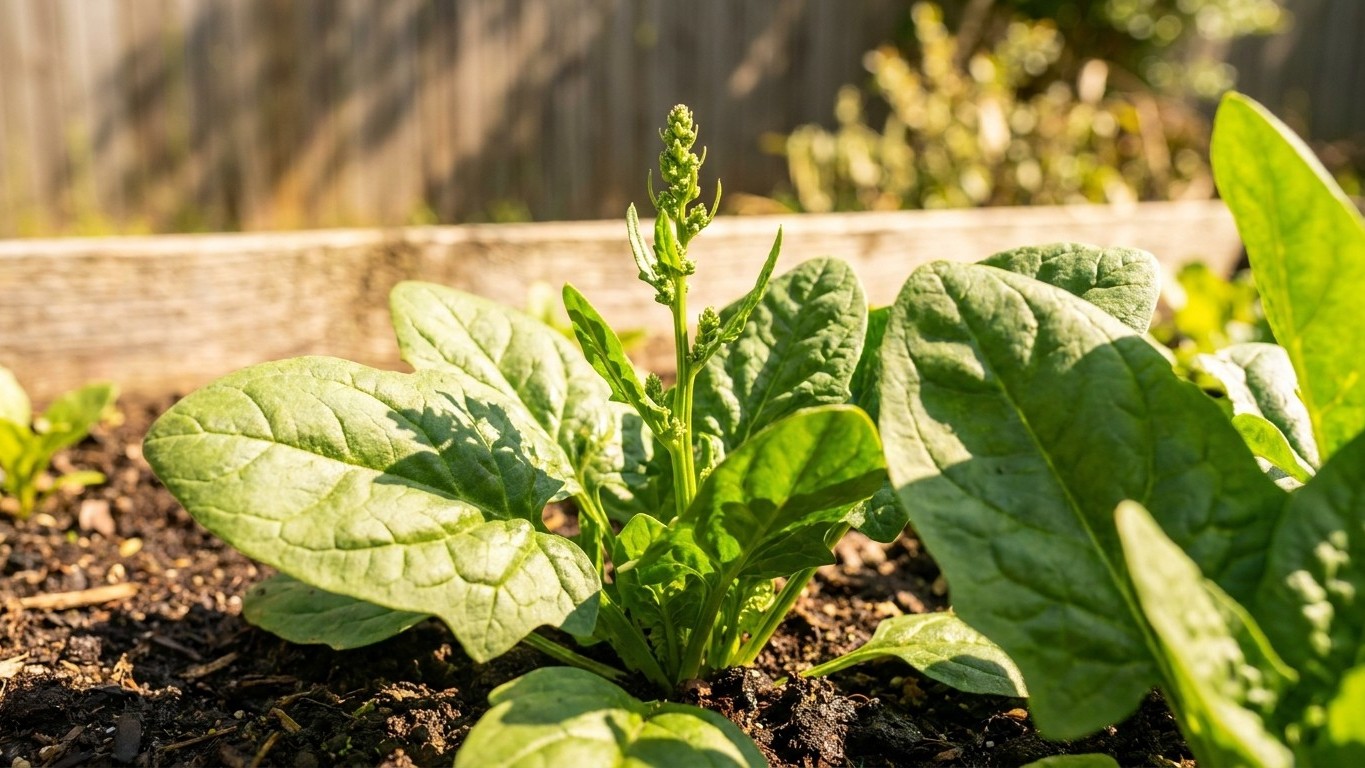

In western Oregon, spinach gets cut in two windows: spring, from seed sown two to three weeks before the last frost, and late fall, from seed that went in 50 to 75 days before the harvest date you want. Cut once the leaves are big enough to eat and before warm weather and long days send up a flower stalk. After cutting, plan on days, not weeks, in a home refrigerator. Two weeks is a ceiling reached only at 32°F. The dates here are for Portland and the Willamette side of the state.
The short answer
On the longest day of the year, Portland gets 15 h 30 of daylight. That number matters more to spinach than any thermometer reading. Spinach bolts during long days as well as warm temperatures, according to Utah State University Extension, and the long days alone are enough to push it toward a flower stalk. A cool summer does not buy extra weeks. The marine air that keeps Portland mild cannot shorten the day.
So the limit here is both day length and heat. Spinach grows best where temperatures stay at or below 75°F, and that same figure is where growth turns poor and leaves turn bitter. Portland averages 11.9 days a year at 90°F or more, according to NOAA’s climate normals, which is a light count by national standards. A light count of hot days does not make July safe, though. Those 11.9 days sit on top of a long run of warm afternoons, and the day length is already working against the plant before the heat arrives.
For cutting, this means you harvest on the plant’s schedule, not a calendar square. In spring, start taking leaves as soon as they are usable instead of waiting for full-size plants, because every week of delay moves the crop closer to the flower stalk. Once a central stalk rises, the plant is finished and the whole thing should come out. The mechanics of that switch, and how to slow it, are covered in Will Spinach Bolt Early in Oregon?, and the broader seasonal picture sits in Growing Spinach in Oregon.
One geographic warning. Portland is west of the Cascades. Central and eastern Oregon are high desert with a far shorter season, so the frost windows below (last spring frost March 6 to March 21, first fall frost November 11 to November 27, from NOAA’s 30-year climate normals) should not be applied statewide. If you garden east of the mountains, treat these dates as a Willamette Valley reference and check your own local frost records.
Then there is the second half of the title. The UC Davis Postharvest Technology Center puts spinach’s optimum storage at 32°F with 95 to 98 percent relative humidity, and calls it highly perishable. It will not maintain good quality for more than 2 weeks, with wilting, yellowing and decay increasing after 10 to 14 days. At common distribution temperatures of 41 to 50°F, it goes faster. That is a ceiling, not a plan. A refrigerator door sits in that warmer band, so keep the spinach on the back of the bottom shelf, where the air is coldest, in a bag or container that holds in humidity.
How long the spring window really is
Spring spinach in Portland is a race between two lines, and only one of them comes with a date. The steps below show how the window works out.
- Start with the last frost. NOAA’s normals put it between March 6 and March 21 for Portland, depending on how much risk you accept (the range reflects the 30 to 70 percent probability band for a 32°F freeze).
- Count back two to three weeks. Three weeks before March 6 is about February 13. Two weeks before March 21 is about March 7. Sowing therefore runs from mid-February to early March, a span of roughly three weeks.
- Notice where the day length sits. The equinox falls around March 20, when day and night are about equal. A seed sown in mid-February germinates and puts on its first growth while days are still shorter than 12 hours. A seed sown in early March starts right at the equinox, and every day after that is longer than the last, until 15 h 30 in June.
- Watch the 75°F line. Growth stops being good above it and the leaves turn bitter. No calendar date for that crossing appears in the figures behind this page, and it would be a mistake to invent one. Use a thermometer in the shade and the ten-day forecast. When highs start touching 75°F regularly, cut everything that is usable.
- Cut early and often. Take outer leaves while the center keeps growing. That spreads the harvest across the weeks you have, and it lets you finish the planting on your terms, before a flower stalk finishes it for you.
How many weeks does that add up to? The source publishes no days-to-maturity for spinach, so I can’t count from sowing to first cut, and I won’t borrow a number from another crop. What the facts do show is the shape of the season. Sowing opens over about three weeks, from mid-February to early March, and the cutting period ends when highs sit near 75°F or the long days win, whichever comes first. In a maritime climate like Portland’s, that is a short season: weeks of cutting, not a summer’s worth.
The practical edge goes to the earliest sowing in that span. Plants started in mid-February spend their youth in the shortest days they will see, which is the opposite of what a bolting-prone crop gets from a late start. A March sowing is not wrong, but it has less cushion. If the early seed sits in cold, wet soil, a second sowing a week or two later keeps the harvest from arriving all at once.
The autumn crop, and when the soil lets you sow
Fall is the better season for spinach in the Willamette Valley, for one reason: days are shortening instead of lengthening. The flowering trigger that dominates spring and summer is gone. The obstacles in fall are different, and there are two of them.
The soil is still too warm
Seed germination is reduced when soil is above 80°F, according to the same Utah State University Extension source. Notice that the block is warmth, not cold. Late August and early September can leave a garden bed holding heat long after the evenings cool, especially under mulch or against a south-facing fence. Seed sown into that soil may come up patchy or not at all.
So the early end of the fall window opens when the soil falls below 80°F, not on a date. The surest way to know is a soil thermometer pushed a couple of inches into the bed in the afternoon. If it reads high, you can cool a bed by watering it, shading it with cloth for a few days, or waiting. The facts behind this page include no date for when Portland’s soil crosses that line, so measuring beats guessing. Young seedlings are also what slugs and other pests find first, which is worth reading about in What Eats Spinach in Oregon, and When before you sow.
The frost that ends the season
The late end of the window comes from counting backward. For a fall crop, the source’s only guidance is to plant 50 to 75 days before the date you want to harvest. The first fall frost in Portland falls between November 11 and November 27, so take those as target dates and subtract:
- To harvest by November 11, sow between about August 28 (75 days back) and September 22 (50 days back).
- To harvest by November 27, sow between about September 13 (75 days back) and October 8 (50 days back).
Put the two constraints together and the early dates in each range collide with warm soil. A sowing at the end of August may be perfectly timed on the calendar and still fail in a hot bed. The realistic window is therefore set by the soil at the beginning and by the count at the end: from whenever the bed drops below 80°F until roughly the second week of October.
I’m using the first-frost range as the finish line because it is the date NOAA’s normals publish. The source does not say how much frost spinach tolerates, so I won’t claim a number for that. If plants are still healthy after your first frost, keep cutting. Because fall days keep shrinking, waiting a few extra days to let leaves size up carries far less bolting risk than it does in April, and the stalk is no longer the main worry.
Common questions
Can I cut spinach more than once?
Yes, as long as the plant has not bolted. Take the outer leaves and leave the center so it keeps producing. Once a flower stalk rises from the middle, the plant is done, and the best move is to cut the whole thing and sow something else in the space.
Does a cool Oregon summer let spinach keep going?
No. Portland gets 15 h 30 of daylight on the longest day, and long days alone trigger flowering in spinach. A cool summer lowers the heat problem but not the day-length one, so spinach stays a spring and fall crop even in mild weather.
How long does cut spinach actually keep?
UC Davis says it will not hold good quality for more than 2 weeks, and that is at 32°F with 95 to 98 percent humidity. In the 41 to 50°F range typical of a refrigerator door, it yellows much faster. Keep it at the back of the bottom shelf, and don’t count on the full two weeks.
Which variety should I grow?
The Utah State University Extension source names four: Bloomsdale, Melody, Teton and Olympia. It publishes no data about any of them, so I can’t say which bolts later, handles frost better or matures faster. Pick by what your local seed supplier recommends for your area, and sow in the windows above.