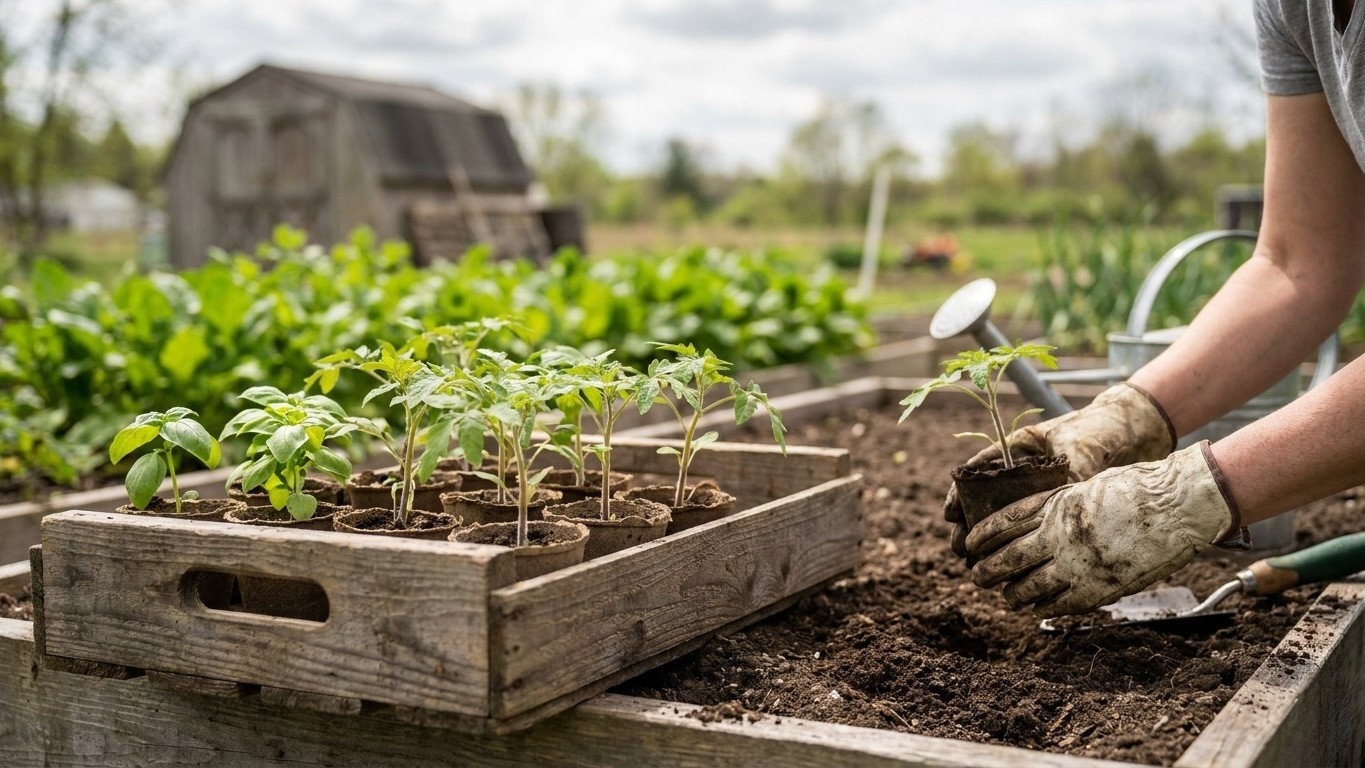

May is the month Pennsylvania gardens turn a corner. Across most of the state, the frost risk that defined March and April has passed or is passing, and the soil has finally warmed enough to trust with the crops that actually matter to most home gardeners: tomatoes, peppers, beans, squash, and the flowers that carry a yard through summer. The exact green light depends on where in the state you’re standing.
What goes in the ground in May

The Philadelphia area, the mildest corner of Pennsylvania, sees its last spring freeze between March 29 and April 6, based on NOAA’s 1991-2020 climate normals for that station. By the time May opens, that region is typically weeks clear of the 32°F threshold. But the northern tier and the Alleghenies run two to four weeks later in spring, which means some higher-elevation counties are only just clearing their own frost window as May begins, not before it. That gap is the whole story of this month in Pennsylvania: the same calendar date means something different depending on elevation.
Where the frost-free window has already opened, direct-sow beans, corn, cucumbers, summer squash, and melons once the soil has warmed and dried enough to crumble rather than clump in your hand. This is also the month to move tomato, pepper, and eggplant transplants outdoors, along with basil and other tender herbs, but only after hardening them off over several days of increasing outdoor exposure. Root crops like carrots and beets can still go in by seed, and successive sowings of beans and squash through the month keep the harvest coming rather than arriving all at once.
In counties still finishing their frost window, that is, the higher ground of the Alleghenies and the north-central tier, hold the tender stuff a bit longer and lean on what tolerates a late cold snap: onion and shallot sets, peas, and the hardy greens like spinach, lettuce, and Swiss chard. Potatoes can generally go in across most of the state this month, since a light frost damages foliage but rarely kills the tubers. If a cold night is forecast after tender transplants are in, a light row cover or overturned bucket overnight is cheap insurance against losing a week’s worth of growth.
What to start under cover
Not everything started this month goes into open ground right away. May is the window to start fall brassicas indoors, timed backwards from Pennsylvania’s first fall frost, which arrives between November 5 and November 16 depending on location. Broccoli, cabbage, and Brussels sprouts need time as seedlings before they go out as transplants in mid- to late summer, and most seed packets list roughly six to eight weeks from seed to transplant size. Counting back from a November frost window and allowing for the crop’s full days-to-maturity on top of that transplant window puts the starting point for many fall brassicas squarely in May, even though the outdoor planting is still months off.
The two ways this goes wrong run in opposite directions. Start too early under cover, with no place to move seedlings up in pot size, and you end up with rootbound, leggy plants that sulk for weeks after transplanting, if they don’t stall out entirely. Start too late, and the fall crop runs out of daylight and warmth before it matures, especially in the northern counties where the growing season closes sooner. A simple pot-up schedule, moving seedlings to a larger container once roots fill the current one, buys flexibility if the outdoor bed isn’t ready exactly on schedule.
This is also a reasonable month to start a second round of basil or a batch of annual flowers like zinnias and cosmos under cover for a head start, particularly in the cooler northern tier where a few extra weeks indoors makes a visible difference by midsummer.
What is ready to pick
Asparagus is the signature May harvest in Pennsylvania, cut once spears reach about the thickness of a pencil and before the tips loosen and start to fern out. Rhubarb stalks are also ready to pull this month, taken by twisting at the base rather than cutting, and left to establish for a full growing season if the plant is young.
Overwintered spinach and any hardy greens that made it through the cold months, kale, collards, mâche, put on a fast flush of growth as days lengthen, and are best picked before the weather warms enough to push them toward flowering, which turns the leaves bitter. Early lettuce sown in April is usually ready for its first cut-and-come-again harvest by mid-to-late May, and radishes sown at the same time mature quickly, often within three to four weeks of seeding.
In the state’s cooler pockets, strawberries are still weeks from ripening, but in the southeastern counties the earliest June-bearing varieties can start coloring up toward the very end of the month. If last season’s stored onions, potatoes, or winter squash are still in the pantry, this is a good month to sort through them; anything showing soft spots or sprouting heavily should be used first, since the remaining stock won’t hold much longer into warm weather.
The jobs that matter this month

Mulching earns its keep in May more than almost any other month, because it does two jobs at once: it holds soil moisture as temperatures climb, and it suppresses the flush of weed seedlings that germinate right alongside your vegetables. Apply it once the soil has warmed, not before, since mulch put down too early on cold ground actually slows warming and delays root growth.
Staking and caging need to happen now, before plants sprawl. Tomatoes, peas, and vining squash are far easier to support while small; trying to wrestle a cage around a tomato plant that’s already flopped over in July usually means broken stems and lost fruit. The same logic applies to trellising cucumbers and pole beans.
Watering rhythm matters more once transplants are in the ground and roots haven’t spread yet. Deep, infrequent watering encourages roots to grow downward in search of moisture, while shallow daily sprinkling keeps roots near the surface, where they dry out faster in a hot stretch. Succession sowing, dropping in a new short row of beans, lettuce, or radishes every couple of weeks, spreads the harvest out instead of dumping it all at once.
Pest scouting starts in earnest now too. Colorado potato beetle adults emerge as soil warms and lay eggs on potato and eggplant leaves; checking the undersides of leaves weekly and hand-picking early keeps a small problem from becoming a defoliated plant. Slugs are also active on cool, damp May mornings, especially around new transplants and seedling greens.
What not to do in May
The classic mistake this month is trusting warm air over cold soil. A run of 70°F afternoons doesn’t mean the ground has caught up, and tomatoes or peppers set into soil that’s still cold at root depth often just sit there, stunted, for weeks, sometimes never fully recovering their vigor for the season. Waiting a few extra days for the soil itself to warm, rather than reacting to a warm afternoon, avoids that setback entirely.
Uncovering plants too early after a mild spell is the second common misstep, particularly in the northern tier and higher elevations where the frost window closes later than the calendar suggests. A single cold night after row covers come off can undo weeks of hardening-off work on tender transplants. Keep covers within reach through the month rather than putting them away at the first stretch of warm weather.
Nitrogen timing trips up a lot of gardeners, too. Heavy nitrogen feeding early on pushes leafy, lush growth at the expense of flowering and fruiting later, which matters most for tomatoes, peppers, and squash. A balanced feed at planting, followed by a lighter hand until flowering starts, produces sturdier plants than an early nitrogen-heavy push. Overwatering newly transplanted seedlings out of anxiety is the last common error; check soil moisture with a finger before watering rather than watering on a fixed schedule.
Checking this against your own county
Pennsylvania spans USDA hardiness zones 5a to 7b, a range built on a single measure, the average annual extreme minimum winter temperature, and Philadelphia sits toward the milder end of that range while the northern tier and higher Alleghenies sit closer to the cold end. A statewide picture of What to Plant in May is a starting point, not a set of instructions for a specific yard. Elevation alone can shift a frost window by weeks, and local microclimates, a valley that pools cold air or a south-facing slope that warms early, move things further still. For a planting calendar built around a specific county and current season conditions, the Penn State Extension service is the reliable next stop.
Common questions
Is it safe to plant tomatoes outdoors in Pennsylvania in May?
In the milder southeastern counties, yes, once the soil has warmed and nights have settled above freezing. In the northern tier and higher elevations, where the frost window runs two to four weeks later, it’s worth waiting until later in the month and keeping row cover on hand for a cold snap.
What vegetables can still be direct-sown in May in Pennsylvania?
Beans, corn, cucumbers, summer squash, and melons can go in by seed once soil has warmed, alongside successive sowings of beans, lettuce, and radishes through the month for a staggered harvest.
Why start fall vegetables indoors in May if fall frost is months away?
Fall brassicas like broccoli and cabbage need weeks as seedlings before they’re strong enough to transplant, and counting backward from Pennsylvania’s first fall frost, between November 5 and November 16, puts the starting point for many of them in May.
What is the biggest planting mistake gardeners make in Pennsylvania in May?
Trusting warm air temperatures over actual soil temperature. Tender transplants set into ground that hasn’t fully warmed often stall for weeks, even if the days themselves feel like summer.
Gardeners who plant by the Moon can check the May 2027 moon planting calendar, a tradition rather than a proven method.