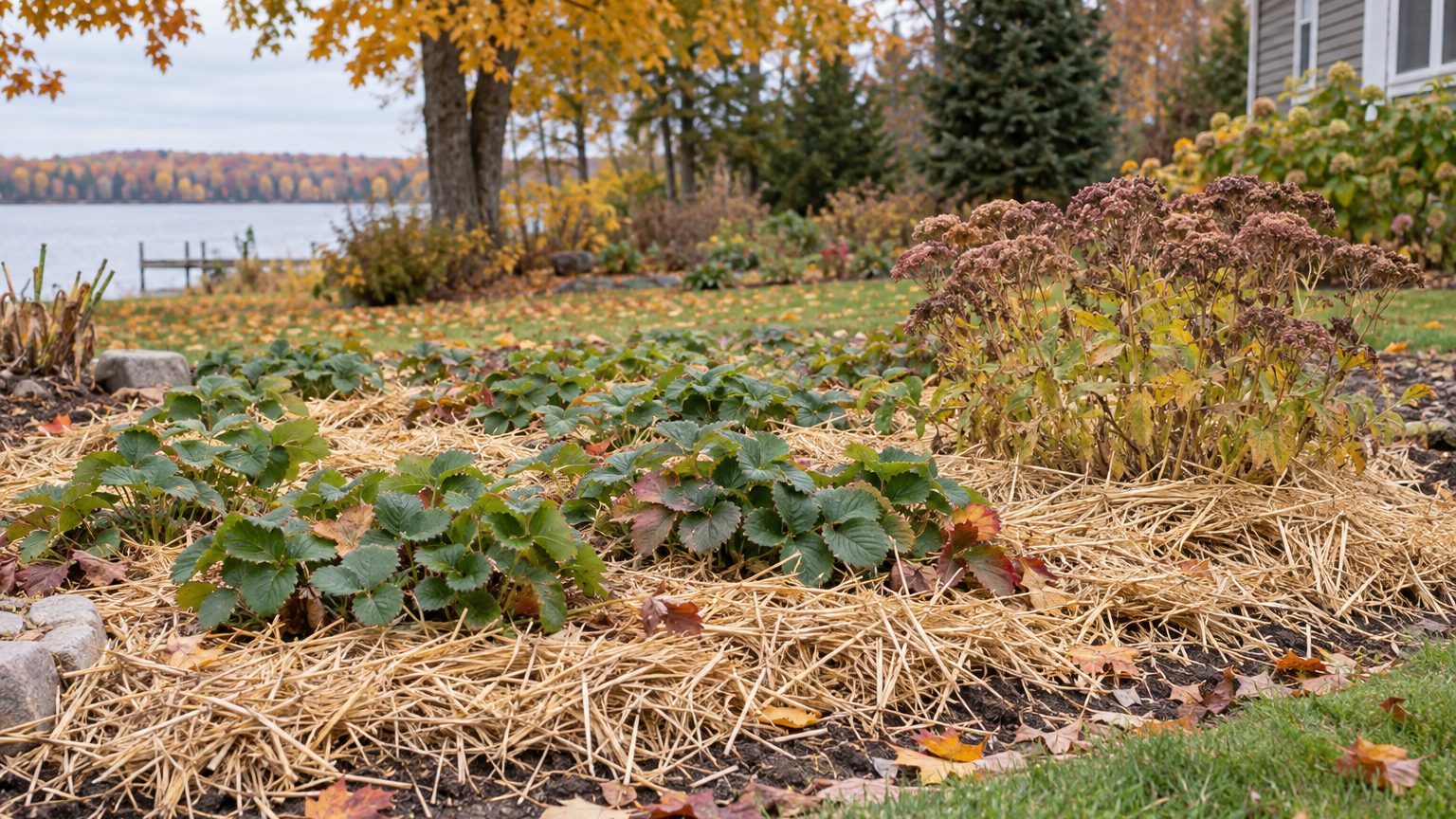

Winter mulch goes down after the ground starts to freeze, which is later than most gardeners expect. NOAA’s 1991-2020 normals put the first fall frost in Philadelphia between November 5 and November 16. The mulch follows in the weeks after that range, once the soil surface stays stiff through the day. Farther north and higher up, spring runs later, and so does the mulching. Clean straw works for strawberries, and a 2-inch to 3-inch layer works for most perennials.
When to put winter mulch down in Pennsylvania
The purpose of winter mulch is to keep soil frozen, not warm. Plants rarely die from steady cold. The damage comes from the soil freezing, thawing during a mild spell, and freezing again. Each cycle expands the soil and pushes shallow roots upward, which is frost heave. A blanket of mulch laid over frozen ground holds the temperature steady until spring.
That logic applies across Pennsylvania. The NOAA NCEI Climate Normals for 1991-2020 give the mean daily minimum of the coldest month at the Philadelphia reference station as 26.0°F. Philadelphia is the mildest corner of the state, so the ground freezes there too, and it freezes harder and longer elsewhere. The USDA Plant Hardiness Zone Map 2023 places the state anywhere from 5a to 7b, depending on where you garden.
A first frost is not the same as frozen soil. According to the NOAA NCEI U.S. Climate Normals, the first fall 32°F freeze at the Philadelphia station falls between November 5 and November 16, the stretch where the odds run from 30 to 70 percent. Soil still holds a good deal of summer heat at that point. If you mulch then, you trap that warmth, and the plants stay soft and active under a cover that stays damp. Mulch in the weeks after the November 5 to November 16 first-frost range, once the soil surface stays frozen through the morning.
| Area | First fall frost | When to mulch | When to uncover in spring |
|---|---|---|---|
| Philadelphia area (reference station) | November 5 to November 16 (NOAA, 30-70% band for a 32°F freeze) | In the weeks after that range, once the soil surface stays frozen | When new growth starts; the mildest corner of the state, so earliest |
| Northern tier and the Alleghenies | Earlier than the Philadelphia range | Earlier than Philadelphia; go by the ground | Later; NOAA notes these areas run two to four weeks later in spring |
How do you know the ground has started to freeze?
Look for a crust. When the top of the soil is firm and stiff in the morning, and puddles carry a skin of ice that does not melt until afternoon, you are close. Strawberry leaves give another signal. After several hard freezes they flatten and darken, and the plants stop growing. Push a trowel or a screwdriver into a bare patch. If the tip meets a stiff layer before it reaches soft ground, the freeze has begun. A single cold night will not do it, but a run of them will.
Does the timing change in the northern tier and the Alleghenies?
It does, and the direction is simple. Colder ground gets its first fall frost earlier, so fall mulching moves earlier there. Spring work moves the other way, because NOAA’s note on the Philadelphia figures says the northern tier and the Alleghenies run two to four weeks later in spring. That makes the dates above a starting point. A gardener in the northern tier should watch the soil and skip the Philadelphia calendar. For your own county, First and Last Frost Dates in Pennsylvania narrows the numbers, and the wider set of Pennsylvania guides covers the rest of the garden year.
Strawberries
A strawberry crown sits right at the soil surface, with nothing to shield it. That makes the plant especially vulnerable to heaving. When the soil lifts and settles, it can tear the roots or push the crown up where cold air reaches it directly. Bare cold is a second problem. The crown holds next year’s flower buds, and a hard freeze without cover or snow can kill them. A layer of straw handles both problems. If you are planning a bed, Growing Strawberries covers the rest of the plant’s year.
What do you cover strawberries with, and how deep?
Use clean straw, such as wheat straw sold for mulch. Hay is a poor substitute because it is full of seed and will fill the bed with grass next spring. Straw is hollow and springy, so air moves through it even after snow and rain pack it down. Whole leaves behave differently. Oak and maple leaves mat into a wet sheet over the crown, which invites rot.
For depth, stay inside the range NC State Extension gives for mulch in general, a 2-inch to 3-inch layer, and do not go deeper. Straw looks thin when you spread it and then settles, so check the depth after a rain. Cover the crowns and the leaves so only a trace of green shows through. Spread the straw after the leaves have flattened and darkened from hard frosts, and rake it off the crowns when new growth starts in spring.
When do you pull the straw back in spring?
Go by the plants and not by the calendar. When pale new leaves begin pushing up through the straw, rake it off the crowns and into the aisles. There it keeps weeds down and keeps the berries clean once they form. Leave it close by so you can flip it back over the plants if a hard freeze is forecast during bloom. In the Philadelphia area this happens earliest. The northern tier and the Alleghenies come two to four weeks later, according to NOAA’s note on the Philadelphia figures. A plant left under straw too long turns yellow and weak, and the soil under it warms slowly.
Perennials and borderline plants
Most established perennials that are rated for your zone do not need winter mulch to survive. The USDA Plant Hardiness Zone Map 2023 is built on one variable, the average annual extreme minimum temperature, and the state runs from 5a to 7b. Match the rating on the plant tag to your own zone on that map. Winter mulch helps three groups.
- Perennials planted this fall, whose roots have not anchored yet and lift easily
- Shallow-rooted plants that heave, such as coral bells and garden mums
- Borderline plants, rated for your zone or just under it, including some bigleaf hydrangeas and perennial herbs such as lavender and sage
Perennial herbs are a good test case, since many come from milder climates. Getting Perennial Herbs Through the Winter covers which ones need a covering and which can take a cold winter bare. Winter mulch also helps a borderline plant when snow cover is thin, since snow is the best insulator and it comes and goes.
How deep should perennial mulch be?
NC State Extension’s Gardener Handbook gives two sentences that work together. On weeds: “A 2-inch to 3-inch layer of mulch suppresses most annual weed seeds and makes it easy to hand-pull any that do germinate.” On roots: “Provide a 3-inch layer of mulch to reduce water loss and maintain uniform soil moisture and temperature around roots.” They were written for weeds and moisture, but the same depth works in winter, because even soil temperature is the goal. Going deeper adds nothing and builds a mulch volcano that holds water against the plant. Shredded leaves, pine needles, bark chips and chopped straw all work.
Why a ring around the crown and not a pile on it?
Crowns and stems rot when they sit under wet mulch for months. Spread the mulch in a ring over the root zone and leave the crown itself open, with a small gap around each stem. The basics of ring placement are laid out in Mulching Without Killing the Plant. Evergreen boughs laid over the ring after the ground freezes add a little extra protection on exposed sites, and they let air through. Mulch perennials after the soil has started to freeze, in a ring, with the crown left open.
What goes wrong
What happens if you mulch too early?
Plants under a warm blanket keep growing, or stay soft and wet. You see mushy crowns, stems that blacken at the base, and mold on the mulch itself. Early cover also gives mice and voles a dry place to settle in before the cold even arrives. The fix is patience. Hold off until the weeks after the first-frost range and the soil is firm in the morning. That is later than the nursery displays suggest.
How do you stop mulch from matting and housing voles?
Whole leaves and wet grass clippings mat into a dense sheet that holds water and smothers a crown. Shred leaves first, or use straw and pine needles, which stay loose. Voles tunnel under deep cover and chew bark and roots through winter, and you may not notice until a shrub fails to leaf out. Keep mulch pulled back from trunks and stems, keep to the 2-inch to 3-inch range, and clear the cover from around young shrubs. Mulch put down after the ground is frozen gives them less time to move in.
What if you forget to uncover in spring?
Strawberries left under straw come up pale and leggy, and the soil stays cold and wet around the crowns. Perennials under mulch heaped against the crown can rot as the weather warms. Check the beds as soon as new growth shows, and pull mulch off crowns then, with the northern tier and the Alleghenies running two to four weeks later than Philadelphia. Keep the loosened straw nearby for a late freeze.
Common questions
Should I mulch strawberries before or after the first frost?
After. In the Philadelphia area the first fall frost comes between November 5 and November 16, according to NOAA. Mulch in the weeks after that, once the leaves have darkened and the soil surface stays frozen. In the northern tier and the Alleghenies the frost comes earlier, so you mulch earlier too.
Do I still need mulch if snow covers the garden?
Snow is a very good insulator, and a bed under steady snow stays at an even temperature all winter. The trouble is that snow does not always come, and a thaw can strip it away from a frozen bed. Mulch covers those gaps, which is why gardeners apply it anyway, especially on strawberries and new plantings.
Can I use shredded leaves instead of straw?
Shredded leaves work well on perennials and around shrubs, and they cost nothing. On strawberry crowns, straw is the safer choice because leaves pack down and stay wet. If you do use leaves on strawberries, shred them finely and keep the layer within the 2-inch to 3-inch range.
When do I take winter mulch off?
Pull it off the crowns when new growth starts, and not before the hardest freezes have passed. Your area’s last frost date helps here, and NOAA’s note says the northern tier and the Alleghenies run two to four weeks later than Philadelphia. Do not haul the mulch away. Rake it into the aisles or into a ring at the edge of the bed, where it will suppress weeds all summer and be ready if a late freeze threatens the blooms.