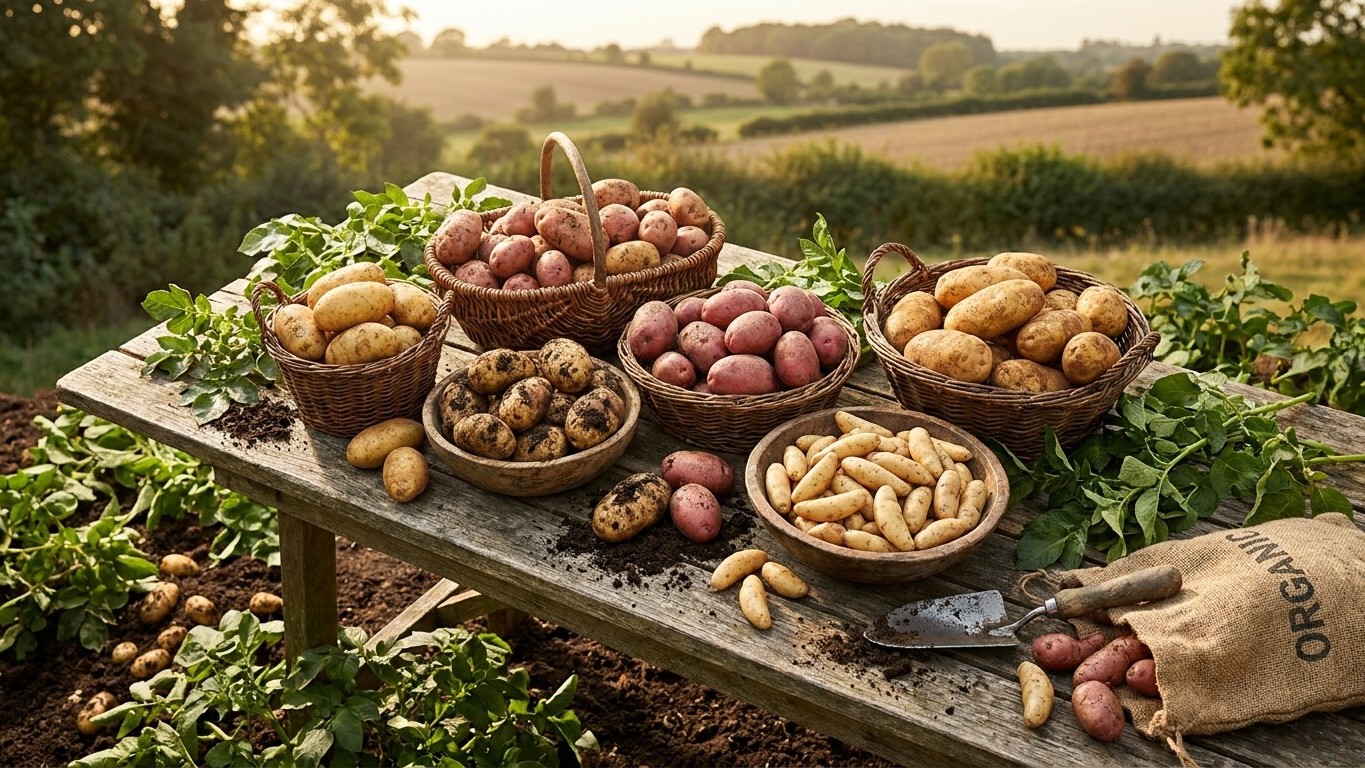

The Potato Varieties That Suit Pennsylvania depend on where in the state you garden, not on a single statewide pick. Growers near Philadelphia, where soil warms fast toward the danger zone for tuber growth, do best with early and mid-season types dug before summer heat sets in. Gardeners in the northern tier and the Alleghenies, where the season starts later but stays cooler, have room to grow late-season varieties through the summer.
The short answer
Philadelphia’s last spring frost falls between March 29 and April 6, according to NOAA NCEI’s 1991-2020 U.S. Climate Normals for station USW00013739. That’s the reference point for the mildest corner of the state, and it matters because potatoes aren’t planted by a date on the calendar. They go in the ground once soil temperature holds at 50°F, a point that lands 14 to 21 days before the last frost date, per Utah State University Extension and the University of Maine Cooperative Extension (Bulletin #2077). Near Philadelphia, that usually means a mid-to-late March planting in most years.
Move away from that reference city and the calendar shifts hard. The northern tier and the Alleghenies run two to four weeks later in spring than Philadelphia, which pushes both the soil-warming date and the planting date well into April or even May at higher elevations.
That regional split is what actually answers the title’s question. In the southeast corridor, where the growing season starts early and soils climb toward 90°F by midsummer, early and mid-season varieties fit best because they’re harvested before that heat threshold stalls tuber growth. Baking types such as Yukon Gold and boiling types such as Red Pontiac are commonly grown in that early-to-mid window. In the cooler ridges and the northern tier, where summer heat rarely pushes soil past 90°F for long stretches, late-season varieties such as Katahdin, grown for baking and storage, have the extra weeks they need to size up without stalling.
Neither Utah State nor Maine publishes a days-to-maturity count for any variety. Both classify potatoes by season class only, early, mid-season, or late, and that classification, not a calendar number, is what a Pennsylvania gardener should plant around.
What actually decides it
Soil temperature at planting, not the calendar
Potatoes are planted once soil reaches 50°F, a threshold that lands 14 to 21 days before the last frost date (Utah State University Extension; University of Maine Cooperative Extension). Planting by a fixed date instead of soil temperature is the most common mistake behind slow, patchy emergence: seed pieces sit in cold, wet soil and rot before they sprout, regardless of what the calendar says.
The 90°F ceiling that stops tuber growth
This is the mechanism that decides the whole crop, and it’s the part a gardener can’t see coming without knowing to look for it. Once soil temperature climbs above 90°F, tuber set and fill are inhibited, and watering doesn’t reverse it (Utah State University Extension; University of Maine Cooperative Extension). That’s a heat response, not a drought response, so extra irrigation during a hot stretch won’t rescue a stalled crop. Where a location regularly sees soil temperatures cross that line in summer, the right move is to plant early and dig a spring crop, not to nurse a full-season variety through the hottest weeks.
Regional frost lag across Pennsylvania
Philadelphia’s frost window doesn’t describe the whole state. A garden in the northern tier or the Alleghenies runs two to four weeks behind that reference date, which shifts both the 50°F planting window and the number of hot days that follow before fall frost. A gardener in any location, say a lakeshore plot near Erie or a ridge farm outside State College, works the same mechanism in reverse: estimate the local last-frost date, count back 14 to 21 days for the 50°F soil mark, then judge how many days above 90°F typically follow before choosing a season class. Fewer hot days favor a late-season variety; more hot days favor early or mid-season.
How to do it
- Estimate your local last spring frost date. Philadelphia’s is March 29 to April 6 per NOAA NCEI; the northern tier and the Alleghenies run two to four weeks later.
- Check soil temperature in the planting bed with a soil thermometer rather than guessing from air temperature.
- Plant seed potatoes once the soil holds at 50°F, which lands 14 to 21 days before your local last frost date.
- Buy certified seed potatoes rather than saved kitchen stock or last season’s garden tubers.
- Match season class to your local summer heat pattern: choose early or mid-season varieties where soil regularly exceeds 90°F in summer, and late-season varieties where it rarely does.
- Track soil temperature again as harvest approaches, and dig early or mid-season crops before soil climbs past 90°F for extended stretches.
What goes wrong
- Planting by a fixed calendar date instead of soil temperature. Cold, wet soil rots seed pieces before they sprout. Test the soil and wait until it holds at 50°F, regardless of the date.
- Growing a late-season variety through a hot southeastern Pennsylvania summer. Once soil passes 90°F, tuber set and fill stop, and extra watering won’t fix it. Switch to an early or mid-season class dug before peak heat, or plan for a spring-dug crop instead.
- Planting uncertified seed potatoes. Uncertified seed carries virus that stunts yield without any visible sign at planting time. Buy certified seed each season instead of replanting saved tubers.
- Applying Philadelphia’s frost date to a garden in the northern tier or the Alleghenies. That gap runs two to four weeks, and planting on the Philadelphia schedule in a colder region risks frost damage to young sprouts. Adjust the planting window using the regional lag before setting seed.
- Choosing a variety by texture labels like waxy or floury. Those terms don’t come from Utah State or Maine’s published guidance. Choose instead by the variety’s stated use, baking or boiling, which is the distinction the extension sources actually publish.
Common questions
What’s the best potato variety for Pennsylvania’s climate?
There isn’t one statewide answer. Near Philadelphia, early and mid-season varieties suit the faster warm-up and earlier summer heat. In the northern tier and the Alleghenies, late-season varieties have more cool weeks to size up before frost.
When should I plant potatoes in Pennsylvania?
Plant once soil temperature reaches 50°F, which lands 14 to 21 days before your local last frost date. In Philadelphia, that frost date falls between March 29 and April 6 per NOAA NCEI; other parts of the state run two to four weeks later.
Can I grow late-season potatoes in Philadelphia?
It’s harder there than in the cooler ridges, because soil is more likely to cross the 90°F threshold that stalls tuber set and fill during a long southeastern summer. Early or mid-season varieties dug before that heat arrives are the safer match for that reference city.
Why does my potato seed need to be certified?
Uncertified seed, including saved kitchen potatoes or last year’s garden tubers, can carry virus that reduces yield without showing obvious symptoms. Certified seed is checked to be free of that risk before it’s sold.