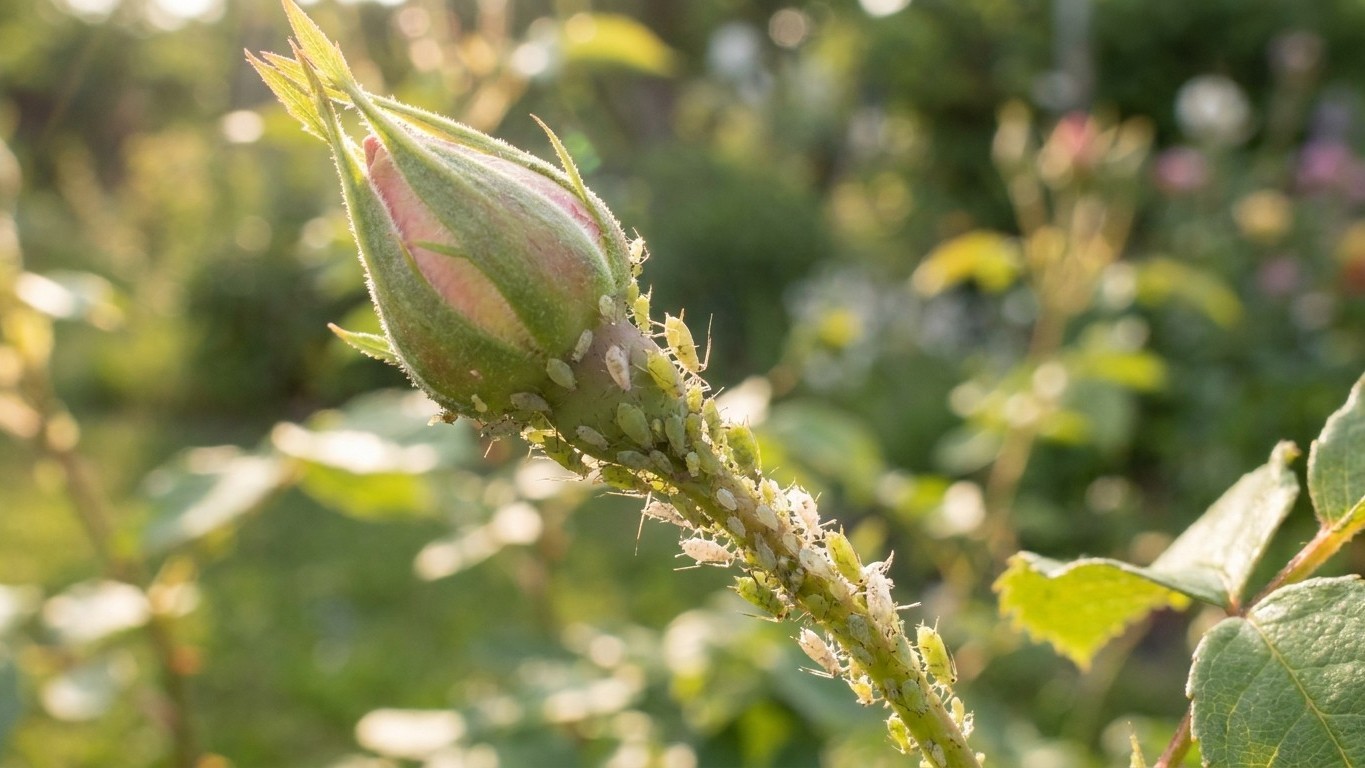

Aphids are small, soft-bodied insects that feed on plant sap, and they attack nearly every crop, shrub, and houseplant a home gardener grows. What sets them apart from most garden pests is that females can produce live young without mating, which is why a handful of aphids on a rose bud can become a dense colony within a week. Spotting them early, understanding when your region’s populations build, and matching control to that timing are the three things that actually change the outcome.
What it is and what it attacks

Aphids belong to the insect superfamily Aphidoidea, and the common name covers hundreds of species that all share the same feeding strategy: piercing plant tissue with needle-like mouthparts and drawing out sugary sap. Some, like the green peach aphid, feed on an enormous range of vegetables and ornamentals. Others, like the woolly apple aphid, stick to specific woody hosts. Between them, this pest group reaches roses, tomatoes, citrus, stone fruit, cereal grains, and most houseplants sold in the United States. No region is free of aphids; what differs is which species dominates and how many generations it fits into a season.
The reproductive trick behind fast outbreaks
Most aphids reproduce asexually for much of the year. A female doesn’t need to mate to produce offspring, and she often gives birth to live nymphs rather than laying eggs. Those nymphs are already carrying the next generation inside them before they’re even born, a phenomenon called telescoping generations. That’s the mechanical reason a plant can look fine on Monday and be coated in aphids by the weekend: there’s no waiting on eggs to hatch, no search for a mate, just continuous, compounding birth. Only when conditions turn (shortening days, dropping temperatures) do many species switch to producing winged forms and, eventually, a sexual generation that lays overwintering eggs.
That biology raises three practical questions, and each one has its own dedicated page on this site. First: what does the damage actually look like, and how do you tell it apart from disease or other pests? Second: when do aphids show up and multiply in your specific climate, since a colony that peaks in April in the Gulf states might not peak until June in the northern Plains? Third: what actually stops them, given that broad sprays often kill the very insects that would otherwise keep populations in check? The sections below answer each briefly and point to the fuller page.
Recognizing it
The clearest sign of an aphid problem isn’t the insect itself, it’s the plant’s reaction. Leaves curl or cup downward, new growth looks stunted or twisted, and a clear, sticky residue called honeydew coats leaf surfaces and anything beneath them. That honeydew often grows a black fungal film known as sooty mold, which can look worse than the aphids ever did. Ants are frequently the first clue: many species farm aphids for their honeydew and will patrol stems aggressively to protect the colony from predators, so a sudden line of ants marching up a stem is often the tip-off before you spot the insects themselves.
Confirming it’s aphids and not something else
Aphids cluster on the undersides of leaves and along tender new stems, usually in shades of green, black, yellow, or gray depending on species. They’re soft-bodied, pear-shaped, and slow-moving, which separates them from spider mites (which are far smaller and leave fine webbing) and from scale insects (which are immobile and armored once mature). Curled leaves can also come from herbicide drift, viral disease, or simple heat stress, so it’s worth turning a leaf over before assuming aphids are the cause. The full breakdown of symptoms, honeydew patterns, and species-specific damage on different crops is covered on this site’s dedicated aphid damage page, which is the right next stop once you’ve confirmed the insect itself.
When it appears
Timing is where aphids get complicated, because there’s no single date that applies nationally. Populations build around local temperature patterns, host plant growth stages, and the specific species involved, and those variables shift from one state to the next and from one season to the next. A cool, wet spring can delay the first colonies by weeks; a mild winter can let overwintering eggs or adults survive in numbers that produce an earlier, larger first wave.
Why the calendar isn’t the same everywhere
In warmer climates, some aphid species skip the egg stage entirely and overwinter as active adults on host plants, meaning colonies can be present, if small, year-round. In colder regions, most species overwinter as eggs laid on woody hosts in fall, then hatch once temperatures and plant growth reach a threshold in spring. Because that threshold is measured in degree-days and varies by species and by state, only a local land-grant university extension service can tell you when to expect the first flush of activity in your specific location. This site’s aphid life cycle page walks through the full seasonal pattern, from egg to wingless female to the winged migrants that spread colonies to new plants, and explains how to read your own region’s timing rather than relying on a generic calendar.
What stays consistent everywhere is the shape of the curve: a slow start, a steep climb as asexual generations stack up, then a decline as natural enemies catch up or as host plants mature and become less attractive to feeding aphids. Watching for that climb, rather than waiting for visible damage, is what separates an easy fix from a season-long fight.
What works
Timing beats force with aphids. Because populations can rebound from a small surviving fraction within days, a single well-timed intervention early in the buildup does more than a heavier response after the colony has already peaked and started producing winged dispersers. Checking new growth and leaf undersides on a regular schedule, starting right around when your local extension service flags typical emergence, catches colonies while a simple response, like a strong water spray to physically dislodge them, is still enough.
Barriers and biological control
Physical barriers matter more than most gardeners expect. Reflective mulches disrupt the winged aphids that use light cues to find new host plants, and floating row covers keep migrating aphids off vulnerable seedlings during the highest-risk weeks. But the strongest long-term control usually comes from natural enemies already present in most yards. Lady beetles (family Coccinellidae) and their larvae are aggressive aphid predators, lacewing larvae (family Chrysopidae) consume large numbers of aphids at close range, parasitic wasps in the subfamily Aphidiinae lay eggs inside aphids and eventually kill them from within, and hoverfly larvae (family Syrphidae) feed heavily on colonies in spring. All four groups are vulnerable to broad-spectrum insecticides, so a heavy spray program can remove the predators faster than it removes the aphids, setting up a worse rebound later in the season. Planting flowering herbs and native plants that supply nectar for adult lacewings, hoverflies, and parasitic wasps helps keep those populations established before aphids even arrive.
The full method, including how to sequence monitoring, barriers, and biological control across a season, is laid out on this site’s aphid control page. Because effective timing and any product guidance depend entirely on where you garden, the most useful next step is this site’s page for your own state or region, which links to your local extension service and its current, season-specific recommendations.
Common questions
Do aphids fly? Some do. Most aphids in a colony are wingless, but when a host plant becomes crowded or declines in quality, certain individuals develop wings and disperse to find new plants, which is how a single infested tomato can seed problems across a whole garden bed.
Can aphids spread plant viruses? Yes. Several aphid species transmit plant viruses while feeding, picking up virus particles from an infected plant and depositing them on the next one they probe, often within seconds of landing, which is one reason early-season control matters even when colony size still looks small.
Will ants make an aphid problem worse? Often, yes. Ants that farm aphids for honeydew actively defend colonies against lady beetles, lacewings, and parasitic wasps, so an active ant trail on an infested plant can suppress the very predators that would otherwise bring the colony down.
Are indoor houseplants at risk from outdoor aphids? They can be, particularly when houseplants spend summer outdoors or sit near an open window, since winged aphids move readily between outdoor host plants and nearby indoor greenery.