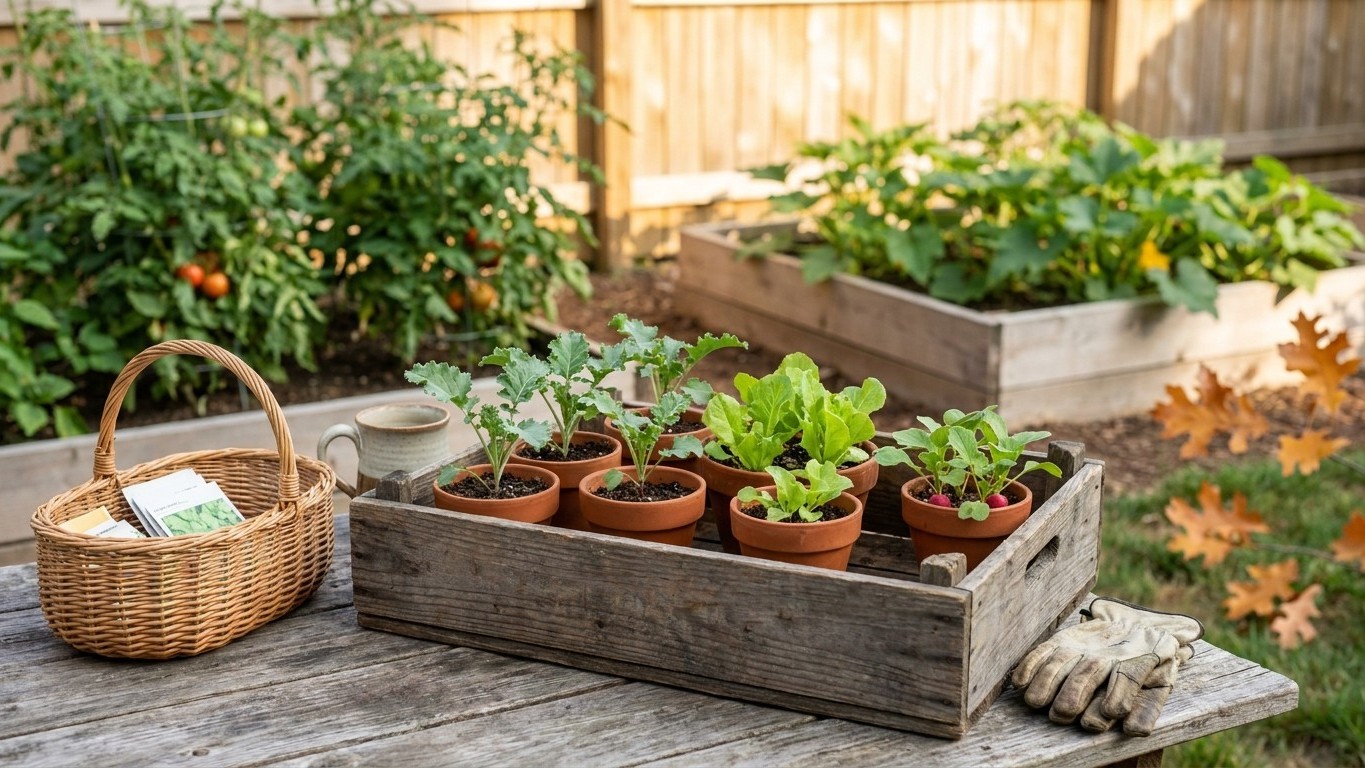

August in Prince Edward Island is still an active planting month, not a wind-down. With the average first fall frost landing October 17 at the Charlottetown A station, there are roughly seven to eleven weeks of open-ground growing left depending on when in August you sow. That window favors quick greens, fall roots, and a second round of peas and beans planted early in the month.
What goes in the ground in August

The decision here isn’t the calendar, it’s arithmetic: count backward from the average first fall frost of October 17 and see what still fits. Early August gives a crop about 77 days before that mean date arrives. By the third week of August, you’re down to roughly 55 to 60 days. By the last week, you’re under 50. Since October 17 is a mean date from Environment and Climate Change Canada, not a guarantee, a real frost can show up two or three weeks earlier in a cold year, so anything you plant should build in a cushion rather than race the average.
That math rules out long-season heat lovers like fresh corn, winter squash, or a new round of tomatoes. It does not rule out fast greens and roots, which is where most of PEI’s August planting actually happens.
What fits the window
| Crop | Days to maturity | Latest safe sowing (approx.) |
|---|---|---|
| Radish | 25-30 | Early September |
| Arugula | 30-40 | Late August |
| Spinach | 35-45 | Mid-August |
| Baby lettuce (loose leaf) | 30-45 | Mid-August |
| Turnip (for greens or small roots) | 35-55 | Early August |
| Peas (fall crop) | 55-65 | First week of August |
Beets and carrots sown very early in the month can still size up into small, sweet roots before frost, though they run tight against the average date and should go under a row cover once nights turn cold. Garlic and shallots are not an August job here; that planting belongs in fall, once soil temperatures drop further.
What to start under cover
Under cover in August means extending the season past October 17, not starting next spring’s crops. A cold frame or low tunnel set up now can buy an extra three to four weeks beyond the open-ground frost average, which changes what’s worth sowing indoors or in trays this month.
Count backward the same way as outdoors, but add that cushion. A fall lettuce or spinach sown in trays in early August, transplanted into a cold frame by early September, can keep producing well past the average frost date because the frame itself pushes the effective frost line back. Kale and Swiss chard transplants started now, hardened off, and moved under cover by month’s end will often carry right through into late fall.
The two ways this goes wrong are familiar to anyone who’s tried it. Start too early in a warm August and seedlings get leggy and rootbound sitting in small cells waiting for cooler transplant weather. Start too late, past the third week of the month, and there isn’t enough runway left even with a cold frame’s head start, since the plant still needs its full days-to-maturity count before the cover starts doing its job. Aim for the first half of August for anything you want to shelter for a fall harvest.
What is ready to pick
August is peak harvest territory across the Island. Early and mid-season potato varieties come out of the ground once the tops start to yellow and die back, and garlic planted the previous fall is typically pulled and cured earlier in the season but often finishes curing in storage through August. Onions are bulbing up and starting to flop over at the neck, a sign they’re close to lifting.
In the vegetable garden, cucumbers, summer squash, and zucchini need checking every day or two since they go from perfect to oversized fast. Green and yellow beans keep producing as long as they’re picked before the pods bulge with seed. Broccoli side shoots keep coming after the main head is cut, and cabbage heads are ready once they feel solid when squeezed.
PEI’s wild lowbush blueberries and cultivated raspberries hit their stride in August, along with the first ripening tomatoes in a typical season. Sweet corn planted early usually reaches harvest by late August. For anything left in storage from earlier in the season, this is a good month to check bins of spring-harvested garlic and onions for soft spots or sprouting before the problem spreads.
The jobs that matter this month

Watering rhythm matters more in August than almost any other point in the season, since PEI’s sandy loam soils drain fast and a dry stretch can stall root crops and stress fruiting vegetables right when they need steady moisture to size up. A deep soak two or three times a week beats a light daily sprinkle every time.
Succession sowing and staking
This is the last realistic window for succession sowing of quick greens and roots, so gaps left by harvested peas, garlic, or early lettuce should get refilled within a few days rather than sitting bare. Tomatoes, pole beans, and vining squash still need their stakes and trellises checked and reinforced now, since a loaded plant that topples in a late-summer storm loses fruit it won’t have time to replace.
Mulch laid down now does double duty: it holds soil moisture through dry spells and keeps weed pressure down while the garden is at its most crowded. Pest scouting deserves a walk-through every few days, watching for Colorado potato beetle on potato foliage and cabbage worms on brassicas, both of which multiply fast in warm August weather. Garlic and onion beds that have been harvested should get cleared and either replanted with a fast fall crop or seeded with a cover crop to protect the soil once the season winds down.
What not to do in August
The most common mistake is treating warm August air as a green light for anything, including crops that need far more than the weeks left before frost. Sweet corn, winter squash, or a fresh round of tomatoes started now simply won’t finish, no matter how mild the weather feels.
Feeding nitrogen-heavy fertilizer late in the month is another classic misstep. It pushes soft, leafy growth on crops like tomatoes and potatoes right when they should be shifting energy toward fruit or tubers, and that soft growth is also more vulnerable to the fungal issues that show up in humid PEI summers, including the late blight that potato and tomato growers watch for closely. If a fertilizer is needed at all this late, a lower-nitrogen, higher-potassium formula supports ripening better.
Pulling row covers or cold frame lids off too early during a warm stretch is a habit worth breaking, since PEI’s weather can swing quickly and a single cold night can undo weeks of protected growth. Leave the cover in place, venting it on hot days rather than removing it outright, until the crop underneath is ready to harvest.
Checking this against your own county
The frost dates and hardiness figures above come from the Charlottetown A weather station, and Prince Edward Island is not one uniform climate. Coastal areas warm and cool more slowly than inland fields, and the western and eastern tips of the Island often run a week or two behind Charlottetown in both spring and fall. The Canadian hardiness zone for the Charlottetown area is 5b under Natural Resources Canada’s system, a figure built from seven climate variables that does not translate directly to the USDA zones used elsewhere on this site.
For local frost records and crop guidance specific to your part of the province, the Prince Edward Island Department of Agriculture maintains resources worth checking against anything general written here: princeedwardisland.ca/en/topic/agriculture.
Common questions
Can I still plant tomatoes in August in PEI?
No. Tomatoes need far more than the seven to eleven weeks left before the average October 17 frost, and starting new plants now leaves no realistic path to ripe fruit before the season ends.
Is it too late for a second round of peas?
Only if you wait past the first week or two of August. Fall peas need about 55 to 65 days, which lines up closely with the frost average, so early-month sowing is the safer bet.
What’s the fastest crop to sow right now for a late harvest?
Radishes, ready in as little as 25 to 30 days, are the safest bet for anyone sowing later in the month, since even a sowing in early September would still have time to mature before frost in most years.
Do I need to protect crops from frost in August?
Not typically in early or mid-August, but since October 17 is only an average, cooler-than-usual years can bring an earlier frost. Keeping row cover on hand from late August onward is a reasonable precaution for anything still maturing.
Gardeners who plant by the Moon can check the August 2027 moon planting calendar, a tradition rather than a proven method.