
Prince Edward Island’s October sits almost exactly on top of its average first fall frost, October 17. That means the answer to what goes in the ground changes depending on which week of the month you’re standing in: garlic and shallots still make sense for most of it, but the window for anything tender closed weeks ago. Zone 5b on the Canadian hardiness scale, centered on Charlottetown, sets the backdrop.
What goes in the ground in October

The October 17 frost figure from Environment and Climate Change Canada’s Charlottetown A station is a mean, not a guarantee. In roughly half of all years frost arrives later than that date, and in the other half it arrives earlier. That single fact should shape every planting decision this month: treat mid-October as the center of a window, not a line you can plant right up to.
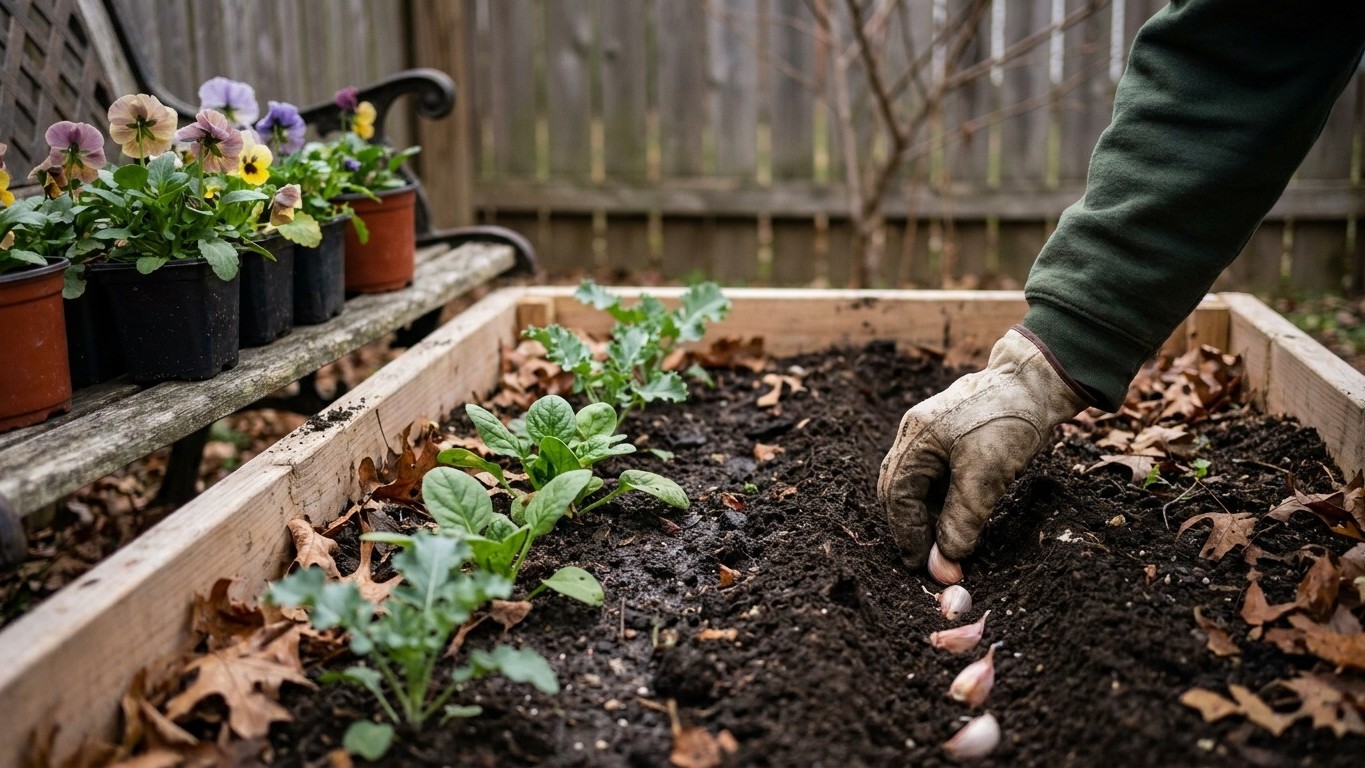
Garlic is the one crop PEI gardeners plant with real confidence in October. Softneck and hardneck varieties both go into the ground as cloves, ideally while soil is still workable and before it locks up hard, ordinarily somewhere in the back half of the month once the worst summer heat has fully left the soil. Shallots follow the same timeline. Both need roughly six to eight weeks of root growth before a deep freeze sets in, which is exactly what an October planting date buys them.
What else still works
Bare-root fruit trees, cane fruit like raspberries, and dormant shrubs can go in while the ground remains diggable, giving roots a head start before winter dormancy. Cold frames and low tunnels extend the season for anything already growing, spinach and mâche especially, by trapping a few extra degrees on frosty nights. For gardeners with a bright windowsill, forcing rhubarb or chicory indoors turns a dormant crown into a late crop with almost no outdoor risk at all. What doesn’t belong on this month’s list: anything that needs a full summer to mature. Peas, beets, and hardy greens sown now simply won’t reach a usable size before the ground freezes.
What to start under cover
Counting backward from October 17 rather than forward from a fixed date is the safer arithmetic here. A cold-frame sowing of spinach, arugula, or mâche needs roughly four to six weeks of root and leaf development before hard cold locks growth down for the winter. Run that math backward from the average frost date and the safe sowing window for these crops falls in the first half of October at the latest, earlier if your garden sits somewhere colder than Charlottetown.
Miss that window in either direction and the results disappoint. Sow too early, before the cold frame is even needed, and tender greens can bolt or overgrow before the protection matters, wasting the head start. Sow too late, once the six-week clock has already run out, and seedlings get caught with too little root mass to survive the first serious freeze, dying just as they’d have started producing. The safest approach is to treat early October as the last realistic sowing date for anything under glass or plastic, and to use the back half of the month for maintenance, venting on mild days and closing tight before a cold snap, rather than for new seed.
Onion sets meant to overwinter under cover follow a similar logic, though PEI’s maritime damp makes this a riskier bet than in drier climates, and few island gardeners rely on it as a main strategy.
What is ready to pick
Potatoes anchor PEI’s October harvest, and for good reason: the province built its farm economy on them. Home gardeners lift the main crop once the tops have died back and before the soil turns cold and wet, since potatoes left in heavy October ground are prone to rot and slug damage. Carrots and beets can stay in the ground longer, both sweetening after a light frost touches the foliage, but should come out before the ground freezes solid and traps them.
Brussels sprouts, kale, and leeks all improve with a frost or two, the cold converting starches to sugars and mellowing bitterness. Winter squash and pumpkins need to come in before a hard freeze damages the skin, then cure in a warm, airy spot for one to two weeks so the rind hardens enough for storage. Apples ripening on the tree should be checked by lifting and giving a gentle twist; if the fruit separates easily from the branch, it’s ready.
Anything already in storage from earlier harvests deserves a check this month too. Squash, onions, and potatoes stored since September should be inspected for soft spots or the sweet smell that signals early rot, and any suspect piece pulled before it spreads to the rest of the bin.
The jobs that matter this month

Harvest timing tops the list, because potatoes and winter squash left out past a hard freeze suffer damage that no amount of careful storage can fix afterward. Once the main harvest is in, cleaning up frost-killed tomato and squash vines matters almost as much: dead plant material left in place over winter gives fungal spores and overwintering pests a head start on the following season.
Protecting what you’re keeping
Dahlia and gladiolus corms need lifting before the ground freezes hard, then a few days of curing indoors before storage in a cool, dry spot. Strawberry beds and newly planted garlic both benefit from a layer of straw mulch, but only once the ground has started to cool, since mulching too early traps warmth and invites rot rather than protecting against cold.
Soil testing is worth doing now rather than waiting for spring, since amendments like lime take months to fully adjust pH and a fall application has all winter to work into the soil. Draining and storing garden hoses and any irrigation lines before a freeze saves replacing cracked fittings later. Tools deserve a clean and a sharpen before they go into winter storage, and it’s also the point in the season to start looking at seed catalogs, since the popular garlic and seed potato varieties sell out earliest, not closer to spring when everyone else is ordering too.
What not to do in October
The most common mistake is trusting a mild afternoon over the calendar. A warm stretch in early October can tempt gardeners into leaving tender crops like squash or beans in the ground a little longer, but the average frost date of October 17 means a cold night can arrive with almost no warning, and the plants have no capacity to recover once hit.
A related error is uncovering cold frames or row covers too readily on a mild day and then forgetting to close them back up before evening. PEI’s maritime climate can swing several degrees within hours once the sun sets, and a cover left open overnight defeats the entire point of having built it.
Fertilizing with nitrogen this late in the season is another classic misstep. Nitrogen pushes soft new growth, and that growth has no time to harden off before frost, which means the plant wastes energy on tissue that dies at the first cold snap instead of storing reserves for winter survival. Perennials, fruit trees, and shrubs are better left unfed from this point until spring. Finally, leaving dahlia and gladiolus corms in the ground past the first hard freeze, hoping for a few more weeks of bloom, is a reliable way to lose the whole planting to rot.
Checking this against your own county
A single frost date for the whole province is a starting point, not an instruction. PEI is small, but its coastal and inland areas don’t warm or cool at the same pace, and low-lying fields trap cold air on clear nights in ways that hillier ground does not. Gardeners west of Charlottetown or along the north shore often see frost arrive on a different schedule than the Charlottetown A station records.
The Prince Edward Island Department of Agriculture publishes regional guidance worth checking against local conditions before committing a full planting to any single date. Find it through the provincial agriculture department.
Common questions
Is it too late to plant garlic in late October in PEI?
Not usually, as long as the ground is still workable enough to dig a trench. Garlic planted right up to the point the soil starts to freeze will still root before winter, though earlier plantings give it a stronger head start.
Should I cover my garlic bed right after planting?
Hold off on a heavy straw mulch until the ground has cooled and had a light frost or two. Mulching while the soil is still warm traps heat and moisture in a way that can encourage rot rather than protect the cloves.
Can I still start a cold frame in mid-October?
It’s a tight window. Greens like spinach or mâche need four to six weeks to establish before hard cold sets in, so a mid-October sowing is pushing the limit unless the frame offers strong insulation.
Why did my potatoes rot in storage after an October harvest?
Potatoes lifted from wet, cold October soil often carry excess moisture into storage. Curing them in a dry, well-ventilated spot for one to two weeks before putting them into long-term storage reduces this risk considerably.
Gardeners who plant by the Moon can check the October 2026 moon planting calendar, a tradition rather than a proven method.
Related guides
- the Prince Edward Island planting calendar
- What to Plant in Prince Edward Island in September
- What to Plant in Prince Edward Island in November
Elsewhere? See what to plant in October in every state and province.