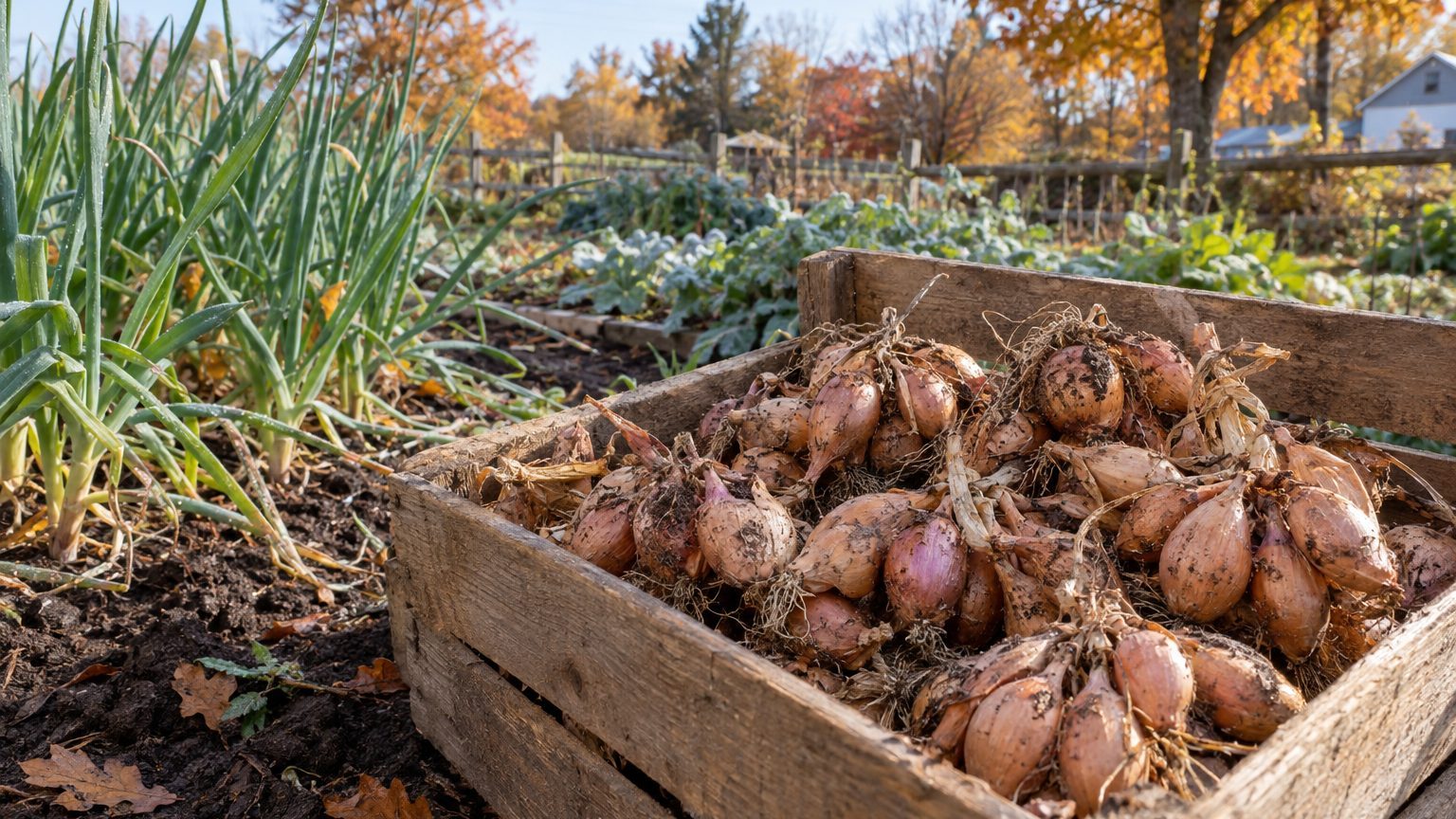

Choose set-grown, multiplying shallots (the small bulbs sold for planting, not seed packets) and plant them as soon as the soil can be worked in spring. That choice fits the roughly 154 days between the average last and first frosts at Charlottetown. Seed-grown types and the slowest-maturing shallots are the ones that struggle. This page has no provincial variety trial results, so it ranks shallots by type, not by named cultivar.
The short answer for Prince Edward Island
The advice rests on one weather station. At Charlottetown A, Environment and Climate Change Canada puts the average last spring frost at May 16 and the average first fall frost at October 17 (1981-2010 normals). Both are midpoints. In one year out of two, the frost falls later than the date shown, so neither is a safe date. Between the two averages lies a window of about 154 days, and it will run shorter in colder districts and in some years.
That window is generous for a bulb crop that does not need warm nights. Shallots tolerate light spring frost, so May 16 is not a hard planting deadline the way it is for tomatoes. What matters is that the crop finishes growing, dries down, and cures before October frost arrives. If you want exact planting dates, When to Plant Shallots in Prince Edward Island works through them. For the wider picture, see Growing Shallots in Prince Edward Island.
Set-grown shallots are the default
Sets skip the slowest stage of the crop, which is the seedling’s first couple of months. Each planted bulb divides into a cluster of several by midsummer. When the tops yellow and fall over, you pull the clusters and cure them. For a gardener working with a window this long, that schedule leaves a comfortable margin before October.
Seed-grown shallots need a head start
Shallots from true seed usually produce single round bulbs instead of clusters. They only make sense here if you start them indoors well ahead of the last frost. This page has no trial data on how any seed-grown type performs on the Island, so treat it as an experiment, not a plan.
| Type | Fit with the Island’s season | Main risk |
|---|---|---|
| Set-grown, planted in spring | Good: finishes well inside the frost-free window | Cold, waterlogged soil at planting |
| Set-grown, planted in fall | Possible with a thick mulch | Winter cold and freeze-thaw heaving |
| Seed-grown, started indoors | Workable with a late-winter start | Extra effort, uncertain yield |
| Seed sown directly outdoors | Poor | Runs out of season before maturity |
The page carries no summer temperature figure for the province, so heat plays no part in this ranking. The choice by type comes from season length and winter cold alone.
What will not work here
Sowing shallot seed directly in the garden in late May is the clearest failure. By the time the soil is comfortable, you have used up part of the 154 days, and a seed-started shallot still has to grow from a seedling to a full bulb. Frost-free stretches that end at an average of October 17, and sometimes earlier, leave no room for that.
A second trap is any shallot whose catalog listing quotes a maturity close to the length of your window. Count days from your planting date, not from May 16. A variety that needs 120 days looks fine on paper, but if it goes in on June 1 and the first frost arrives in early October, the margin is gone. Pick types that mature well before the average fall frost, with weeks to spare for curing.
Fall planting without protection is the third. Charlottetown’s coldest month averages a daily minimum of -12.1 °C. That is an average of the nightly lows, so the real cold snaps go lower. Bare sets planted in October can be pushed out of the soil by repeated freezing and thawing, and sets planted too early send up green tops that winter will burn. If you plant in fall, plant late enough that roots form but leaves do not, then cover the bed with a thick layer of straw or leaves.
Crowding is the quieter failure. Multiplying shallots form clusters, and a cluster squeezed against its neighbor stays damp and cures slowly. The page has no rainfall or humidity figure for the Island, so the spacing advice here is deliberately cautious: leave room, and err on the side of airflow. A wet late summer is exactly when you want dry soil surfaces and open rows.
What changes across Prince Edward Island
The Canadian hardiness zone for the reference city is 5b, from Natural Resources Canada’s 1991-2020 data. It is not a USDA zone and does not convert to one. The Canadian system draws on seven climate variables, the USDA system on one, and NRCan itself says there are no simple conversions between them. That figure describes one city. This page does not have zone values for other Island towns, so there is no single answer for the province.
The frost dates carry the same warning. Charlottetown A is one station, and northern and upland districts run weeks behind it. Someone gardening in a colder pocket should shift three things. Plant sets later in spring, based on when the soil is workable, not on May 16. Lean toward spring planting over fall planting, since colder ground makes winter losses more likely. And expect the first fall frost sooner than October 17, so pick the earlier-maturing types and start curing early.
Do not take your zone from this page. Look up your own municipality on Natural Resources Canada’s Plant Hardiness Site, which lists zones by community. Treat the Charlottetown figures as a reference point to adjust from, not as your garden’s own numbers.
Where to check this for your own county
Prince Edward Island has three counties (Prince, Queens, and Kings), and gardens in each can differ from the Charlottetown station by weeks. The Government of Prince Edward Island’s agriculture pages are the place to start. This page does not know what shallot material is currently posted there, so check rather than assume.
Look for two things. The first is a local planting calendar, ideally one that names your county or at least separates the eastern and western parts of the Island. The second is a list of varieties trialled nearby. A shallot that did well in a trial plot in your county is better evidence than any general ranking, including this one.
A county recommendation beats a provincial one, and this page is the provincial one. It rests on a single weather station and on type-based reasoning, because no verified trial results were available for ranking cultivars. Use it to narrow the choice, then let local sources settle it.
Checking this against your own garden
Your own observations outrank every date here. Three are worth watching, and none needs equipment.
First, feel the soil. Squeeze a handful in early spring. If it crumbles and does not clump into a cold, wet ball, it is ready for sets. If your beds reach that point a week or two after a neighbor’s, you have a slower microclimate, and you should plan accordingly.
Second, note when the first green shoots appear after planting. Compare it across beds: a sunny, sloped bed will show shoots days before a low, shaded one. That gap tells you which bed to use for the slowest-maturing types and which to keep for early ones.
Third, watch where frost settles on a clear autumn morning. White grass in one corner and clear ground in another marks a frost pocket. Keep the cure-down crop out of that corner, or lift it sooner. Write down the date each observation happened, and after a couple of seasons your notes will be a better calendar than the Charlottetown averages.
Common questions
Can I grow shallots from seed on Prince Edward Island?
Only with an indoor start, and with no trial data on this page to back it. Sets are the safer choice for a window of about 154 days between average frosts.
Should I plant shallots in fall or spring?
Spring planting of sets is the lower-risk option, given a coldest-month average daily minimum of -12.1 °C. Fall planting can work with a thick mulch, planted late enough that no leaves emerge before winter.
Is Canadian zone 5b the same as USDA zone 5b?
No. The Canadian system uses seven climate variables and the USDA system one, and NRCan states there are no simple conversions. Zone 5b applies to the reference city, not the whole Island.
Is May 16 a safe date to plant?
It is an average, and in one year out of two the last frost falls later. Shallots tolerate light frost, so it matters less for them than for tender crops. Note too that the frost normals cover 1981-2010, while the hardiness zone uses 1991-2020 data, so the two figures come from different periods.