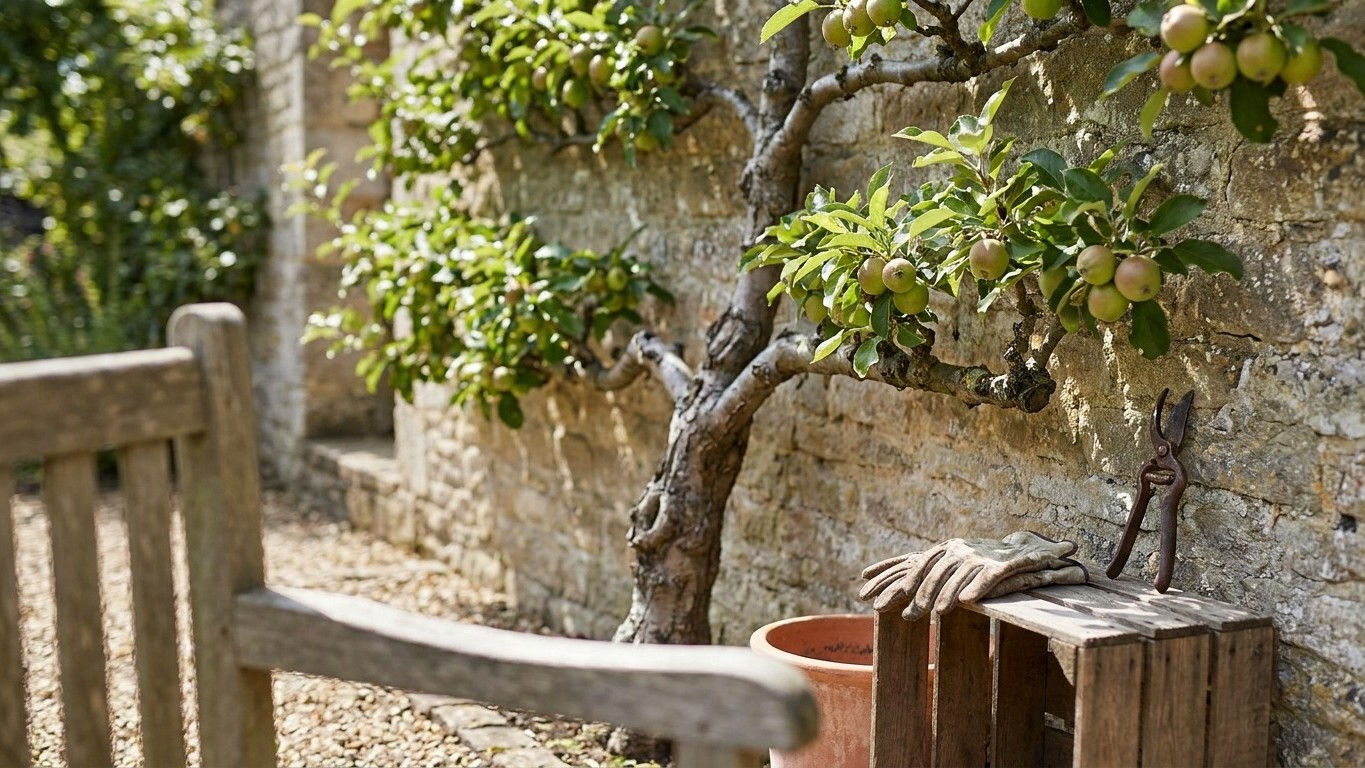

Quebec’s growing season runs from an average last frost on May 6 to an average first frost on October 5, a window of roughly five months that decides both when an apple tree can safely bloom and how long its fruit has to mature before the cold returns. Early varieties come off the tree in August, mid-season types through September, and the latest keepers right up against that October 5 average, sometimes past it.
When apples are ready to pick in Quebec
Nobody in a Quebec orchard picks by flipping a calendar page. They watch the tree, because the same variety can mature a week or two earlier or later depending on how the summer ran. What they’re checking is the stage: background skin color shifting from green to the variety’s true color, seeds turning from white to brown inside a cut fruit, and a fruit that separates from the branch with a gentle twist instead of resisting the pull.
That stage is set in motion by the frost calendar. Bloom follows the last spring frost, which averages May 6 at the Montreal/St-Hubert reference station used by Environment and Climate Change Canada for the 1981-2010 normals. That’s an average, not a guarantee: in roughly half the years on record, frost arrived after that date. A grower who leans on May 6 as a hard deadline for uncovering tender plantings or expecting bloom safety is playing the wrong side of a coin flip.
From bloom, each variety needs its own stretch of warm days to size and sweeten fruit. Early types like Lodi and Yellow Transparent are typically off the tree by mid-August. McIntosh, the variety most associated with Quebec orchards, generally comes in through September. Cortland, Spartan, and Empire follow into late September, and the longest-season varieties push toward early October, right up against the average first fall frost of October 5, again from the same Montreal/St-Hubert normals.
Why the reference station isn’t your orchard
Montreal/St-Hubert sits in a relatively favorable pocket of the province. The Montérégie apple belt, around Rougemont, Mont-Saint-Hilaire, and Frelighsburg, tends to track close to those dates or even slightly milder thanks to the moderating effect of nearby water and gentle relief. Move north toward Quebec City, into Charlevoix, or up toward the Bas-Saint-Laurent, and the frost-free window narrows on both ends, often by two to three weeks total. A late-season variety that ripens comfortably in Rougemont may not fully mature in a colder district before frost cuts the season short. The province’s agriculture ministry, MAPAQ, is the standing reference for regional growing advice, though it does not publish a single province-wide picking calendar, because the range in microclimates makes one unreliable.
Which ones keep, and which must be eaten
Not every apple that ripens in a Quebec orchard is built to sit in storage. Some are bred and grown to be eaten within days of picking; others hold their texture and flavor for months in the right conditions. The distinction matters more here than in milder climates, because a long, cold storage season is often the only way to stretch a short harvest window across an entire winter.
McIntosh, the variety most planted across the province, softens relatively fast and is best used within weeks rather than treated as a long-term keeper. Lobo and Paulared, both early-to-mid season, follow the same pattern: good eating, poor storage. Cortland holds a little longer but still isn’t a cellar apple in the way growers mean the term. On the other end, Spartan, Empire, and Honeycrisp, all widely grown in Quebec orchards, are known for holding firm and flavorful well past the point McIntosh has gone soft, which is why they’re often the varieties recommended for anyone planning to store a home harvest rather than eat it fresh.
| Variety | Typical harvest window | Best use |
|---|---|---|
| Lodi / Yellow Transparent | Mid-August | Eat fresh, cook soon after picking |
| McIntosh | September | Eat fresh, short-term storage |
| Cortland | Late September | Fresh eating, modest storage |
| Empire | Late September to early October | Good storage keeper |
| Spartan | Late September to early October | Good storage keeper |
| Honeycrisp | Late September to early October | Good storage keeper |
None of this is published as a fixed timetable by MAPAQ or any provincial source consulted here, and orchard-to-orchard variation means these windows shift with the season. Treat them as a starting point for scouting fruit, not a substitute for checking seed color and skin firmness before picking.
Storing them through a Quebec winter
The traditional answer here is the cold cellar, or chambre froide, a fixture in older Quebec homes for exactly this reason. Apples want a temperature close to freezing but not below it, along with high humidity so they don’t shrivel. A cellar dug into the ground holds that range naturally through most of the winter, which is why the practice persisted long before refrigeration became universal.
The number that matters most for anyone storing apples in an unheated space is the mean daily minimum of the coldest month, which sits at -14.1°C [6.7°F] at the Montreal reference station used for the 1981-2010 climate normals. That’s not a rare cold snap; it’s the average low across the coldest month. An attached garage, an uninsulated shed, or a porch that isn’t buffered from outside air can easily sit at or below that mark for stretches of the winter, and apples left there will freeze solid, turning mushy and brown once thawed. A basement corner away from exterior walls, a purpose-built root cellar, or a refrigerator set near 32-35°F all avoid that risk in a way an open unheated structure does not.
Practical storage habits
- Keep apples away from potatoes and other produce that release ethylene gas, which speeds ripening and shortens storage life.
- Store fruit in perforated plastic bags or slatted crates rather than sealed containers, to manage humidity without trapping condensation.
- Check stored apples every few weeks. The old warning about one bad apple spoiling the barrel is not folklore, a single rotting fruit releases ethylene and can accelerate spoilage in everything around it.
- Separate short-keeping varieties like McIntosh from long keepers like Empire or Spartan, and work through the short keepers first.
What goes wrong here
The most common mistake is picking on impatience rather than on the fruit’s own signals. An apple pulled too early is starchy, doesn’t sweeten further off the tree, and won’t store as well as one left to finish properly. Waiting an extra week rarely costs anything and usually improves both flavor and keeping quality.
The second mistake is treating the average frost dates as fixed deadlines. Because May 6 and October 5 are averages drawn from three decades of data, actual frost in any single year lands earlier or later about half the time. A grower who assumes the season is safely over by early October, or safely started by early May, is working from the midpoint of a range, not a guaranteed date.
The third mistake is storage-related: using a space that seems cool enough by feel but isn’t monitored with a thermometer. Given that the coldest month’s average daily low sits at -14.1°C, a cold snap can push an unheated structure well past the point where fruit freezes, and by the time the damage is visible, the harvest is already lost.
The fourth is ignoring regional differences within the province itself. Advice tuned to the Montérégie apple belt doesn’t automatically carry to Charlevoix, the Gaspésie, or the upper Bas-Saint-Laurent, where both the frost-free window and the coldest-month averages run harsher. A picking date or storage plan that works reliably an hour from Montreal can fail further north or at higher elevation, simply because the underlying climate numbers are different.
Common questions
Can I pick apples before the first fall frost hits?
Yes, and for most varieties you should. Ripeness is judged by seed color, background skin color, and how easily the fruit separates from the branch, not by frost timing. Some late varieties do benefit from a light frost for flavor, but a hard freeze damages fruit still on the tree.
Is McIntosh a good storage apple?
Not really. It’s the province’s signature variety for fresh eating and short-term use, but it softens faster than Empire, Spartan, or Honeycrisp, which are the better choices if the goal is stretching a harvest through winter.
Does a garage work for winter apple storage in Quebec?
Only if it stays reliably above freezing. Given that the coldest month’s average daily low is -14.1°C at the Montreal reference station, an unheated or poorly insulated garage can easily dip below the point where apples freeze and turn mealy once thawed.
Why do frost dates matter if I’m only picking, not planting?
Because the length of the frost-free window, from the May 6 average last frost to the October 5 average first frost, sets how much time a variety has to mature. Late-season apples pushed to their limit in a shorter district may not fully ripen before frost cuts the season off.