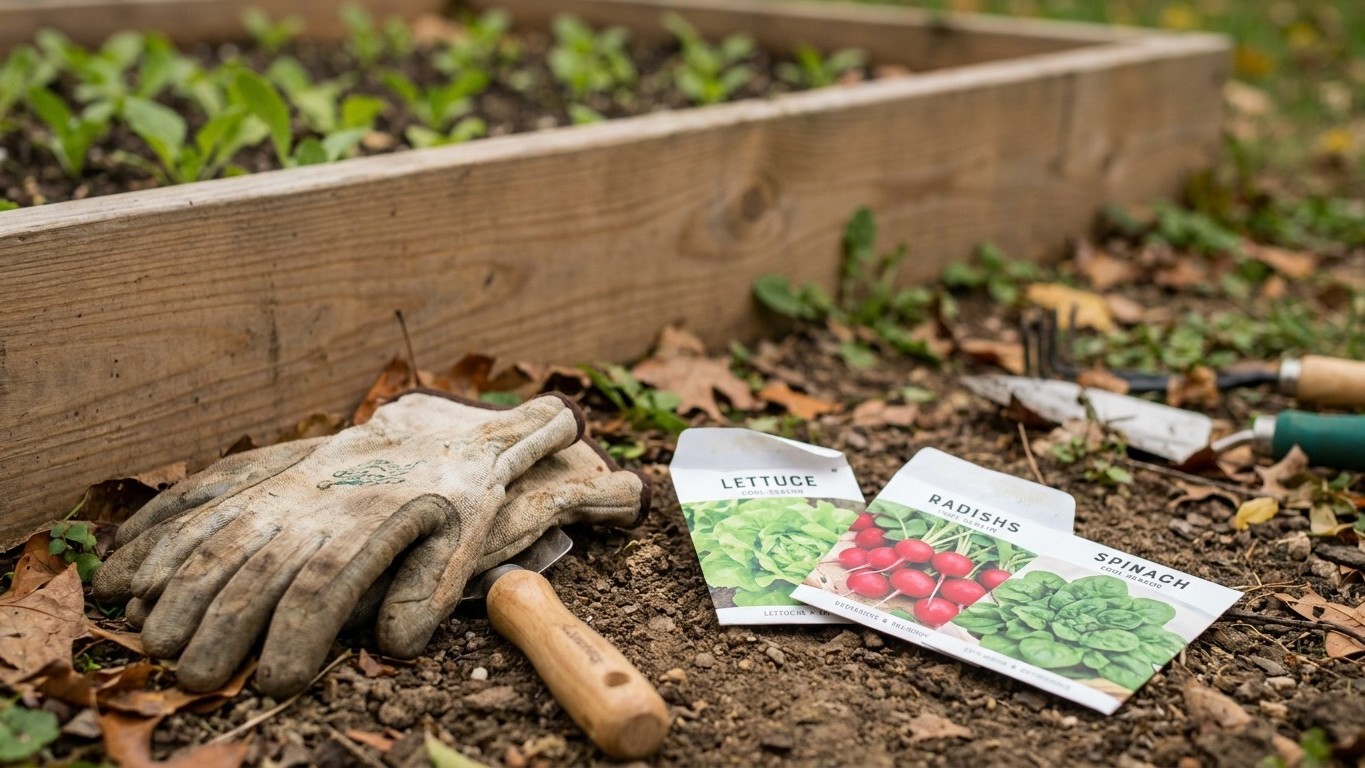

September is Quebec’s last real planting window before the ground hardens, and the calendar math is tight: with the average first fall frost landing October 5 around Montreal, gardeners have roughly four to five weeks to get quick crops established or garlic beds ready. Direct-sow cold-hardy greens now, plant garlic before the soil turns cold and heavy, and start pulling in whatever won’t survive a hard freeze.
What goes in the ground in September

The deciding factor here isn’t the date on the wall, it’s how many frost-free (or near-frost-free) days remain and how cold-tolerant the crop is once frost does arrive. Environment and Climate Change Canada puts the average first fall frost at October 5 for the Montreal/St-Hubert station, based on 1981-2010 normals. That’s a mean, not a promise: in roughly half the years on record, frost arrives later than that date, and in the other half, it arrives sooner. Treat it as the middle of a window, not a safe deadline, especially if your garden sits in a low spot or a valley where cold air pools first.
Given that math, anything you sow outdoors in September needs to either mature fast or shrug off a light frost. Spinach, mâche (corn salad), arugula, radishes, and baby Asian greens all fit the bill, most reach a pickable size in three to six weeks and actually taste better after a cool snap. Garlic and shallots are the signature September planting in this province: cloves go into loosened, well-drained soil later in the month so roots establish before the ground freezes solid, setting up next summer’s harvest. Beans, squash, and anything else that dies at the first touch of frost are a gamble not worth taking this late.
| Crop | Days to maturity | Frost tolerance | Verdict |
|---|---|---|---|
| Spinach, mâche, arugula | 25-40 days | Handles light frost | Safe |
| Radishes | 25-35 days | Handles light frost | Safe |
| Garlic, shallots | Planted now, harvested next summer | Overwinters dormant underground | Safe |
| Bush beans | 50-60 days | Killed by first frost | Gamble |
| Summer squash | 45-55 days | Killed by first frost | Gamble |
What to start under cover
Counting backward from that average October 5 frost date is more useful than counting forward from today. A cold frame or low tunnel typically buys three to five extra weeks of growing conditions once outdoor temperatures drop below freezing, so seed sown under cover in early or mid-September can still size up into November even after the open garden has shut down. Hardy lettuce, spinach, and mâche are the usual candidates, sown thickly in a frame or tunnel to be cut as baby greens through late fall.
The two ways this goes wrong are predictable. Sow too early, while September days are still warm, and fast-growing greens bolt or turn leggy before the cold that would normally slow them down actually arrives. Sow too late, past the third week of the month, and there isn’t enough daylight or warmth left for seedlings to put on real size before growth stalls, since day length in Quebec drops fast heading into fall. The workable middle is early-to-mid September for anything you want cutting from by mid-to-late fall, with a second, smaller sowing about two weeks later as insurance if the first germinates unevenly.
This is also a reasonable month to start herbs indoors on a sunny windowsill, parsley and chives in particular transplant indoors reasonably well and keep a kitchen supply going once the outdoor plants get cut down by frost.
What is ready to pick
September carries the heaviest harvest load of the year in most Quebec gardens. Tomatoes, peppers, and summer squash are still coming in from crops planted back in spring, while winter squash, pumpkins, main-crop potatoes, onions, and storage cabbage reach their finish line this month. The tell for winter squash is the stem: it should be hard and corky, and a thumbnail pressed into the skin shouldn’t leave a mark. Potatoes are ready to lift once the foliage yellows and dies back on its own, not before. Onions are done when the tops flop over and start to dry.
Apples ripen on their own schedule depending on variety, and the safest test is simple: lift and twist gently, if the fruit separates from the branch with a light tug, it’s ready. Main-crop carrots and beets can stay in the ground a while longer for storage, since cool soil actually improves their flavor, but anything still tender and leafy, lettuce, basil, late beans, should come in before the first real cold snap rather than risk a frost that arrives earlier than the October average suggests.
Curing matters as much as picking. Winter squash and onions both need one to two weeks in a warm, dry, airy spot before they go into storage, skipping that step is the most common reason stored crops rot early.
The jobs that matter this month

Cover cropping is the job most home gardeners skip in September and regret by spring. Sowing winter rye or crimson clover on any bed that’s finished producing protects bare soil from winter erosion and adds organic matter back in, and it needs to go in while there’s still enough warm soil left for germination, waiting until October is often too late for reliable establishment.
Garlic bed preparation belongs here too: working compost into the planting area now, before cloves go in later in the month, gives roots richer soil to grow into before dormancy sets in. Alongside that, this is the window to pull spent tomato and squash vines, and any diseased foliage in particular should go in the trash rather than the compost pile, since backyard compost rarely gets hot enough to kill off blight spores.
Cold nights start showing up by mid-to-late September even though the average frost is still weeks off, and a stack of old bedsheets or floating row cover kept by the back door lets you protect tender crops on the nights a frost warning does show up early. Dividing overgrown perennials and transplanting shrubs also works well now, since the soil is still warm enough for root establishment but the heat stress of summer has passed.
Seed saving rounds out the list: beans, tomatoes, and squash left to fully ripen on the vine give viable seed for next year at no cost, and it’s worth setting aside a few of the best fruits specifically for that rather than eating everything that comes in.
What not to do in September
The most common mistake is trusting a warm afternoon over the calendar. Air temperature in the mid-70s in the daytime says nothing about what happens overnight in a low-lying garden, and frost pockets can drop ten degrees colder than a forecast for the general area. Gardeners who pull row covers off during a mild stretch, thinking the risk has passed, often lose tender crops to a clear, still night a few days later.
Feeding nitrogen to trees, shrubs, or perennials this month is another common error. Nitrogen pushes soft new growth, and that new growth hasn’t had time to harden off before the cold arrives, making the whole plant more vulnerable to winter dieback than if it had been left alone. If soil needs amending, compost is the safer choice this late in the season.
Pruning fruit trees now falls into the same trap: it’s not the dormant pruning that matters here (that’s a late-winter job), and any cuts made now can stimulate new growth right before the plant needs to be shutting down for the season. Finally, don’t rush winter squash and onions into storage straight from the garden without curing them first, and don’t let stored crops from earlier in the season sit unchecked, a soft potato or a sprouting onion left in with the rest of the batch spreads rot fast.
Checking this against your own county
A single frost date for the province is a starting point, not an instruction. Quebec spans a huge range of microclimates: the Eastern Townships sit at higher elevation and run colder than the Montreal plain, the Gaspé Peninsula and areas along the St. Lawrence north shore see frost weeks earlier than the south shore, and urban gardens in Montreal itself often stay a degree or two warmer than open farmland nearby thanks to the heat island effect. The hardiness zone figure of 5b (Canadian system) cited here applies to the Montreal reference station, not to the whole province, and it isn’t comparable to a USDA zone number at all, since the two systems are built on different climate variables entirely.
For a planting calendar built around local conditions, check Quebec’s ministry of agriculture (MAPAQ), which tracks regional advisories and frost risk specific to different parts of the province.
Common questions
Is it too late to plant garlic in September in Quebec?
No, September through October is the standard window for garlic planting in Quebec, giving cloves enough time to root before the ground freezes without pushing top growth that would be damaged by winter cold.
Can I still start a vegetable garden in September in Quebec?
Only with fast, cold-hardy crops. Spinach, radishes, arugula, and mâche can still mature before the average October 5 frost, but anything needing 50 or more frost-free days is a poor bet this late.
When should I bring in tender crops before frost?
Since October 5 is only an average and frost can arrive earlier in a given year, keep row cover on hand from mid-September onward and check overnight forecasts rather than waiting for a fixed date.
Should I fertilize my garden in September?
Avoid nitrogen on trees, shrubs, and perennials this month, since it encourages soft new growth that won’t harden off before winter. Compost worked into vegetable beds or garlic rows is the safer choice.
Gardeners who plant by the Moon can check the September 2027 moon planting calendar, a tradition rather than a proven method.