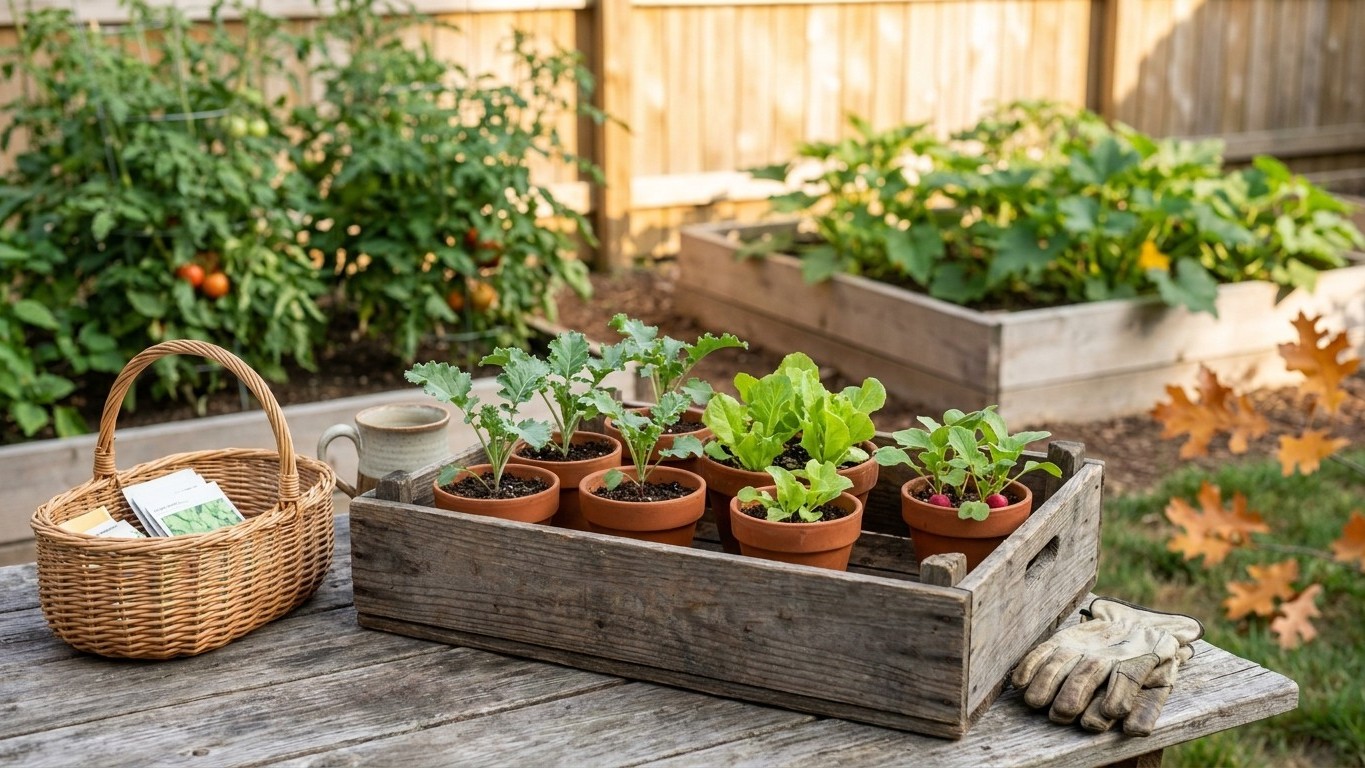

Quick answer: this is a sowing month, not a planting-season kickoff. Quebec gardeners can still put quick, cold-tolerant crops straight into the ground, from lettuce and spinach to radishes and fall peas, while everything started back in spring keeps ripening on the vine. Whether a given seed packet still works depends on simple math: how many days that crop needs to mature, weighed against how many days remain before the average first fall frost.
What goes in the ground in August

That math starts with one number: October 5, the average date of the first fall frost recorded at the MONTREAL/ST-HUBERT A station. It is a mean, not a guarantee, so in roughly half of all years frost arrives later than that, and in the other half it can arrive earlier. Treat it as the middle of a window, not a deadline carved in stone. From the start of August to that date is about 65 days; from the end of August, closer to 35. That shrinking gap is what decides everything you sow this month, far more than how warm the air feels.
Fast, cool-tolerant crops still fit comfortably. Radishes, at 25 to 30 days, can go in almost any week of August. Arugula, mesclun mixes and baby lettuce, needing 30 to 40 days, work through most of the month. Spinach, at 40 to 45 days, actually often germinates better later in August once soil temperatures start easing off summer highs. Turnips and beets need a bit more lead time, and quick fall peas are the tightest call of the bunch, since even fast varieties want 55 to 65 days and a stretch of cool nights to finish sweet.
| Crop | Approx. days to maturity | Latest safe sowing, working back from Oct. 5 |
|---|---|---|
| Radishes | 25-30 | Through most of August |
| Arugula, mesclun, baby lettuce | 30-40 | By the third week of August |
| Spinach | 40-45 | By mid-August |
| Turnips | 40-55 | By the first half of August |
| Beets, full-size roots | 50-60 | By the first week of August |
| Quick fall peas | 55-65 | Only in the very first days of August |
Kale, collards and hardy Asian greens like bok choy deserve a mention of their own, since they tolerate a light frost and often taste better after one. Sow them any time in August and they will still be producing after most other crops have quit. Garlic and shallots are a different story: they go into Quebec beds later in the fall, once summer crops have cleared out, so hold that seed stock rather than planting it now.
What to start under cover
Starting seeds under cover in August is less about protecting from cold and more about dodging heat. Soil temperature in an open bed in early August can be too warm for spinach or lettuce to germinate reliably, so many Quebec gardeners start these in flats in a shaded spot or a cold frame with the lid propped open, then move the seedlings out once they have a couple of true leaves and the worst of the heat has passed.
Count backward from that October 5 mean frost the same way you would for direct sowing, but add the week or two a transplant needs to recover from shock before it starts growing again. A lettuce transplant that needs 50 days in the ground, plus a week to settle in, has to be moved out by roughly the second week of September to have any real shot at maturing before frost, which pushes its seed-starting date to the middle of this month.
The two ways this goes wrong are mirror images of each other. Start too early under cover and the seedlings sit too long in a small tray, turn rootbound and leggy, and never really recover once transplanted. Start too late and the plant is still small when the season runs out, leaving you with baby greens instead of the harvest you planned for. Splitting a sowing into two batches roughly ten days apart hedges against both mistakes and gives a longer harvest window besides.
What is ready to pick
August is when the spring’s work pays off. Tomatoes, peppers, cucumbers, summer squash and beans are all coming in steadily, and sweet corn planted in late spring is usually filling out its ears. Early potato varieties can be dug once the plants start to yellow, and raspberry canes that fruit twice a season often push out a second flush now.
Garlic and shallots planted the previous fall are typically pulled in late summer, and the signal is in the leaves: once the lower third to half of the leaves have browned and dried while the top stays green, it is time to lift the bulbs rather than leave them chasing a bit more size, since garlic left too long in the ground tends to split open and store poorly. Onions send a similar signal when their tops flop over on their own.
Check curing garlic, shallots and any early onions for soft spots or mold as they dry in a shaded, airy spot, since one bad bulb in a bunch can spread rot to its neighbors. If you kept overwintered stored crops from a previous season, this is also a good month to give the root cellar or storage shelf a once-over, pulling anything that has started to soften before it takes down the rest of the batch.
The jobs that matter this month

Water is the job that most often slips in August, and it is the one that costs the most if it does. Established vegetable beds generally want the equivalent of an inch to an inch and a half of water a week, delivered in one or two deep soakings rather than a daily sprinkle, and morning watering keeps foliage drier overnight, which matters in Quebec’s humid summers where fungal disease spreads fast on wet leaves.
Staking and tying should already be done by now for tomatoes and vining crops, but August is the last real chance to catch anything that has started sprawling before it tangles into its neighbors or snaps under its own weight. Mulch that has thinned out over the season is worth topping up too, both to hold moisture and to keep weeds from competing with crops in their final stretch of growth.
Pest scouting pays off directly in yield this month. Squash vine borer damage shows up as sudden wilting in otherwise healthy squash plants, Colorado potato beetle larvae strip potato foliage fast enough to matter within days, and tomato hornworms can defoliate a plant almost overnight if left unchecked. A five-minute walk through the beds every couple of days catches these problems while hand-picking or targeted treatment still works, rather than after the damage is done.
Succession sowing ties all of this together. As radishes, early lettuce and the first round of beans finish and get pulled, that freed-up soil is exactly where this month’s quick greens and roots should go, so clearing spent plants promptly is itself a job worth doing on schedule rather than letting a bed sit empty and pull double duty as a weed patch.
What not to do in August
The most common mistake is treating warm air as permission to plant warm-season crops. Corn, tomatoes and peppers sown now will not mature before the average frost window closes in early October, and since that date is a mean rather than a promise, an early frost can cut the season shorter still. If a warm-season crop is not already fruiting by August, starting a fresh round of it is a loss, not a gamble worth taking.
Cutting back on watering because a hot spell “felt like enough rain” is another quiet failure. August heat pulls moisture out of soil fast, and beans, cucumbers and squash in particular will stop setting fruit under drought stress even if the plants themselves look fine.
Heavy nitrogen feeding late in the season is worth avoiding too. It pushes tomatoes, peppers and squash toward more leafy growth right when they should be putting energy into ripening fruit, and it can leave plants softer and less able to handle the first cool nights of fall. A lower-nitrogen feed, or none at all past midsummer, generally serves fruiting crops better from here on.
Leaving mature garlic, onions or potatoes in the ground past their signal point is the last classic misstep. Waiting for “just a bit more size” usually ends with split bulbs, sunscald or rot setting in before the harvest even makes it to storage.
Checking this against your own county
A single frost date for the whole province is a starting point, not an instruction. Quebec stretches from the Montérégie’s relatively mild river valleys to the highlands of the Gaspésie and the Saguenay–Lac-Saint-Jean region, and elevation, proximity to the St. Lawrence and local lake effects can shift both the last spring frost and the first fall frost by two or three weeks in either direction. A garden at higher elevation or further from the river should plan on a shorter season than these figures suggest.
For local planting calendars and crop-specific guidance tuned to your region, Quebec’s Ministère de l’Agriculture, des Pêcheries et de l’Alimentation (MAPAQ) is the reference worth checking before finalizing an August sowing plan.
Common questions
Can I still plant tomatoes in Quebec in August?
No. Tomatoes need far more than the roughly 35 to 65 days left before the average October 5 frost, so a new planting now would not have time to fruit before the season closes.
What vegetables can I plant in Quebec in August for a fall harvest?
Radishes, arugula, baby lettuce, spinach, turnips and, in the very first days of the month, quick fall peas all still fit within the remaining frost-free window, along with frost-tolerant greens like kale and bok choy.
When should I harvest garlic in Quebec?
Watch the leaves rather than the calendar: once the lower third to half have browned while the upper leaves stay green, the bulbs are ready to lift and cure.
Is it too late to plant peas in August in Quebec?
Only barely. Quick-maturing varieties sown in the very first days of the month can still finish before the average frost window closes, but waiting past that narrows the odds considerably.
Gardeners who plant by the Moon can check the August 2027 moon planting calendar, a tradition rather than a proven method.