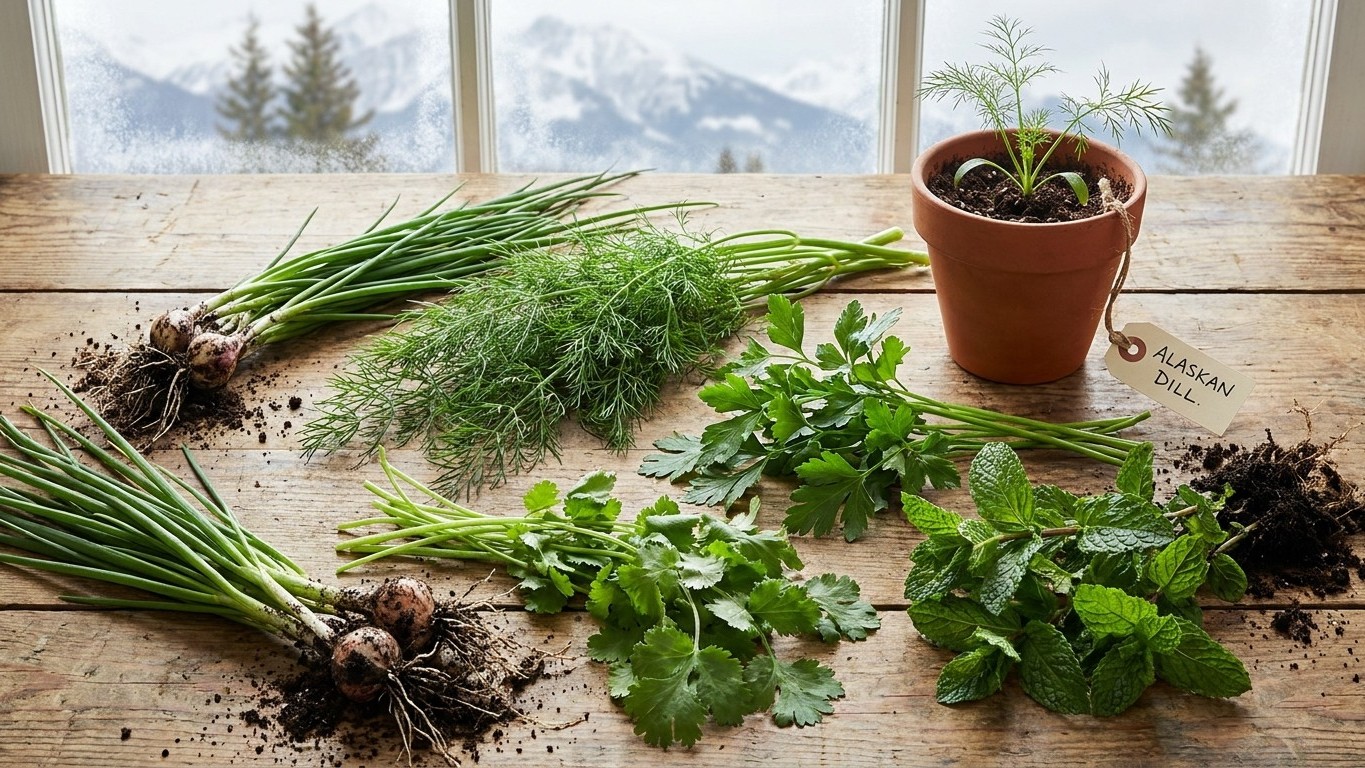

For Rhode Island’s zone 6a-7b climate, the strongest choices are hardy perennials like thyme, sage, chives, and oregano, plus heat-loving annuals such as basil and dill. Rosemary and bay laurel survive here only as container plants brought indoors for winter, since the state’s coldest month averages a minimum of 22.1°F, well below what those Mediterranean natives tolerate outdoors.
The short answer for Rhode Island
Sort herbs by type and the picture gets clearer. The frost-free window here runs roughly from mid-April (last spring frost falls between April 7 and April 17) to late October (first fall frost falls between October 24 and November 3), which gives most gardens somewhere between 190 and 210 growing days. That’s enough time to run a full basil crop, several dill sowings, and a complete cilantro-to-seed cycle without rushing.
Heat-loving annuals like basil, dill, and summer savory do well once soil has warmed past mid-May. They finish their life cycle comfortably inside the frost-free window and don’t need a head start indoors unless you want an early harvest.
Hardy perennials are where Rhode Island genuinely shines. Thyme, sage, oregano, chives, and winter savory are all rated hardy well into USDA zone 5 or lower, so the state’s zone 6a-7b range is comfortably within their tolerance. Once established, these come back year after year with minimal fuss, and they’re the closest thing to a low-maintenance herb bed you’ll find in New England.
Tender perennials treated as annuals are the trap. Rosemary, bay laurel, and lemon verbena are perennial only in climates where winter lows stay well above freezing. Rhode Island’s coldest-month average minimum of 22.1°F puts them at serious risk outdoors, so the realistic move is growing them in pots and overwintering indoors on a bright windowsill or in a cool basement.
Cool-season herbs like parsley, cilantro, and chervil prefer the shoulder seasons. They germinate and grow best in the cooler weeks right after the spring frost date and again as the fall frost approaches, since Rhode Island summers get warm enough to push cilantro and chervil into early bolting.
Given that spread, the herbs with the fewest compromises for a typical Rhode Island yard are thyme, sage, chives, oregano, and basil, one solid perennial backbone paired with a reliable summer annual.
What will not work here

Rosemary left in the ground through a Rhode Island winter is the single most common failure gardeners report, and the coldest-month figure explains why. A mean daily minimum of 22.1°F in the coldest month isn’t a rare cold snap, it’s the average, meaning most winters will push well below rosemary’s comfort zone on a regular basis, not just once. The same logic applies to bay laurel and to true French lavender varieties that aren’t bred for cold tolerance; treat all three as container plants that come inside, not as permanent border residents.
Humidity, not drought, is the bigger enemy for the herbs people do plant correctly. Rhode Island summers carry enough moisture off Narragansett Bay and the Atlantic that basil and oregano planted at tight spacing are prone to downy mildew and powdery mildew by midsummer. The fix isn’t watering less, it’s spacing wider than the seed packet suggests and making sure air can move between plants. A basil row packed at 6-inch spacing in a humid August is a classic setup for fungal trouble here.
Direct-seeding tender herbs too early is the other predictable mistake. Because the last spring frost can land anywhere from April 7 to April 17 depending on the year, and suburban and rural gardens away from the reference weather station often see frost linger a week or two longer than that, basil and dill seed sown directly into cold soil in early April will either rot or sit dormant for weeks. Starting basil indoors in April and transplanting after the soil has genuinely warmed avoids the problem entirely.
Slow-maturing perennial herbs grown from seed, rather than nursery starts, also struggle to establish here in a single season. French tarragon and true lavender can take most of a growing season just to build root mass, and a Rhode Island gardener starting these from seed in late spring often finds them undersized heading into a winter they’re not yet ready to survive. Buying an established plant instead of seed for these two specifically sidesteps that timing problem.
What changes across Rhode Island
Rhode Island is small, but it isn’t climatically uniform. The state spans USDA hardiness zones 6a through 7b, a real difference in winter severity packed into a state you can drive across in under two hours. That spread means there’s no single, correct answer to “will this herb survive winter here,” only a range depending on where in the state a garden sits.
Coastal areas and islands, warmed by the moderating effect of Narragansett Bay and the open Atlantic, tend to sit toward the milder end of that range. Interior and northern parts of the state, further from the water’s buffering effect, run colder and align more with the harsher end. A perennial herb that limps through winter in a sheltered coastal yard may not survive at all fifteen or twenty miles inland.
What that means practically: a gardener anywhere in Rhode Island should treat rosemary and bay laurel as needing winter protection or indoor overwintering everywhere in the state, since even the milder coastal pockets don’t reliably clear the bar those plants need. But for herbs sitting closer to the hardiness edge, like some lavender cultivars or less cold-tolerant sage varieties, the difference between the state’s mild and cold ends can be the difference between a plant that returns every spring and one that doesn’t.
The USDA’s Plant Hardiness Zone Map lets you check your zone by ZIP code, and that single lookup will tell you more about your own winter risk than any statewide average can.
Where to check this for your own county
Everything above describes Rhode Island as a whole, built from the state’s climate normals and its full hardiness zone range. Your county is not the state, and a county-specific recommendation will always beat a state-level one built from averaged, wider data.
The University of Rhode Island Cooperative Extension is the resource built to close that gap. It’s the state’s land-grant extension service, and its role is translating state and regional data down to what actually performs in Rhode Island’s specific soils, coastal exposures, and microclimates.
Two things are worth looking for specifically once you’re there. First, a local planting calendar, which will reflect actual frost patterns and growing conditions reported from within Rhode Island rather than a single reference-station average. Second, any lists of herb varieties the extension service or its master gardener program has trialled in-state, since a variety that performs well in a research plot in Kingston, Rhode Island tells you more than a generic national seed catalog description ever will.
If your county has its own extension office or master gardener chapter, that’s an even tighter filter than the statewide service, since it strips away variation from parts of Rhode Island that don’t resemble your own. The extension service’s job is to get you from that starting point to something calibrated for your own soil and yard.
Checking this against your own garden
Every date here comes from an airport weather station average, and your own garden will disagree with it in small, meaningful ways. Three direct observations will tell you more about your specific microclimate than any calendar.
Soil warmth by feel is the first and most reliable one. Push a finger a couple of inches into your bed in spring; if it still feels cold and slightly clammy rather than mild, basil and dill seed sown there will sit and sulk regardless of what the calendar says. Wait until the soil itself feels warmed through, not just the air.
The second is watching your hardy perennials wake up. Thyme, chives, and sage pushing visible new green growth is a dependable, plant-confirmed signal that your particular yard has crossed into active growing conditions, often more reliable than a fixed date because it reflects your actual soil and sun exposure that year.
The third is the first true leaves on any seedlings you’ve started indoors. The first small round leaves that emerge from a seed aren’t the plant’s real leaves; the next set, which look like a miniature version of the mature plant, are. That’s your signal the seedling is ready to be hardened off and moved outside, and it will vary from year to year even in the same garden depending on light and warmth indoors.