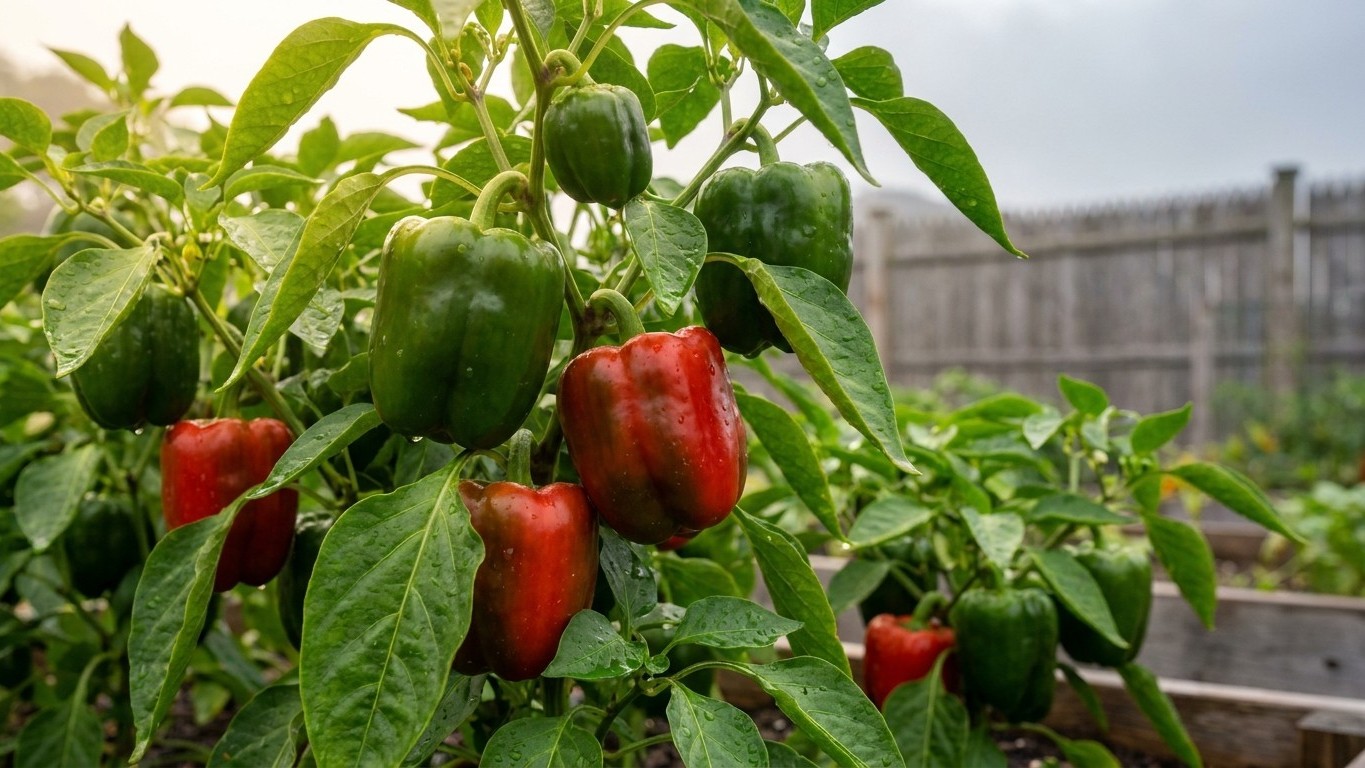

Rhode Island’s coastal climate keeps most summers on the mild side, which actually works in a pepper’s favor. The reference station near Providence logs just 9.4 days a year at or above 90 F, so scorching afternoons that cause blossom drop are the exception, not the rule. The bigger risk here is the cool end: nights that dip below 55 F, especially near the coast or on cool spring evenings before the soil has fully warmed.
The short answer

Start with the number: 9.4 days a year at 90 F or hotter, based on NOAA NCEI Climate Normals for the 1991-2020 period at the reference station in Providence. That’s a low heat load compared to a lot of the country, and it matters directly for pepper fruit set. Pepper flowers stop setting fruit when daytime highs push past 90 F for a stretch, because the pollen becomes less viable and the plant redirects energy toward survival instead of reproduction. With fewer than ten days a year crossing that line on average, a Rhode Island garden isn’t likely to lose a whole flush of blossoms to heat the way a garden in a hotter zone might. That’s the good news, and it’s worth sitting with for a second before moving to the other half of the story.
Fruit set fails at both ends, not just the hot one. Nights below 55 F cause the same kind of blossom drop as extreme heat, because pepper plants need warm nights to keep pollen and flower development on track. This is where the picture gets less certain for Rhode Island gardeners, because this site tracks days above 90 F for the state but does not carry summer night minima. There’s no published figure here for how many nights in a typical Rhode Island summer drop under 55 F, and giving one would mean guessing.
That gap matters more than it might seem. A coastal garden in Washington County can run several degrees cooler on a July night than an inland yard in Providence County, and neither number would be safe to assume from the other. Elevation, distance from the water and even how a yard sits relative to tree cover or pavement all shift nighttime lows in ways that a statewide average can’t capture. Rhode Island is small, but it isn’t climatically flat. If your peppers are setting fruit slowly through midsummer despite mild days, cool nights are the first thing to check, not heat — see Why Peppers Fail to Set Fruit in Rhode Island for a closer look at this issue.
The practical move is to track your own overnight lows for a week or two during peak flowering, using a simple min-max thermometer in the spot where the peppers actually grow. This matters just as much at planting time, since cool spring nights before the soil has warmed can set transplants back before they even get established — see When to Start Pepper Seed in Rhode Island for guidance on timing. If those nights are consistently under 55 F, that’s likely doing more damage to fruit set than anything happening during the day. Waiting a few extra weeks to transplant, until nights have settled into the upper 50s or warmer, often does more for yield than any amount of daytime coddling, and choosing among the Pepper Varieties That Ripen in a Rhode Island Season can help stack the odds further in your favor daytime shade or watering adjustment.
When to start seed here
Working backward from the garden to the seed tray is the most reliable way to time pepper starts, because it forces you to use your own frost data rather than a generic calendar date. Here’s how the arithmetic works, step by step, using Rhode Island’s reference figures as the starting point.
- Start with the last spring frost window. At the Providence-area reference station, the 30-70% probability band for a 32 F freeze runs from April 7 to April 17, according to NOAA NCEI’s 1991-2020 Climate Normals. That’s the airport-station figure, not a guarantee for every yard in the state.
- Adjust for where you actually garden. Suburban and rural sites typically see their last frost later than the airport station, often by one to two weeks, and more if the garden sits at elevation or in a low-lying frost pocket. A garden in a valley in western Rhode Island could be pushing into late April or even early May before frost risk clears.
- Add the soil temperature requirement. Pepper transplants shouldn’t go into the ground until the soil itself reaches 60 F, per Utah State University Extension guidance on growing peppers. Soil often lags several days to two weeks behind the last frost date, depending on how much sun the bed gets and whether it’s mulched or bare.
- Combine those two checkpoints. If your local last frost lands around late April and your soil needs another one to two weeks to hit 60 F, a realistic transplant date for many Rhode Island gardens falls somewhere in the first half of May, though this varies by county and by how the season is running.
- Count back 8 to 10 weeks for indoor seed starting. Utah State’s guidance calls for starting pepper seed indoors 8 to 10 weeks before that transplant date. Working from a mid-May transplant target, that puts indoor seed starting somewhere in early to mid-March.
The point of doing the math this way, rather than picking a fixed date off a calendar, is that it travels with you. Move to a different part of the state, or even a different microclimate within the same town, and the frost window shifts. Redo the count each year using your own observed frost dates and a soil thermometer, and the schedule stays accurate no matter where in Rhode Island you’re gardening.
What goes wrong here
- Blossom drop from a hot spell. Even with only 9.4 days a year averaging 90 F or hotter in the reference data, those days do happen, usually clustered in July or August. When a heat spell hits during flowering, blossoms can drop without setting fruit. The remedy is timing plantings so peak flowering doesn’t land squarely inside the hottest week of the year where possible, and providing afternoon shade cloth during an active heat spell to keep flower temperatures from climbing as high as the air around them.
- Blossom drop from a cool night. Since this site doesn’t carry night minima for Rhode Island, the only way to catch this is watching your own thermometer. If flowers are forming but not setting fruit and daytime temperatures look normal, check overnight lows in the garden itself. Nights under 55 F during flowering are the likely cause, and the remedy is patience: wait for a warmer stretch, or delay transplanting further into the season next year if this happens repeatedly.
- Sunscald where the sun is strong. Rhode Island’s coastal light can be intense in midsummer, and pepper fruit exposed directly to afternoon sun after a plant loses leaf cover (from pruning, wind damage or disease) can develop pale, sunken patches on the fruit’s shoulder. The remedy is keeping the plant’s natural leaf canopy intact rather than pruning heavily, and using light shade cloth over exposed fruit during the hottest weeks.
- Blossom-end rot. This shows up as a dark, leathery patch on the bottom of the fruit and traces back to inconsistent watering rather than a soil calcium shortage in most home gardens. Rhode Island’s sandy coastal soils in particular can dry out and rewet unevenly. The remedy is a steady watering schedule, roughly an inch a week including rainfall, with mulch to even out soil moisture between waterings.
Checking this against your own county
Everything above comes from a single reference station and statewide averages, which is a reasonable starting point but not a substitute for what’s happening in your specific yard. Rhode Island is geographically small, but coastal Washington County, urban Providence County and the hillier parts of the state near the Connecticut border can run noticeably different frost timing and summer night temperatures from one another.
The University of Rhode Island Cooperative Extension tracks local growing conditions, soil testing and pest pressure specific to Rhode Island counties, and its staff can speak to microclimate differences that a statewide dataset can’t capture. Their office is reachable through web.uri.edu/coopext. Before locking in a planting schedule based on the figures here, a quick check with your county’s extension office, or a look at their published local frost and soil data, is worth the ten minutes it takes.
Common questions
Can I grow peppers on the Rhode Island coast versus inland?
Both are workable, but coastal gardens tend to run cooler at night due to ocean influence, which can push flowering into the range where fruit set struggles if nights fall under 55 F. Inland gardens may see warmer nights but also a wider swing between day and night temperatures. Neither pattern is published in a single figure here, so tracking your own overnight lows during flowering is the reliable way to know which risk applies to your yard.
How many days a year does Rhode Island hit 90 F?
The reference station near Providence averages 9.4 days a year at or above 90 F, based on NOAA NCEI’s 1991-2020 Climate Normals. That’s a low heat load, which generally works in favor of pepper fruit set compared to hotter regions.
What’s the earliest safe date to transplant peppers outside in Rhode Island?
It depends on your local frost date and soil temperature rather than a fixed calendar day. The reference frost window runs April 7 to April 17 at the Providence-area station, but home gardens typically see frost clear one to two weeks later than that. Add the requirement that soil reach 60 F before transplanting, and many Rhode Island gardens land somewhere in the first half of May, though this shifts by county.
Why are my pepper plants flowering but not setting fruit?
Fruit set fails at both temperature extremes: nights under 55 F and days over 90 F. Since Rhode Island rarely sees many 90 F days, a cool night stretch during flowering is often the more likely cause here. Check your garden’s actual overnight low with a thermometer placed where the plants grow, since this site doesn’t publish night minima for the state.