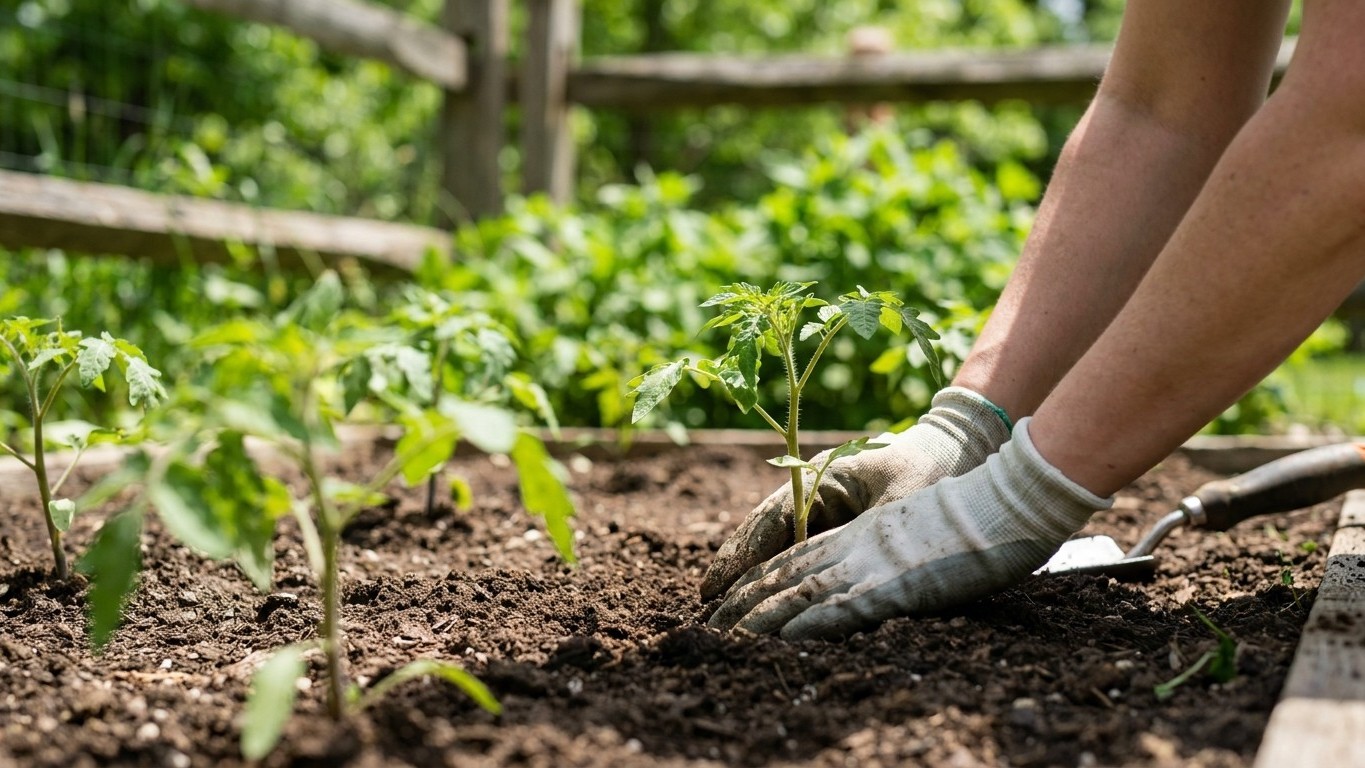

By June, Rhode Island gardens are past the frost line entirely. The last spring frost at the reference station runs April 7 to April 17, so soil has had six to eight weeks to warm through. This is the month for tomatoes, peppers, beans, squash, corn, melons, and sweet potato slips going into open ground, alongside a fresh round of lettuce, beets, and carrots for a summer harvest.
What goes in the ground in June

The calendar stopped mattering weeks ago. What matters now is that soil has held steady warmth long enough for warm-season roots to take hold without stalling. With the last spring frost window closed since mid-April at the latest, June is the safest stretch of the whole growing year to commit tender crops to open ground in Rhode Island, which sits in USDA hardiness zone 6a-7b depending on location.
Tomato and pepper transplants that have been hardening off can go into their final beds now, spaced for airflow since humid Rhode Island summers push along fungal disease fast. Beans, both bush and pole, do best direct-sown this month since they resent root disturbance and germinate quickly once soil has warmed. Summer squash, zucchini, and cucumbers can go in as seed or transplant, and corn planted now still has a full season to mature before the first fall frost arrives, which the same reference station places between October 24 and November 3.
Melons and winter squash need the longest runway of anything planted this month, so get them in early in June rather than late if there’s a choice. Sweet potato slips are a June-specific crop for this region. They need consistently warm soil to root, which makes them a poor fit for May but a solid one now.
On the cooler-season side, there’s still room for a batch of bush beans, a second sowing of beets and carrots, and heat-tolerant lettuce varieties if planted early in the month before the hottest stretch sets in. Basil, both for eating fresh and for a later pesto batch, does well seeded or transplanted now since it hates any lingering chill.
What doesn’t belong in the ground this month is anything that needs a long cool spring to size up properly, like spring peas started from seed. Those needed to go in back in April. Planting them now usually means a plant that struggles through heat before it ever sets much of a pod.
What to start under cover
Most of the spring transplant rush is behind Rhode Island gardeners by June, but starting seeds under cover doesn’t stop. This is the month to count backward from the first fall frost window, October 24 to November 3, for anything slow enough to need a head start before it goes outside for a fall harvest.
Broccoli, cabbage, and Brussels sprouts for a fall crop are the classic June under-cover sowing in this climate. These brassicas want eight to ten weeks between seed and a hardened transplant, and they need to go into the garden while there’s still enough warm season left for them to size up before cold weather slows growth. Starting them indoors in June, away from the brutal heat that can stall germination outdoors, keeps seedlings from bolting or stressing before they even get planted.
Second and third rounds of basil, cucumbers, and summer squash also make sense to start under light cover this month, timed to replace earlier plantings as they fade or succumb to pests later in summer. The point isn’t to fill every square foot at once, it’s to stagger harvest so the kitchen isn’t buried in zucchini for two weeks and then has none.
The two ways this goes wrong are familiar to anyone who’s gardened more than a season. Start fall brassicas too early under cover and they get leggy and rootbound waiting for outdoor heat to ease enough to transplant. Start them too late and they hit the first fall frost before maturing. Splitting the difference by starting in early-to-mid June, rather than waiting until July, gives the most margin for either outcome.
What is ready to pick
June is when the spring-planted garden finally starts paying rent. Lettuce and spinach sown back in April are ready for cutting, and the trick with both is to harvest before sustained heat pushes them to bolt, sending up a bitter flower stalk instead of more leaf. Once a lettuce plant starts to bolt, the leaves turn sharp-tasting fast, so a daily glance at the bed matters more than it does earlier in the season.
Radishes planted in spring are almost certainly done by now, and leaving them in the ground too long past readiness turns them woody and hot rather than crisp. Peas, if they were started early enough, are hitting their peak in June, and picking pods regularly actually keeps the vine producing longer rather than letting a few pods go to seed and signal the plant to stop.
Garlic planted the previous fall is close to harvest by late June in much of the state, and garlic scapes, the curling flower stalks that hardneck varieties send up, are worth cutting off and eating in the meantime. Cutting scapes redirects the plant’s energy into bulb size rather than flowering.
Strawberries planted in prior seasons hit their main harvest window in June across most of Rhode Island, and the plants need picking every couple of days once fruiting starts since ripe berries left on the vine draw pests fast. Herbs like chives, mint, and early basil are also ready for regular cutting, and cutting them back actually encourages bushier, more productive growth rather than weakening the plant.
The jobs that matter this month

Mulching is the single job that pays off most in June and costs the most if it slips. Bare soil under a Rhode Island summer sun loses moisture fast and lets weed seeds germinate freely. A few inches of straw, shredded leaves, or grass clippings around vegetable plants now, while soil is still moist from spring rain, locks that moisture in before the dry stretch that usually follows.
Staking and caging need to happen before plants sprawl, not after. Tomatoes, peas, and pole beans put on rapid growth this month, and a cage or stake installed once a plant has already flopped over does real damage to roots and stems that a cage installed early never causes. The same goes for peonies and tall perennials that flop in heavy rain if they weren’t staked while still short.
Watering rhythm matters more in June than at almost any other point in the season, since young transplants haven’t developed deep roots yet and shallow, frequent watering trains roots to stay near the surface where they dry out fast. Deep, less frequent watering, aimed at soaking the root zone rather than wetting foliage, builds resilience for the hot weeks ahead.
Succession sowing keeps the harvest from crashing all at once. A new short row of beans, beets, or lettuce every two to three weeks through June means the garden keeps producing into late summer instead of dumping everything in one narrow window and then going quiet.
Pest scouting matters because June is when Colorado potato beetle, cucumber beetle, and squash bug populations start building. Checking the undersides of leaves for egg clusters weekly and removing them by hand, before populations explode, is far more effective than treating an infestation later.
What not to do in June
The most common mistake this month is treating a few warm days as permission to skip hardening off transplants. Seedlings raised indoors or in a greenhouse need a gradual introduction to direct sun, wind, and temperature swings over several days before going into open ground, even in June. Skip that step and a plant can scorch or wilt badly within hours of transplanting, even though the air temperature looks perfectly friendly.
Feeding heavy nitrogen to tomatoes and peppers once they’ve started flowering is another classic misstep. Nitrogen pushes leafy green growth at the expense of fruit set, so a tomato plant fed like a lawn in June often ends up lush, tall, and nearly fruitless by midsummer. A balanced or lower-nitrogen feed, applied once flowering starts, supports fruit rather than foliage.
Letting lettuce, spinach, and other cool-season greens sit too long once heat arrives is a mistake that costs the whole crop rather than just part of it. Once bolting starts, there’s no reversing it, so harvesting a bed all at once and replacing it with a heat-tolerant crop is usually smarter than hoping a few more days of growth are worth the risk.
Overwatering newly transplanted squash and cucumber seedlings, out of anxiety that June heat will dry them out, actually invites root rot and damping-off disease faster than underwatering does. Checking soil moisture with a finger before watering, rather than watering on a fixed schedule, avoids both extremes.
Checking this against your own county
A state-wide planting month is a starting point, not an instruction written for any one backyard. Rhode Island is small, but coastal areas near Narragansett Bay warm and cool more slowly than inland towns, and elevation shifts frost timing by days to weeks even within a short drive. A garden in a low-lying frost pocket can lag a coastal yard by a week or more on both ends of the season.
The frost dates cited here come from one reference weather station, and suburban and rural gardens typically see later spring frosts and earlier fall frosts than that station records, sometimes by one to two weeks. For a planting calendar built around local conditions and current pest and disease alerts, the University of Rhode Island Cooperative Extension is the resource built for exactly this kind of county-by-county variation.
Common questions
Is it too late to plant tomatoes in Rhode Island in June?
No. June is well past the last spring frost window of April 7 to April 17, and tomato transplants set out in early-to-mid June still have a full season to produce before the first fall frost arrives between October 24 and November 3.
Can corn still be planted in June in Rhode Island?
Yes, corn planted in June has enough time to mature before fall frost across most of the state, though earlier plantings within the month give the most margin, especially for longer-maturing varieties.
Why is my lettuce turning bitter in June?
That’s bolting, triggered by rising heat and longer daylight. Once a lettuce plant sends up a flower stalk, the leaves turn bitter and there’s no reversing it, so harvesting promptly and replacing the bed with a heat-tolerant crop is the usual fix.
Should fall broccoli be started indoors or direct-sown in June?
Starting broccoli and other brassicas under cover in June, rather than direct-sowing in peak heat, gives seedlings a better shot at germinating and growing steadily before they’re hardened off and transplanted out for a fall harvest.
Gardeners who plant by the Moon can check the June 2027 moon planting calendar, a tradition rather than a proven method.