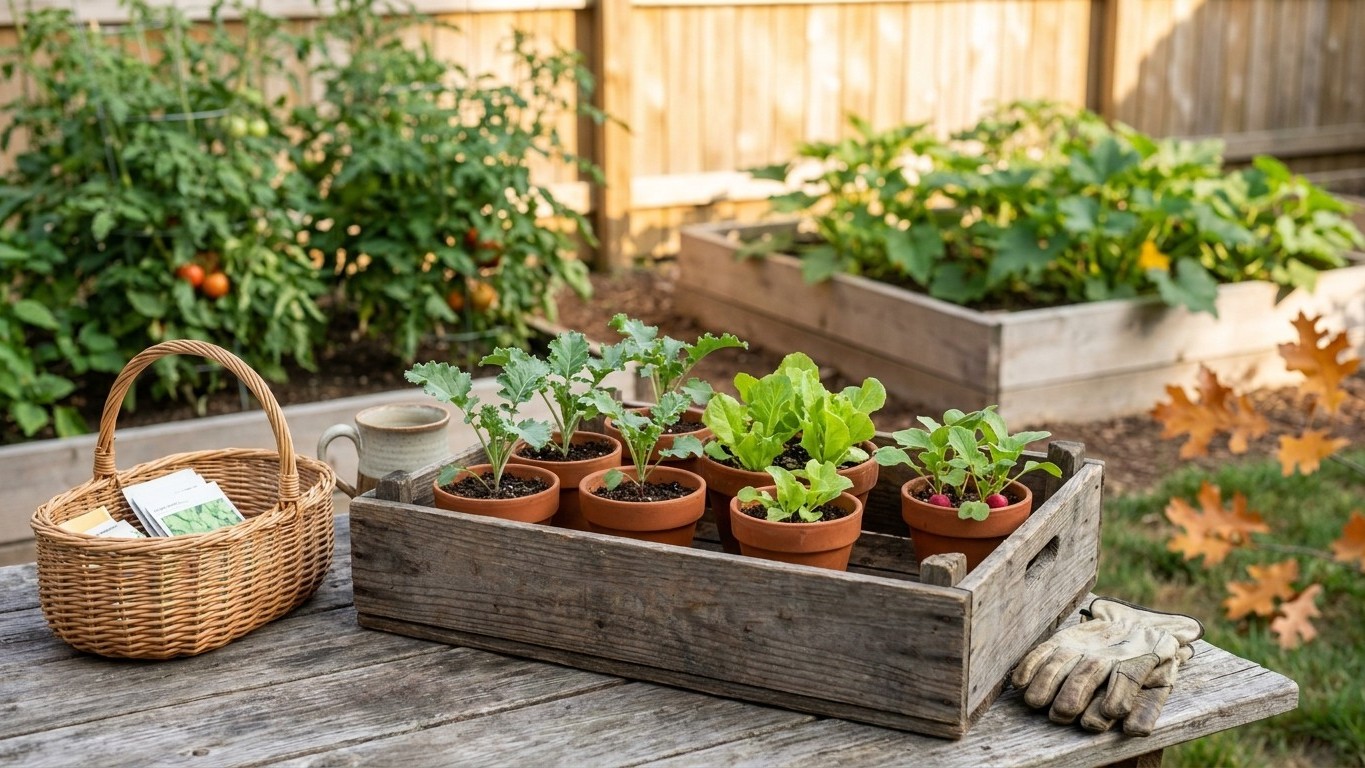

In Rhode Island, August sits squarely between the two frost dates that bookend the growing season: well past the April 7-17 last spring frost, and roughly ten to thirteen weeks ahead of the October 24-November 3 first fall frost. That gap is what decides what still goes in the ground. The short answer: fast-maturing fall crops sown now, plus steady care for everything already fruiting.
What goes in the ground in August

The math that matters this month isn’t the calendar, it’s the countdown to that October 24-November 3 window. Sow something with a 90-day maturity on August 1st and you’re gambling on the late end of that frost range holding. Sow it August 25th and you’ve likely lost the race before the first freeze even shows up. Soil temperature plays its part too, but by August, Rhode Island ground is warm enough for almost anything to germinate. The real constraint is arithmetic: days to maturity versus days left before frost.
That makes August the month for short-season crops aimed at a fall harvest, not for anything that needs a long summer to bulk up. Bush beans, baby kale, spinach, arugula, radishes, and quick turnip varieties all fit comfortably if sown in the first half of the month. Lettuce for fall salads still works through mid-August in most Rhode Island gardens. Garlic and shallots are the exception that goes the other direction entirely: those are a fall planting, timed for October, not something to tuck in now.
A rough countdown table
| Crop | Typical days to maturity | Realistic sowing window in August |
|---|---|---|
| Radish | 25-30 days | Through the end of the month |
| Arugula | 30-40 days | Through mid-to-late August |
| Spinach | 40-50 days | First three weeks of August |
| Baby kale | 50-60 days for baby leaf | First two weeks of August |
| Bush beans | 50-60 days | Only the first few days of the month |
Anything with a longer maturity window than that, winter squash, pumpkins, main-crop carrots, belongs in the ground back in spring or early summer, not now. Planting it in August isn’t a gamble so much as a guaranteed loss to frost.
What to start under cover
Under cover in August usually means two different things: seed trays kept out of the worst heat so they actually germinate, and transplants raised now for a cold frame or low tunnel later in fall. Lettuce and spinach seed can stall or refuse to sprout when soil surface temperatures climb into the 80s, which August afternoons in Rhode Island regularly deliver. Starting those seeds in trays in a shaded spot or a cool basement, then moving the seedlings out once they have true leaves, sidesteps that failure mode entirely.
The other use of “under cover” this month is building stock for extended-season growing. Spinach, mache, and mizuna sown into trays now, then transplanted into a cold frame by mid-September, can be harvesting well past the first frost date since row cover and a frame add several degrees of protection on cold nights. Count backward from that October 24-November 3 window: a cold frame transplant needs roughly four to six weeks of growth before it’s sturdy enough to handle the shorter days and cooler nights of fall, which is exactly what starting trays in August buys you.
The two ways this goes wrong are predictable. Start too early in the month, in full summer heat with no shading, and seedlings get leggy and stressed before they’re even in the ground. Start too late, past the third week of August, and there isn’t enough runway left for the plants to size up before growth slows with shorter daylight. Splitting the difference, starting the first week or two of the month, gives the most margin either way.
What is ready to pick
August is peak harvest for the crops that took all summer to get here. Tomatoes are hitting full stride, peppers are coloring up, and summer squash and cucumbers need checking every day or two since they go from perfect to oversized fast. Sweet corn planted in late spring is usually ready mid-to-late in the month, tested by the classic thumbnail-in-the-kernel check for milky juice. Beans, both bush and pole, keep producing as long as they’re picked regularly, since letting pods mature and dry on the vine signals the plant to stop flowering.
Garlic and onions planted the previous fall or early spring are typically already pulled and curing by this point, so August is more about finishing that cure in a dry, airy spot than about harvesting them fresh. Blueberries wind down through the month depending on variety, and early apple varieties start dropping. For anything stored from earlier in the season, this is a good month to check on it: a soft spot on a stored onion or an off smell from early potatoes means pulling it before it takes down the rest of the batch.
Melons, if they’re in the garden, need a closer read than most crops: a cantaloupe slips cleanly from the vine at the stem when ready, while a watermelon relies on the dulling of the skin’s sheen and a low, hollow sound when thumped, since there’s no slip to rely on.
The jobs that matter this month

Watering rhythm matters more in August than almost any other month. Tomatoes in particular punish inconsistency: a dry stretch followed by a heavy soak splits fruit and worsens blossom end rot. Deep, even watering two or three times a week beats a light daily sprinkle, since it encourages roots to grow down rather than staying shallow and vulnerable to the next hot spell.
Mulch pays for itself twice this month, holding soil moisture during dry heat and keeping weed pressure down while everything else demands attention. Staking and tying still matters too: sprawling tomato and pepper branches loaded with fruit snap in summer thunderstorms if they aren’t supported before the weight builds up.
Succession sowing belongs on the list every ten to fourteen days through the first half of the month, since that’s what keeps a fall harvest of greens and radishes coming instead of arriving all at once. Pest scouting can’t slip either: squash vine borer damage shows up as sudden wilting of a squash plant that looked fine the day before, Japanese beetles skeletonize leaves fast enough to notice in a single afternoon, and tomato hornworms strip a plant of foliage in days if they go unchecked. Walking the garden every few days and hand-picking or treating early keeps a small problem from becoming a lost crop.
Garlic and onion beds that already gave up their harvest are worth turning over now, amended with compost and either replanted with a fast fall crop or seeded with a cover crop, so the soil isn’t sitting bare and losing structure through the rest of the season.
What not to do in August
The most common mistake this month is treating August like it’s still June: sowing a long-season crop that needs 90 or 100 days when the frost countdown from the October 24-November 3 window has already dropped below that. It feels productive to fill an empty bed, but a crop that gets cut down by frost before it matures wastes the space and the effort. Stick to the short-maturity crops covered above instead.
Heavy nitrogen fertilizing is another trap. Feeding tomatoes, peppers, or woody perennials a strong dose of nitrogen this late pushes soft new growth that won’t have time to harden off before the fall frost arrives. On vegetables it also tends to favor leafy growth over fruit set, which is the opposite of what’s wanted this late in the season. A light feeding of a balanced or lower-nitrogen fertilizer is a safer call if plants are showing real deficiency.
Overhead watering in the heat of the day is worth dropping too. It wastes water to evaporation and wets foliage in a way that encourages the fungal diseases, powdery mildew especially, that spread fast in August’s warm, humid stretches. Watering at the base, earlier in the day, gives leaves time to dry before evening. And it’s worth resisting the urge to pull back on care just because the peak of summer feels like it’s winding down: weeds that go to seed in August are next year’s weed problem, not this year’s.
Checking this against your own county
The frost dates and zone figures here come from a single reference station, and Rhode Island’s actual growing conditions shift by weeks depending on where a garden sits. Coastal spots along Narragansett Bay tend to run milder and later into fall than inland areas, and low-lying spots anywhere in the state collect cold air on clear nights, pushing frost earlier than the stated range. A garden’s own microclimate, not the state average, is the real deciding factor for exactly when to stop sowing.
For a planting calendar built around local conditions, the University of Rhode Island Cooperative Extension is the source to check before locking in a sowing date based on a state-wide range.
Common questions
Is it too late to plant tomatoes in Rhode Island in August?
Yes, for outdoor transplants aimed at a full harvest. A tomato transplant set out now wouldn’t have enough time to flower, set fruit, and ripen before the October frost window arrives.
Can garlic be planted in August in Rhode Island?
No. Garlic is a fall-planted crop, typically going in around October, so it overwinters and bulbs the following summer. August is for curing and storing the garlic already harvested, not planting new cloves.
What vegetables can still be direct-sown in late August?
Fast crops with maturity under 40 days work best this late, radishes and arugula in particular. Anything with a longer maturity window is cutting it close against the first frost window of October 24-November 3.
Why did my spinach seed fail to germinate when I sowed it in August?
Spinach seed struggles to sprout once soil surface temperatures climb into the 80s, which is common on August afternoons. Starting seed in trays in a cooler, shaded spot and transplanting once seedlings emerge usually solves the problem.
Gardeners who plant by the Moon can check the August 2027 moon planting calendar, a tradition rather than a proven method.