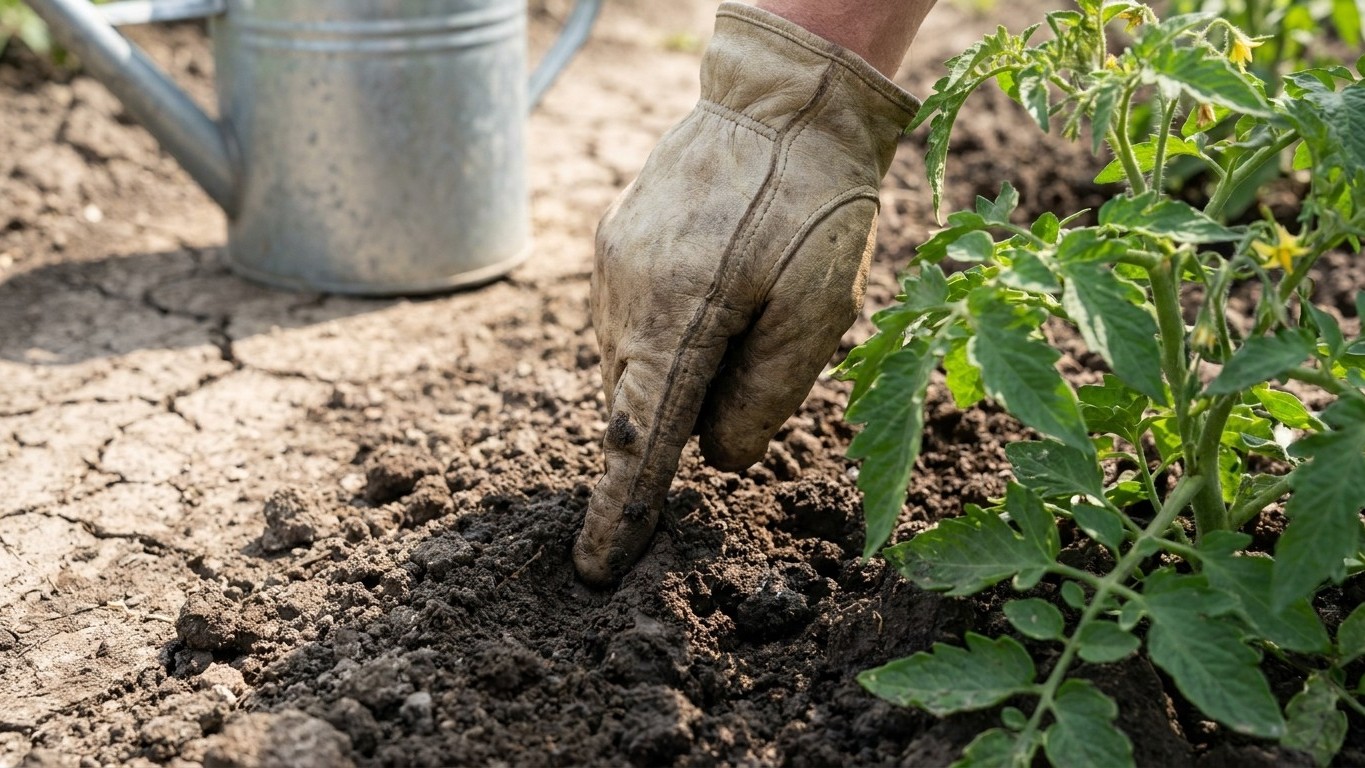

Saskatchewan gardens live and die by moisture management. With zero days a year averaging 90°F or hotter at the Saskatoon reference station, this isn’t about beating extreme heat. It’s about a short growing season, often-dry summer stretches, and prairie soils that either drain too fast or hold too much, whether that soil is in a garden bed or in a pot on the patio. Here’s how much to water, how often, what rules might apply, and how to use less without losing your garden, plus a closer look at Watering Pots and Containers in Saskatchewan for gardeners working with limited soil volume.
How much, how often

The single biggest mistake in a prairie garden is watering a little bit every day. Shallow, frequent sips train roots to stay near the surface, right where the soil heats up and dries out fastest. Deep, infrequent watering pushes roots down into cooler, more stable soil that holds moisture longer between waterings. That’s the goal on any Saskatchewan lot, whether you’re gardening in Regina clay or a sandy pocket near the South Saskatchewan River.
The trick is knowing when “infrequent” actually means it’s time. Don’t guess. Push a finger two inches into the soil near the base of the plant, or use a trowel to check below the surface crust. If it’s dry at that depth, water. If it’s still cool and damp, wait. This single habit prevents both the wilting that comes from underwatering and the root rot that comes from watering on a schedule regardless of what the ground is doing.
Soil texture changes the math. Sandy ground, common in parts of the Saskatchewan River valley, holds very little water and drains fast, so it needs shorter, more frequent soakings than the general “deep and infrequent” rule would suggest on its own. Heavy clay, the more common condition around Regina and Saskatoon, holds a week’s worth of water in reserve but drowns roots if you water before it’s had a chance to dry. Clay should also never be worked or soaked while it’s already wet, since that compacts it and squeezes out the air pockets roots need.
Saskatchewan’s summer growing window is short and often runs dry through the hottest weeks, which is exactly why home gardeners here lean on scheduled watering rather than waiting on rainfall. With a mean last spring frost around May 18 and a mean first fall frost around September 18 at the Saskatoon station, the safe growing window for tender plants runs roughly four months, and a good chunk of that window can pass with little meaningful rain, making it essential to know the basics of Watering Through a Dry Spell in Saskatchewan.
- Check soil moisture at two inches deep with a finger or trowel before deciding to water at all.
- Water only at the base of the plant, directly onto the soil, never over the leaves.
- Water in the morning, so moisture soaks in before the day’s heat and wind pull it back out.
- On sandy soil, water more often but with less volume each time.
- On clay soil, water less often but let it soak in fully, and wait until the surface has dried before the next round.
- Aim to keep water available roughly six to eight inches down, where most vegetable and flower roots actually feed.
Restrictions and rules
Watering restrictions are a municipal matter in Saskatchewan, not a provincewide law, and they shift from year to year depending on reservoir levels, snowpack, and how dry a given summer turns out. Some towns and cities set odd-even watering days by address. Others cap outdoor watering to specific hours, or ban it outright during drought advisories. None of these rules are fixed enough to print here as if they’ll hold for every season.
What is fixed is the pattern behind them. A growing season with long dry stretches in its hottest weeks is exactly the kind of climate where municipal water systems come under pressure and restrictions get triggered. If you’re setting up a watering schedule or installing a timer, treat a restriction check as step one, not step three.
The most reliable move is to contact your own water district or municipal office directly, since bylaws differ between cities like Regina and Saskatoon and smaller rural municipalities, and even neighboring towns can run different rules in the same summer. For broader guidance on water use and agricultural best practices in the province, the Government of Saskatchewan’s agriculture and natural resources portal is the right starting point, with links out to current advisories.
Rural gardeners on well water face a different pressure entirely: not a bylaw, but a water table that can drop through a dry August. A restriction notice from town hall doesn’t apply out there, but the underlying scarcity does, and the same deep-and-infrequent habits described above matter even more when the well is the only source.
Using less
Cutting water use in a Saskatchewan garden isn’t about one big fix. It’s a handful of small habits that stack up, and some save far more than others for the same effort.
- Mulch: A two- to three-inch layer of straw, wood chips, or shredded leaves over the root zone slows evaporation dramatically and keeps soil temperature steadier, which matters most on sandy stretches that dry out fastest.
- Drip irrigation or soaker hoses: Delivering water at the soil line instead of overhead cuts loss to wind and evaporation, both common on the open prairie, and puts moisture exactly where clay or sandy roots need it.
- Grouping plants by need: Thirsty vegetables like tomatoes and squash next to each other, drought-tolerant perennials and native prairie species in their own bed, so you’re never overwatering the tough plants to satisfy the thirsty ones.
- Organic matter in the soil: Working compost into clay improves drainage and reduces the risk of waterlogged roots; working it into sandy soil improves water retention so it doesn’t drain straight through.
- Rain barrels: Where municipal bylaws allow them, a rain barrel under a downspout captures roof runoff for free. As a rule of thumb, an inch of rain falling on a thousand square feet of roof yields about 600 gallons of runoff. On the prairies, that math is a double-edged sword: a single summer thunderstorm can fill a barrel fast, but Saskatchewan’s dry stretches between storms mean that same barrel can sit empty for weeks at a stretch through the hottest part of the season, so it should be treated as a supplement to a hose, not a replacement for one.
None of these steps demand a garden overhaul. Mulch and grouping plants by water need can be done in an afternoon, and both pay off within the same growing season, which matters given how short that season already is here.
Common questions
How often should I water a vegetable garden in Saskatchewan?
Check soil moisture two inches down before every watering rather than following a fixed calendar. Most vegetable beds on clay soil need a deep soak roughly once or twice a week; sandy soil often needs shorter waterings closer to every two to three days, especially during a dry stretch in July or August.
Is it legal to use a rain barrel in Saskatchewan?
Rules vary by municipality, so check with your local water district or city hall before installing one. Where they’re permitted, rain barrels are a useful supplement, though prairie dry spells mean they shouldn’t be your only water source through the hottest weeks.
When is it safe to plant outdoors without frost risk?
At the Saskatoon reference station, the mean last spring frost falls around May 18 and the mean first fall frost around September 18. That’s an average, not a guarantee: in roughly half of all years, frost arrives later than that spring date, and northern or upland parts of the province typically lag weeks behind Saskatoon’s numbers.
Does Saskatchewan’s climate mean I need less water than a hotter province?
Not necessarily. With zero days a year reaching 90°F at the Saskatoon reference station, plants here aren’t fighting extreme heat stress the way they might further south. But the growing season is short and often dry, so consistent, well-timed watering during that window still matters as much as it does anywhere else.