
South Carolina gardeners can plant a cool-season cover crop as soon as the summer garden clears out, often by mid-fall, and expect to work it back into the soil sometime between late winter and mid-spring. The exact date isn’t fixed on a calendar. It depends on soil temperature, on how cold the coldest month actually gets, and on which part of the state a garden sits in.
When the soil is warm enough in South Carolina
The frost question comes first because it’s the one every seed packet and extension bulletin leans on. For the reference station used to track South Carolina’s freeze risk, USW00013880, the last spring frost falls somewhere between February 28 and March 17, according to NOAA’s 1991-2020 Climate Normals. That’s a probability band, not a promise. Half the years in that record, frost showed up outside that window in one direction or the other, which is exactly why growers treat it as a guide and not a deadline.
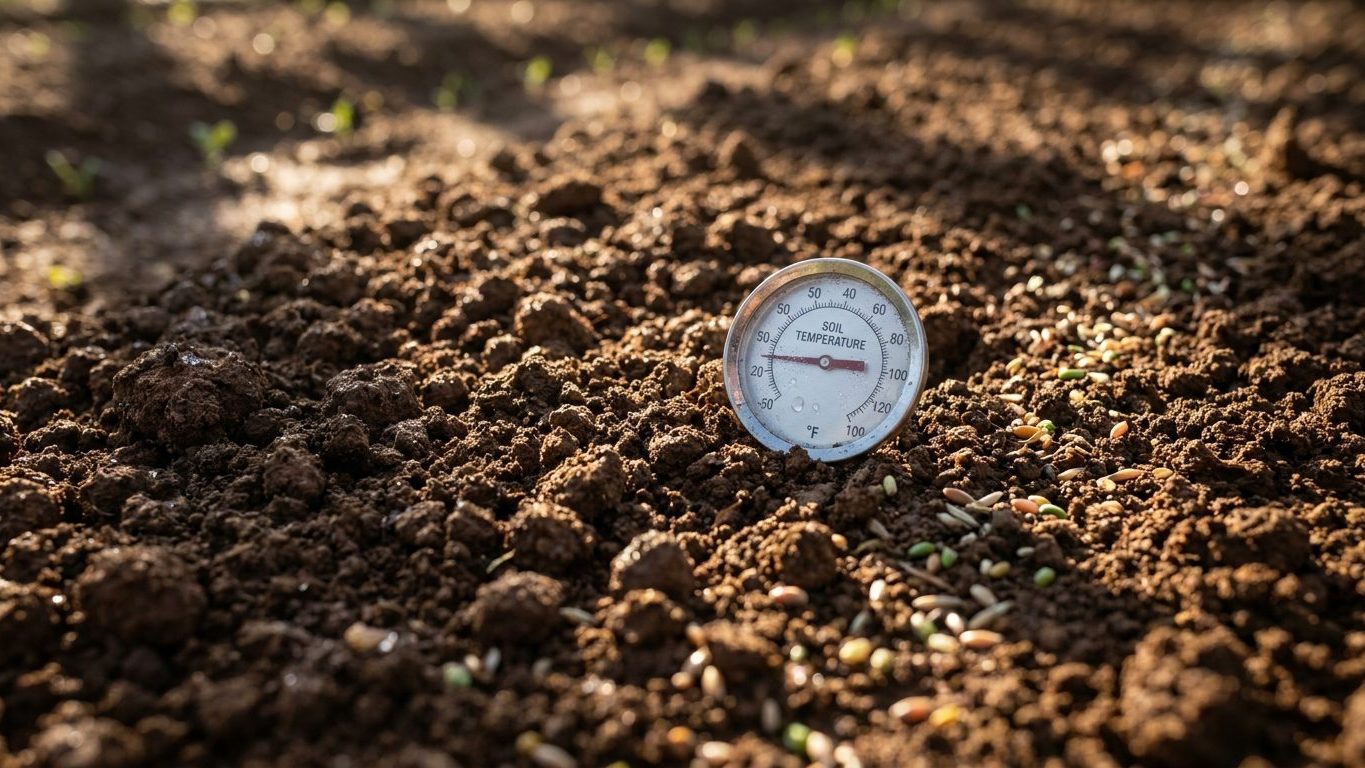
Here’s the part that trips people up: the frost date is a proxy, not the actual trigger. Cover crop seed doesn’t care what the air did last night. It cares what the soil is doing right now, a few inches down. Soil lags behind air temperature by days, sometimes weeks, because it holds cold longer than it holds heat. So the practical rule isn’t “plant after the last frost date,” it’s “plant once the soil has caught up to spring,” which typically happens after that frost risk has already passed, not the moment it clears.
This matters more in South Carolina than in colder states because the frost window itself shifts by geography. The USW00013880 station sits closer to the coast, and the caution attached to that data is direct: peninsular Charleston runs milder than the airport station itself, while the Upstate, up toward the mountains, tightens that window by several weeks on both ends. A gardener in Greenville is not working with the same soil clock as one in Charleston, even though both are technically the same state and fall inside the same USDA hardiness zone 7a-9a range for the territory.
What this means for the actual planting decision is that grass-family cover crops (oats, rye, wheat) tolerate a wider soil temperature range at germination than legumes like crimson clover or vetch, which want the soil to have genuinely warmed. Brassicas, tillage radish among them, split the difference. None of this changes with a specific seeding rate, and that’s deliberate: rate depends on species, drill versus broadcast method, and seed source, which is exactly the kind of detail that only the Clemson Cooperative Extension can size correctly for a given county. Termination here is mechanical, not chemical, whether that’s mowing, crimping, or simply letting a hard freeze do the work.
How long the season lasts here
Run the two frost dates against each other and a pattern shows up that doesn’t move much across the state, even though the individual dates do. First fall frost lands between November 20 and December 5, last spring frost between February 28 and March 17, both from the same NOAA station. Subtract the early end from the early end and the late end from the late end, and the overwinter window comes out to roughly 100 to 102 days either way.
That consistency is the useful part. Whether a garden sits on the coast with a later fall frost and earlier spring frost, or Upstate with both dates arriving sooner, the actual length of the cover crop’s growing window stays close to the same three-and-a-half months. What shifts is when that window opens and closes, not how wide it is.
A hundred days is enough for most cool-season cover crops to establish, put on real biomass, and still get terminated before spring planting starts to crowd it. It is not, in most years, enough room for two full successive plantings of anything slow to establish. That’s the practical dividing line: South Carolina’s window supports one solid cover crop cycle per winter for most gardeners, with the fall planting date being the one decision that actually matters, since a late fall start eats directly into that hundred days before winter dormancy even sets in.
Where the window runs toward the longer end, typically areas closer to the coast with the later fall frost and earlier spring thaw, there’s more room to experiment with a second, quicker-cycling planting or to push a fall vegetable transplant slightly later than the frost date alone would suggest. Gardeners weighing that tradeoff, particularly whether it’s worth transplanting into a bed that still has cover crop roots breaking down, should look at how succession sowing timing gets planned out in more detail on this site’s succession sowing guide, since the math changes depending on what’s being planted next and how fast that crop needs bare, workable soil.
Heat and water in South Carolina
For a cover crop, the growing season isn’t really defined by how hot the summer gets. It’s defined by winter, because that’s the season the cover crop actually occupies. The two numbers that matter are the first fall frost, which sets the last realistic sowing date, and how cold the coldest month actually runs, because that decides which species survive the winter and which get killed outright by cold.
Here’s where South Carolina’s climate does something that surprises gardeners moving in from farther north. The mean daily minimum temperature in the coldest month, at the Charleston reference station, is 38.9°F. That’s not a hard freeze average. It’s mild enough that species relied on elsewhere to winterkill cleanly on their own, oats being the classic example, often don’t die back reliably here. In a colder state, oats are the easiest cover crop there is: they grow fast, then a real freeze finishes them off, leaving a dead mulch with zero termination labor. In South Carolina, that same freeze may not arrive with enough force, and oats left standing can turn into a spring weed problem instead of a mulch, needing to be mowed or cut down by hand exactly when a gardener would rather be planting.
This is the practical tradeoff a mild coastal-to-Piedmont climate creates: winter here is a management decision, not a given. Species selection has to account for whether something will die back on schedule or need active termination. It also means humidity and disease pressure, more than heat itself, tend to be the summer-side concern for anyone running a warm-season cover crop like sunn hemp or buckwheat between spring and fall vegetable cycles, since long, damp stretches favor mildew and slow drying more than they favor any particular pest. None of that changes the winter math, though. The coldest month’s mild minimum is the single figure that should shape which cover crop species gets chosen for the overwinter window described above.
Which cover crops suit South Carolina
Put the pieces together and the choice comes down to type, not brand or variety. A roughly hundred-day winter window favors species that establish fast and put on biomass before growth slows in the shorter days of December and January. A mild coldest-month minimum means winterkill can’t always be counted on, so termination method becomes part of the species decision rather than an afterthought. And a humid growing season, on the warm-season side, makes disease tolerance a real selection criterion rather than a nice-to-have.
In broad terms, South Carolina gardeners are usually choosing among:
- Grasses like cereal rye or oats, valued for fast fall growth, but needing a termination plan since a mild winter may not kill them outright
- Legumes like crimson clover or hairy vetch, which build soil nitrogen through their root systems and benefit from being mowed or crimped once flowering starts
- Brassicas like tillage radish, useful for breaking up compaction, which tend to winterkill more reliably even in a mild coastal winter
- Warm-season options like sunn hemp or buckwheat for gaps between spring and fall vegetable plantings, where airflow and drying time matter more than cold tolerance
What this page won’t do is hand over a cultivar name, a seeding rate, or a chemical termination product. Seeding rates depend on whether seed goes down by broadcast or drill, on the specific species, and on the seed source itself, variables that shift enough between suppliers and counties that a generic number here would be more likely to waste a season than help one. Cultivar selection is even more local: which crimson clover variety or oat line actually performs well against South Carolina’s disease pressure and mild winters is a question with a real answer, but that answer comes from regional variety trials, not from a general gardening article. That answer lives with the Clemson Cooperative Extension, whose county agents track exactly which varieties held up in local trials this past season. Termination, on this site, always means mechanical work: mowing, crimping, cutting, or letting frost do it, never a herbicide application.