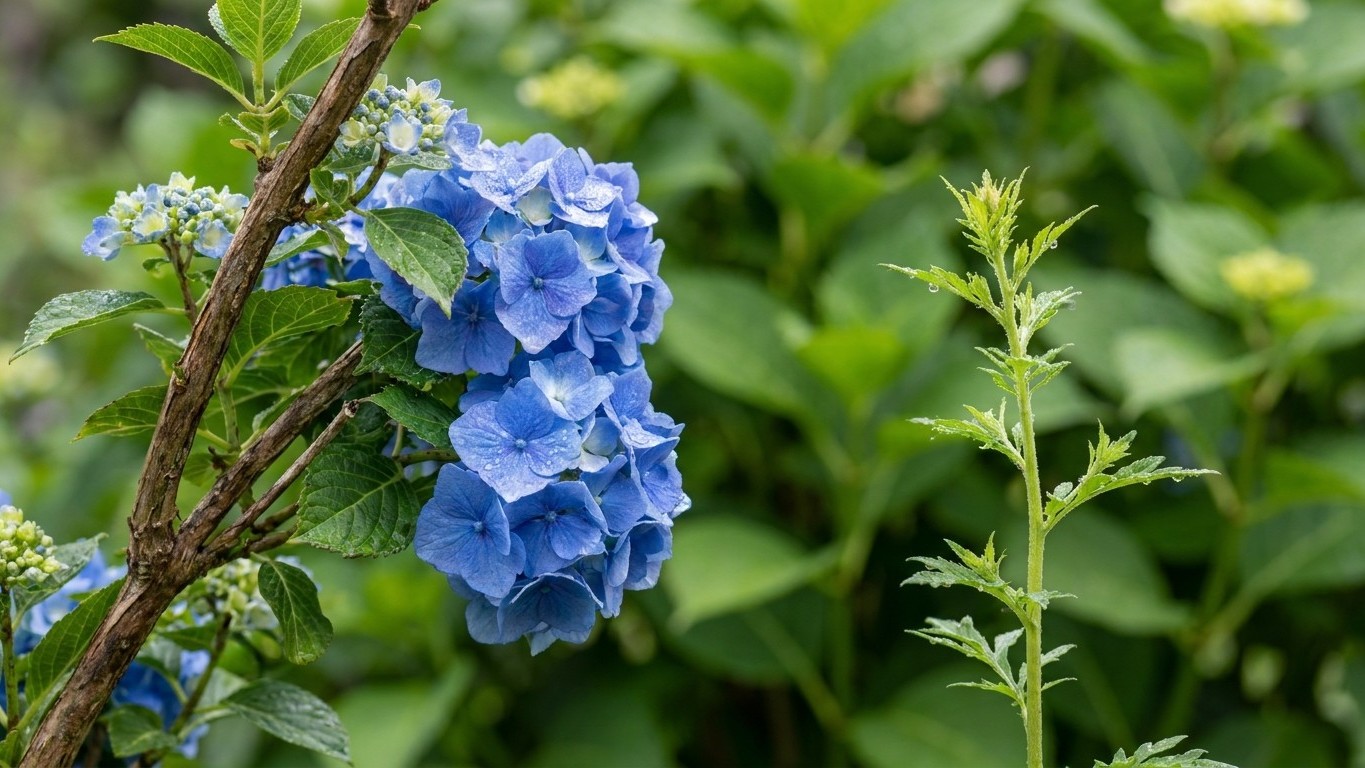

Prune bigleaf and oakleaf hydrangeas right after their flowers fade, which in South Carolina means June or July. Cut panicle and smooth hydrangeas in late winter, just ahead of the last spring frost. Mix those two up and you can lose a whole season of blooms. The rule follows one fact about the plant: which year’s stems carry the flower buds. For planting and general care, see growing hydrangeas in South Carolina.
What this comes down to in South Carolina

The last spring frost at Charleston, using the airport weather station and NOAA’s most recent 30-year climate normals, falls between February 28 and March 17. The first fall frost falls between November 20 and December 5. Those two ranges bracket the pruning calendar. Late-winter cuts happen at the front edge of the first range, and summer cuts happen long before the second one closes.
The mechanism is simple. A hydrangea sets next year’s flower buds at one of two times. Some species set them on the previous season’s stems, in late summer and early fall. Others wait and form buds on shoots that grow in spring. Cut at the wrong time and you remove the buds themselves. Because warm Southern winters keep many shrubs partly active, the margin for error is also narrower than the calendar suggests.
When do you prune hydrangeas that bloom on old wood?
Bigleaf (Hydrangea macrophylla), oakleaf and mountain hydrangeas carry flower buds on stems grown the year before. In a climate with hot, humid summers, those buds are already forming by late summer. Prune within a few weeks of the last flowers fading, and finish by late July. After that, you are cutting into next year’s bloom.
Pruning here means light work. Remove spent flower heads, cut out stems that died over winter, and thin a few of the oldest canes at the base to open up the shrub. Taking a bigleaf down by a third or more in a single year usually means a thin crop of flowers the next summer.
When do you prune hydrangeas that bloom on new wood?
Panicle (Hydrangea paniculata) and smooth (Hydrangea arborescens) hydrangeas bloom on shoots that grow in spring. That makes them forgiving. Cut them in late winter, while the plant is still dormant and before buds break. At Charleston, that points to late February into early March, which sits right at the front edge of the last-frost window.
Cutting back by about a third of the height encourages sturdy stems that hold their heavy flowers upright. Smooth hydrangeas such as the classic white-flowered types can be cut harder, to a foot or two off the ground, if the shrub has flopped in past summers. Leaving the dried flower heads on through winter does no harm. Many gardeners like how they look in frost.
Working it out for your own garden
A calendar date only works for one place and one kind of winter. The method below holds up after a move, or after a January that feels like April.
How do you tell whether your hydrangea blooms on old or new wood?
Start with the species. If you know it, the table settles the question. If you don’t, watch what the plant does in spring. Old-wood shrubs push leaves and flower buds out of last year’s woody canes, and the canes themselves stay thick and brown. New-wood shrubs often look like a bare stump in March, then send up long green shoots that carry the bloom clusters at their tips.
| Type | Blooms on | When to cut |
|---|---|---|
| Bigleaf (such as ‘Nikko Blue’) | Old wood | Right after flowering, by late July |
| Oakleaf | Old wood | Right after flowering, by late July |
| Reblooming bigleaf (such as the Endless Summer line) | Old and new wood | Light trim after the first flush; skip heavy cuts |
| Panicle (such as ‘Limelight’) | New wood | Late winter, before buds break |
| Smooth (such as ‘Annabelle’) | New wood | Late winter, before buds break |
If the label is gone and you are not sure which species you have, see which hydrangea types survive in South Carolina to narrow down which ones you are likely to own.
What does a worked example look like for pruning dates?
Take ‘Nikko Blue’, an old-wood bigleaf. It blooms in late spring into early summer. Count forward a few weeks from the end of flowering and you land in late June or July, the cutting window. Cut in January and you remove the buds that would have opened in May.
Now take ‘Limelight’, a panicle on new wood that opens in summer and carries on into fall. Work back from the Charleston last-frost range of February 28 to March 17, and check with your local county extension office for the pruning window. Cut when the buds start to swell but before they break, which at Charleston usually means late February into early March. That gives the shrub the whole growing season to build stems and flower on them.
A reblooming bigleaf such as an Endless Summer type sits in between. It flowers on both old and new wood, so a mistake costs less. The first flush still comes from old stems, so trim lightly after it, and shape or tidy at the same time. Stop any pruning well before the first fall frost range of November 20 to December 5, and check with your local county extension office for the timing. Late cuts push tender growth that winter then burns.
What changes across the state
The Charleston dates describe one weather station. Peninsular Charleston, with its harbor and surrounding water, is milder than the airport. Move inland and north and the season tightens at both ends. In the Upstate, frosts arrive several weeks earlier in fall and linger several weeks longer in spring. The state also covers roughly USDA zones 7b through 9b on the 2023 USDA Plant Hardiness Zone Map. That system measures only the average annual extreme minimum temperature, and says nothing about when buds wake up.
That matters for pruning. On the coast, shrubs break dormancy earlier, so new-wood types can be cut at the early end of the late-winter window. In the Upstate and the foothills, wait until winter has clearly loosened its grip. Higher ground also gets more spring cold snaps, and an old-wood bigleaf there is more likely to lose flower buds to a late freeze regardless of how well you prune.
Soil and light vary too, but those belong to a different question. If a bigleaf you pruned correctly still blooms the wrong color, soil pH and bloom color is the place to look. Use your own spring as the signal. When buds are plump and starting to swell, new-wood shrubs are ready to cut, and when frost still threatens, hold off.
The mistakes this state punishes

A mild winter sets a trap. A warm spell in January or early February tempts gardeners to cut everything back. Panicles will recover, but fresh growth stimulated by pruning can be nipped by a late frost, especially when the last-frost window runs to mid-March. Wait until the cold stretches have clearly passed, and prune the new-wood shrubs once the worst cold has clearly passed.
A costly error is cutting a bigleaf or oakleaf in fall, winter or spring. Those stems carry the buds. One tidy-up in February can erase a summer of blooms. Leave them alone until summer, and remove only canes that have clearly died.
Dead-looking stems fool people too. Bigleaf canes often show no green until well into spring, long after neighbors have leafed out. Pull out the pruners too early and live wood goes in the trash. The scratch test settles it.
Late-summer shaping is another one. Cutting in August or September pushes soft growth right before the first fall frost range of November 20 to December 5, and it removes buds on old-wood types. Skip it. If a shrub has outgrown its spot, plan the cut for next year’s post-bloom window.
Finally, avoid cutting every stem to the ground each year on a bigleaf. That habit works for smooth hydrangeas but starves an old-wood plant of flowers. Match the cut to the type, and the shrub does the rest.
Checking this against your county
A state-wide figure is a starting point. Frost dates, elevation and microclimate shift from one county to the next, and a sheltered yard in town runs warmer than an open field a few miles out. Your local Clemson Extension office can tell you when buds typically break and how often late freezes hit in your area. For general care, return to growing hydrangeas in South Carolina.
Common questions
Can I prune hydrangeas in the fall in South Carolina?
Avoid it. Old-wood types already hold next year’s buds by then, and cutting new growth before the first fall frost range of November 20 to December 5 at Charleston invites cold damage. Removing a few clearly dead or broken stems is fine.
What happens if I prune my bigleaf hydrangea in spring?
You remove flower buds, so expect few blooms that summer. The shrub will still leaf out and grow, and flowers should return the following year if you prune at the right time afterward.
Is it too late to prune if my hydrangea has already leafed out?
For new-wood types, light cuts after leaf-out are safe, though blooms may come a little later. For old-wood types, waiting until after flowering is exactly right, so leafed-out plants are on schedule.
How hard can I cut back a hydrangea?
Panicle and smooth types tolerate cuts of a third or more, and smooth types can go down to a foot or two. Bigleaf and oakleaf types need only light trimming. Heavy cuts are better spread over a few years.