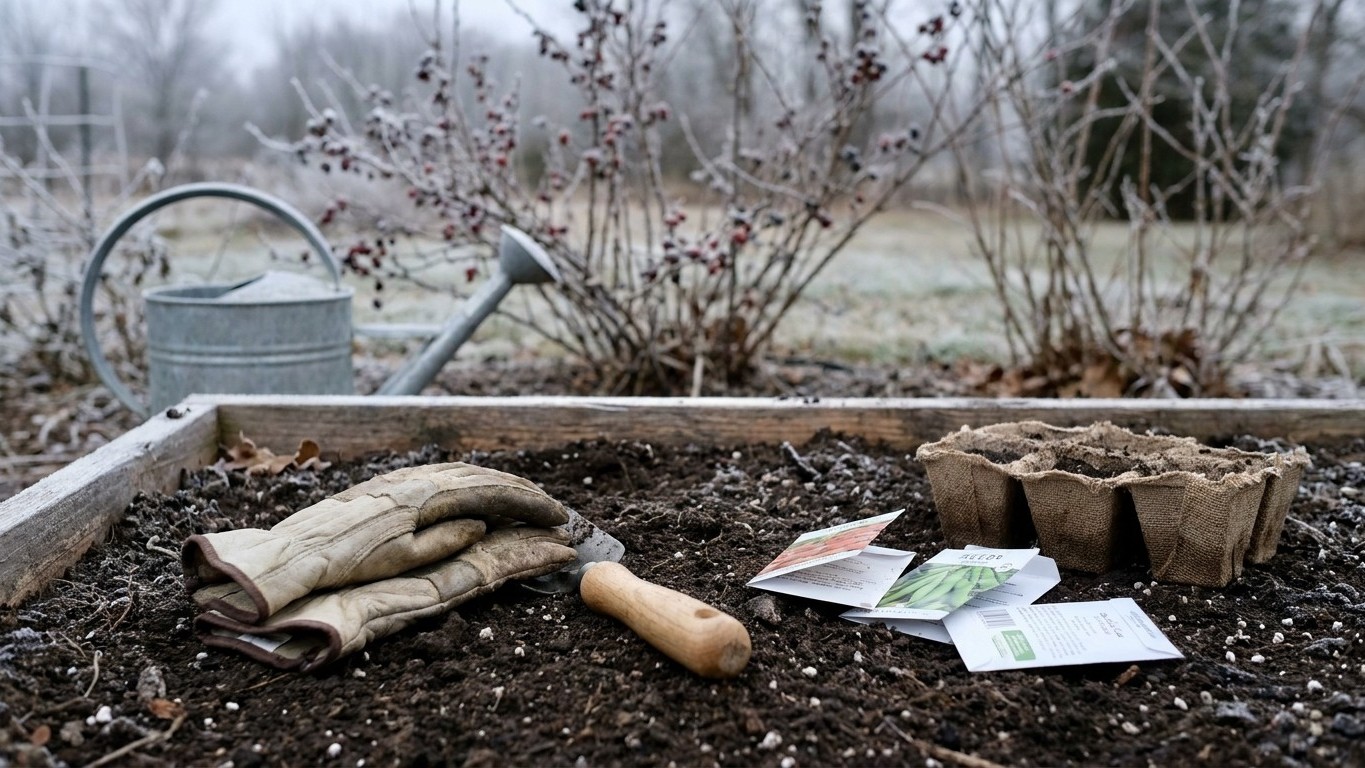

By February, South Carolina gardeners can get garlic and shallots into workable soil, direct-sow English peas and hardy greens, plant bare-root asparagus crowns and fruit trees, and start warm-season transplants indoors. The open ground still carries real frost risk statewide, so tender crops wait. What goes where depends less on the date on the wall than on soil temperature and how close the state sits to its last frost.
What goes in the ground in February

The reference station at Columbia (USW00013880) shows a last spring freeze arriving somewhere between February 28 and March 17, based on NOAA’s 1991-2020 Climate Normals. That means most of February falls before the window closes, not after it. Soil in the upper few inches is often still cold to the touch even on a sunny afternoon, and that number matters more than air temperature ever will. Seeds sown into soil that hasn’t warmed simply sit and rot instead of germinating.
That rules out anything tender. Tomatoes, peppers, squash, beans and melons have no business in open ground this month anywhere in the state. But a real list of what does work still fills a bed.
- Garlic and shallots, wherever the ground can still be worked, since both want a cold spell before they bulb up
- English peas, direct-sown, since they germinate in soil as cool as the mid-40s and shrug off a light frost once up
- Onion sets and short-day onion transplants, which tolerate the swings this month brings
- Spinach, kale, collards and mustard, all of which handle a hard freeze better than most gardeners expect
- Bare-root asparagus crowns, blueberries and brambles, planted dormant while they’re still dormant
Coastal South Carolina, from Charleston south, runs noticeably milder than the Columbia station, and the Upstate runs several weeks tighter at both ends of the season. A cold frame or a low tunnel buys real insurance in either case, letting lettuce and mesclun germinate a few weeks ahead of open-ground conditions. Indoors, this is also the month to force rhubarb crowns or a pot of chicory roots in a dark closet for an early, oddly satisfying harvest that has nothing to do with the weather outside.
What to start under cover
Seed-starting math runs backward from the frost window, not forward from a fixed date. Peppers and eggplant need roughly eight to ten weeks indoors before they’re ready to go outside, so with the reference last frost landing between February 28 and March 17, seed started now under lights or on a warm windowsill times out about right. Tomatoes need six to eight weeks, which gives a bit more room but not much.
Cabbage family transplants, broccoli, cauliflower and Brussels sprouts, want closer to six weeks and tolerate a slightly earlier start since they’ll go out into ground that’s still cool. Lettuce and other quick greens can be started under cover almost any time this month for a rolling supply of transplants.
Two mistakes show up every year. Start too early and the transplants outgrow their pots weeks before the ground or the weather is ready, turning leggy and stressed by the time they finally go outside. Start too late and the same plants never build enough root mass to handle transplant shock when the window does open, costing weeks of production later in spring. Counting backward from the local frost range, rather than from a date on a seed packet, keeps both mistakes off the table. Anyone gardening in the Upstate should push their count later than someone near Charleston, since the local last frost sits later there too.
What is ready to pick
Little comes out of open ground in South Carolina during February, and that’s worth saying plainly rather than dressing up. But the pantry and the cold frame carry real weight this month.
Overwintered kale, collards and leeks that made it through winter cold are often at their sweetest right now, since a hard freeze converts starches to sugars in these crops. Cold frames planted back in fall keep producing lettuce, spinach and mesclun on a slow but steady clip, especially once daylight starts stretching past ten hours. Indoors, sprouts and microgreens fill the gap in under two weeks from seed, needing nothing more than a sunny sill or a shop light.
This is also the month to walk the root cellar or the pantry shelf with a critical eye. Stored winter squash should feel firm and heavy, with no soft spots near the stem. Potatoes that have started sprouting eyes or gone soft belong in the compost, not back in storage. Onions with any give near the neck are on their way out and should get used first. Catching these now, rather than in March, keeps one rotten squash from spreading trouble to the whole bin.
The jobs that matter this month

February carries more of the season’s real deadlines than its bare garden beds suggest. Dormant pruning tops the list: apple, pear, peach and fig trees, along with blackberry and raspberry canes, all take a cleaner cut while they’re still leafless and the wood is easy to read. Wait past bud break and every cut costs the plant sap and vigor it needed for spring growth.
Seed ordering has its own deadline, quieter but just as real. Popular varieties, particularly disease-resistant tomatoes and heirloom peppers, sell out from seed suppliers by late winter most years, and a gardener who waits until March is choosing from what’s left rather than what they actually wanted.
Soil work pays off disproportionately now, before beds fill with roots. A soil test through the county extension office takes a couple of weeks to come back, which makes February the month to send the sample in if amendments need time to work into the ground before spring planting. Turning compost, even just once, speeds up the pile enough to have finished material ready by the time transplants go in.
Round out the list with the jobs that never make it onto a seed packet: cleaning and sharpening pruners and hoes before the season’s first heavy use, repairing raised bed corners or fence sections while beds sit empty, and mapping out crop rotation so nightshades and brassicas don’t land in the same spot they occupied last year. None of it looks like gardening. All of it determines how the next four months go.
What not to do in February
The most common mistake in South Carolina this month is trusting a warm afternoon over the calendar’s frost math. A run of 70-degree days in mid-February happens most years and tricks even experienced gardeners into setting out tomato or pepper transplants, only to lose them to a freeze that arrives, on average, sometime between February 28 and March 17 at the reference station. The air felt warm; the soil and the season hadn’t caught up.
A close cousin of that mistake is pulling row cover or mulch off strawberries, perennial herbs or fall-planted garlic too early after a mild stretch. Exposed crowns and new growth take real damage from the next cold snap, and a plant that survived the coldest week of winter can still get burned in late February by a freeze it was no longer protected against.
Nitrogen timing trips people up too. Feeding a high-nitrogen fertilizer to dormant fruit trees or perennial beds this early pushes soft new growth before the last frost risk has passed, and that tender growth is exactly what a late freeze kills first. Hold nitrogen applications until buds actually start swelling. The same caution applies to working wet soil: stepping into a bed that hasn’t drained after rain compacts the structure for the whole season, undoing months of the fall’s compost work in a single afternoon.
Checking this against your own county
A statewide frost window is a starting point, not an instruction for a specific yard. The Columbia reference station’s February range doesn’t hold everywhere: Charleston and the coastal counties run milder and see their last frost arrive earlier, while Upstate counties near the mountains see it arrive weeks later. Elevation alone shifts the date meaningfully across South Carolina’s terrain.
The Clemson Cooperative Extension Service tracks these local variations county by county and publishes planting guidance tuned to South Carolina’s specific zones. Their office is worth a call or a visit to their extension site before locking in a planting date based on a statewide range alone.
Common questions
Can tomatoes go outside in South Carolina in February?
No. The last spring frost at the reference station runs between February 28 and March 17, and tomatoes have no frost tolerance. Start seed indoors this month instead, timed six to eight weeks ahead of the local last frost.
Is it too late to plant garlic in February?
It’s later than ideal but not impossible where soil is still workable. Garlic planted this late will likely produce smaller bulbs than a fall planting, since it misses part of the cold period that triggers bulbing, but it still beats skipping the crop entirely.
What USDA hardiness zone is South Carolina in?
The state spans USDA Plant Hardiness Zones 7a to 9a, based on the 2023 map’s 1991-2020 average annual extreme minimum temperature. That’s a wide range, and a zone number alone doesn’t replace checking the local frost window for planting decisions.
Should row covers stay on through all of February?
For most crops, yes, unless a genuinely settled warm stretch arrives well after the coldest part of winter has passed. Removing covers too early after one mild week is one of the month’s most common mistakes, since a freeze can still follow within days.
Gardeners who plant by the Moon can check the February 2027 moon planting calendar, a tradition rather than a proven method.