
Yes, sweet corn ripens reliably in South Carolina almost everywhere in the state, and most years leave room to spare. The real question isn’t whether the growing season is long enough, since it is, but when the soil is actually warm enough to plant safely, and how the summer heat load here interacts with pollination once the corn tassels. For a deeper look at the full picture, see Will Sweet Corn Ripen in South Carolina? Get those two details right and a full crop, even a slow-maturing one, has months to spare before the first fall frost shows up.
The short answer
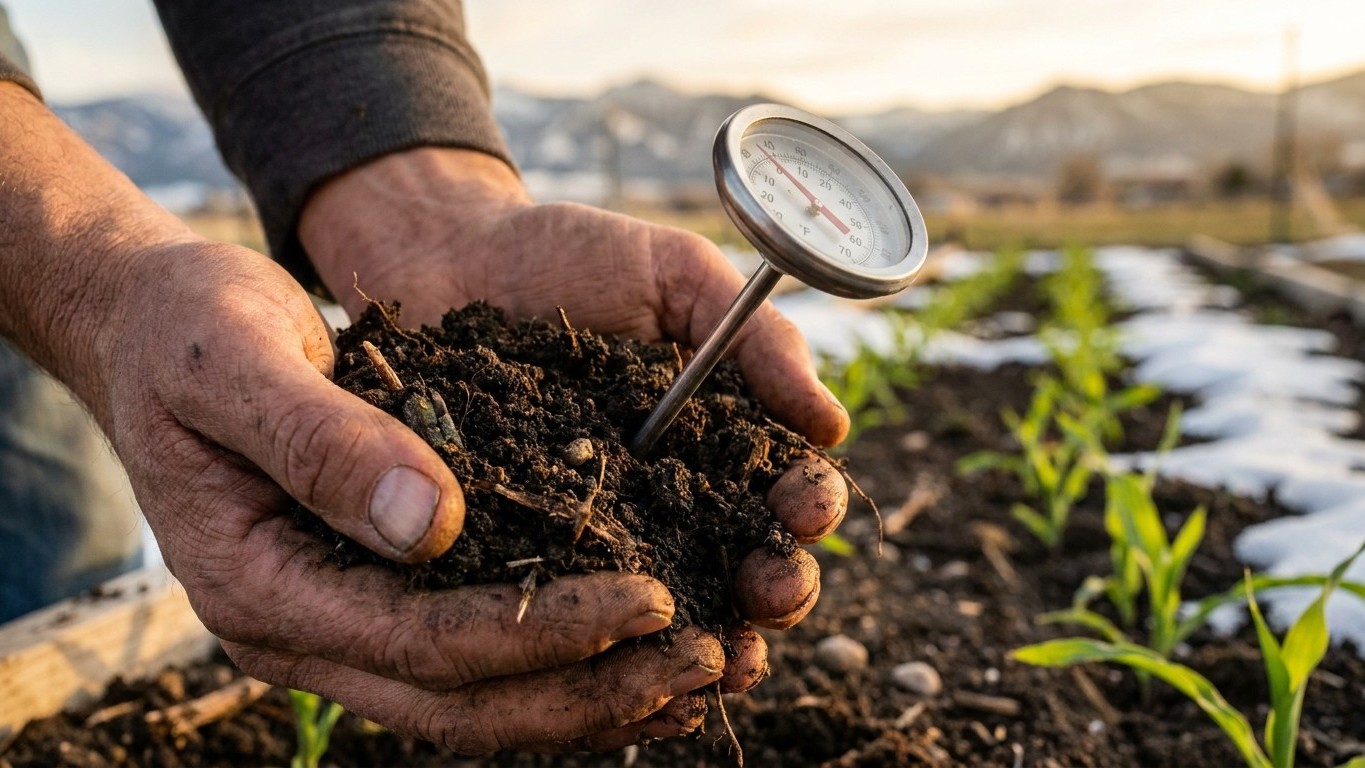
Soil, not air, sets the sweet corn calendar. At the reference weather station used for South Carolina climate normals, the last spring frost falls somewhere between February 28 and March 17 (NOAA NCEI, 1991-2020 Climate Normals). That date matters for tender transplants and tomato starts, but it says nothing about whether the ground is ready for corn seed. Sweet corn needs soil holding above 60°F to germinate reliably, according to Utah State University Extension’s guidance on the crop, and that threshold arrives well after the last frost clears, not the same week. Soil holds winter cold in its top layers long after the air has moved on, so a gardener who plants the day after the last frost date is very likely planting into ground still too cold for the seed to sprout evenly.
Once the soil finally sits above 60°F, the clock that actually matters starts running, and knowing exactly When to Sow Sweet Corn in South Carolina makes the difference between an even stand and a patchy one. Sweet corn needs 60 to 90 days from planting to reach harvest, per the same source. In South Carolina that window is generous. The first fall frost doesn’t arrive until November 20 to December 5 at the reference station, which means a planting made even well into late spring has a comfortable four to seven months of frost-free ground ahead of it before the countdown to 90 days ever gets tight. Compare that to a shorter-season state where the frost-free stretch barely covers one planting, and the picture here looks almost easy: soil warms, corn goes in, and there’s plenty of window for the full 90 days with weeks left over.
The catch isn’t the calendar. It’s the thermometer once summer sets in. The reference station averages 55.1 days a year at or above 90°F, a heat load that has nothing to do with whether the season is long enough and everything to do with what happens to pollen once tasseling begins. Corn pollen is fragile in extreme heat, and a planting timed so its tassels emerge during the hottest stretch of July or August can lose kernels to poor pollination even though the calendar said there was plenty of time. The honest short answer: South Carolina’s growing season is long enough for sweet corn almost anywhere in the state, upstate included, but the real planning question is less “will there be time” and more “will the plant be tasseling during the worst of the heat.”
Does a late variety fit here?
A 60-day variety
A fast-maturing sweet corn is the easy case in South Carolina. Once soil holds steady above 60°F, a 60-day type has finished before the hottest weeks of high summer even begin in most years, and it clears the first fall frost (November 20 to December 5) with months to spare no matter which corner of the state you’re in. That margin is wide enough to support a second, later sowing for a fall harvest, or to stagger plantings a couple of weeks apart so not everything tassels the same week. For a gardener who wants the least risk and the most flexibility, the 60-day window is close to foolproof here.
A 90-day variety
Does the slow end of the range actually fit? It does, and comfortably. Even sown at the start of the warm season, a 90-day type has until late November or early December before frost becomes a factor at the reference station, which leaves an ample cushion after the standard 90 days are counted. Push the planting later into summer, say for a fall-harvest planting, and the arithmetic still works in most of the state: there’s simply that much daylight between a warm-soil planting and the first freeze. The one place to slow down is the Upstate, where the frost window runs several weeks tighter at both ends than the coastal reference station suggests. A 90-day variety sown very late in the Upstate season deserves a second look at local dates before committing, but nowhere in South Carolina does a slow-maturing sweet corn get ruled out by season length alone.
What goes wrong here
- Soil sown too cold. The most common mistake is trusting the calendar instead of the ground. Air feels warm well before soil catches up, and planting the week after the last frost date (February 28 to March 17 at the reference station) often means sowing into dirt that hasn’t reached the 60°F seed needs. The fix is simple: check the soil itself, ideally with a thermometer a few inches down, and wait for a steady reading rather than a warm afternoon.
- A planting mistimed for the region. South Carolina’s frost dates aren’t uniform. Peninsular Charleston runs milder than the airport reference station used for these normals, while the Upstate runs its frost window several weeks tighter on both ends. A late-season sowing timed off coastal dates can run short of days to mature before frost actually hits inland, especially for a slower variety pushed into a late summer planting.
- Sweetness lost to a neighbor. This one has nothing to do with climate. Sweet corn comes in su, se, and sh2 types, and if two of them tassel at the same time nearby, cross-pollination flattens the sugar content of the harvest. There’s no published distance that fixes this; the guidance is about timing, not feet of separation. Plant one type at a time, or stagger sowing dates enough that tasseling windows don’t overlap, and grow corn in blocks of three or more rows rather than a single thin row so pollination itself stays reliable.
Checking this against your own county
The frost dates and heat averages here come from one reference station, and South Carolina is too varied a state for one station to speak for all of it. Coastal Charleston runs milder than its own airport data suggests, while the Upstate sits weeks tighter on both the spring and fall ends. Before committing a planting date, it’s worth confirming local soil-warming and frost patterns with Clemson Cooperative Extension, the land-grant extension service for South Carolina. County agents there track conditions specific to your soil type and elevation, which matters more for a crop this sensitive to soil temperature than any statewide average can.
Common questions
When should I plant Sweet Corn in South Carolina?
Only once the soil itself, not just the air, holds steady above 60°F. That day comes well after the last spring frost clears (February 28 to March 17 at the reference station), so waiting past the frost date by a few weeks and checking the soil directly is safer than planting on the frost date itself.
Does the last frost date tell me when to plant corn?
No. The last frost date only tells you when freezing air becomes unlikely. Sweet corn seed needs the soil to warm separately, and that threshold arrives later than the frost clears, not alongside it.
Can I grow two sweet corn varieties in the same garden?
Only if they don’t tassel at the same time. Su, se, and sh2 types cross-pollinate and lose sweetness when their tassels overlap, so stagger planting dates or grow one type per season rather than assuming distance alone will protect the flavor.
How do I know when the corn is finally ripe?
Check three signs together rather than counting days from planting: silks should be dry and brown, husks should still be moist and green, and juice from a punctured kernel should run milky rather than clear or thick. Planting-to-harvest counts (60 to 90 days) tell you the crop fits the season; the plant itself, not the calendar, tells you the week to pick.