
Sweet corn can ripen in Arizona’s low desert, but the calendar that decides it has almost nothing to do with frost. In most years there isn’t one to dodge. The real limits are how fast the soil warms above 60°F and how many months of extreme heat stand between planting and harvest. Get the timing right and a 60 to 90 day crop fits comfortably. Get it wrong, and heat, not cold, is what stops the ears from filling.
The short answer
Soil temperature, not the last frost, is the number that matters for sweet corn, and in the low desert those two dates aren’t close together. NOAA’s 1991-2020 climate normals for the Phoenix reference station show a freeze at 32°F in only 6 of 30 recorded springs, with any cold snap confined to a narrow window between late December and mid January. NOAA’s own frost-free season figure for the station is 365 days. So for most gardeners here, there simply isn’t a hard frost to count backward from. The soil crosses 60°F, the threshold Utah State University Extension sets for sweet corn germination, well before spring even feels underway elsewhere, and it stays there for months.
That sounds like an easy win, and it partly is. Where it gets complicated is the other end of the season. Sweet corn needs 60 to 90 days from planting to reach harvest, and the arithmetic only works if those days don’t land inside the deepest heat of summer. Phoenix averages 168.9 days a year at 90°F or hotter, a stretch that runs from late spring well into fall in most years. That’s not a hard freeze shutting the plant down; it’s a heat load long enough to stress the crop, drive up water demand, and interfere with pollination if tasseling happens at the wrong moment. Working out exactly When to Sow Sweet Corn in Arizona means planting early enough to dodge that stretch. A fall frost that might close the season out, the kind gardeners in colder states plan around, is also unreliable here. NOAA’s data gives no dependable fall freeze date for this station either.
So the honest short answer to Will Sweet Corn Ripen in Arizona? is that sweet corn ripens fine in Arizona’s low desert if it’s planted early enough that the 60 to 90 day clock finishes before the peak of that 168.9-day heat stretch, or timed for a second window later in the year once the worst of it has passed. The frost date that shapes planting guides in most of the country simply doesn’t apply the same way here. High-country Arizona, places like Flagstaff, is a different climate with real hard freezes, and none of this reasoning transfers there.
Does a late variety fit here?
A 60-day variety
A short-season sweet corn built to mature in around 60 days is the better match for this climate. Planted once the soil has settled above 60°F, a 60-day crop has room to germinate, grow, tassel, and fill ears while still finishing ahead of the longest heat stretch of the year. That buffer matters because the danger here isn’t running out of warm days, it’s running into too many extremely hot ones before the ears are done. A shorter maturity window gives the gardener more control over when tasseling actually happens, which is the single most heat-sensitive stage of the whole crop.
A 90-day variety
A 90-day variety is a harder sell in this territory, and it’s fair to say plainly that it often doesn’t fit. Stretching the clock to 90 days means tasseling and ear fill land later in the season, closer to or inside the stretch of 168.9 average days above 90°F. That’s the exact period when pollination is most likely to be disrupted by heat stress, and there’s no compensating cold snap at the other end to force an early finish the way a fall frost would elsewhere. A 90-day type isn’t impossible if planted at the earliest safe moment after soil crosses 60°F, but the margin for error is thin, and a late spring or a mistimed planting can push the whole crop into the worst weeks of the year with no fallback.
What Goes Wrong here
- Soil sown too cold. Because frost is so rare in the low desert, it’s tempting to plant on the calendar instead of the soil. Sweet corn seed sown before the ground has actually reached 60°F germinates poorly or not at all, frost or no frost. The remedy is simple: check soil temperature directly rather than assuming an absence of frost means the soil is ready.
- A variety too late for the season. A 90-day type planted without accounting for the 168.9-day heat stretch can end up tasseling in the hottest weeks of the year, when ear fill fails even though the plant itself looks healthy. The fix is to lean toward a shorter maturity window, or to plant as early as the soil allows so the clock finishes before deep summer heat sets in.
- Sweetness lost for reasons that have nothing to do with climate. Utah State University Extension is direct on this point: su, se, and sh2 sweet corn types lose their sweetness if they tassel at the same time nearby. This is a pollination problem, not a heat or frost problem, and it happens in mild climates just as easily as harsh ones. The source gives no isolation distance to plant by, so the only real safeguard is timing: don’t grow different sweetness types on schedules that put their tasseling in the same window, and keep each type in its own block of three or more rows so it pollinates itself rather than cross-pollinating with a neighboring type.
Checking this against your own county
Everything above describes the low desert reference station, and Arizona’s climate varies enormously by elevation. A garden in the Phoenix basin and one in the high country are effectively different growing worlds, one built around heat management, the other around real hard freezes. Before locking in a planting date, check with the University of Arizona Cooperative Extension at extension.arizona.edu, which runs county offices with local soil temperature guidance and variety recommendations suited to specific elevations. A five-minute call to the county office, or a look at their published planting charts, will confirm whether the reasoning here matches the actual conditions on a specific piece of ground.
Common questions
Does Arizona’s low desert really have almost no spring frost? According to NOAA’s 1991-2020 climate normals for the Phoenix reference station, a 32°F freeze occurred in only 6 of the 30 years on record, and NOAA lists the frost-free season there as a full 365 days. That’s why a frost-based planting calendar doesn’t work for this region; the limiting factor is summer heat, not cold.
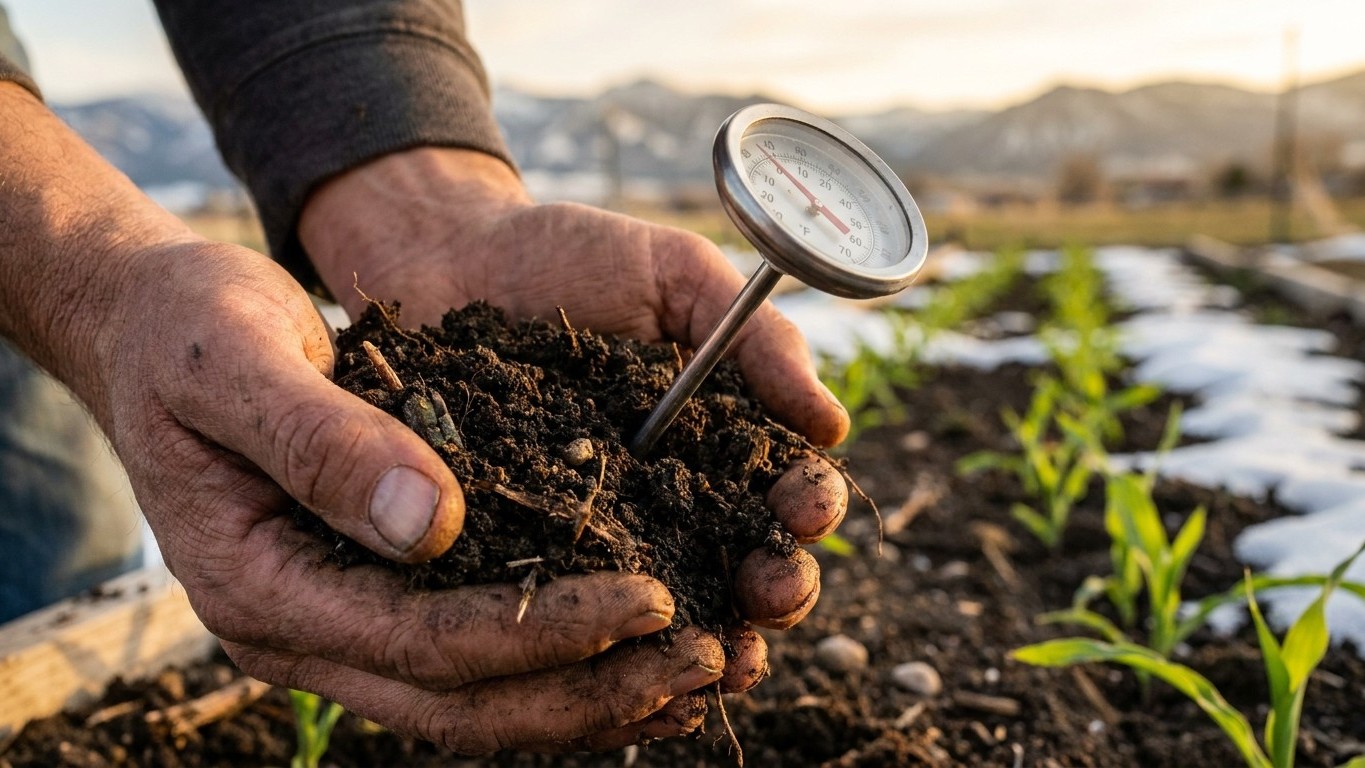
How do I know when the soil has actually reached 60°F? A soil thermometer pushed a few inches into the planting bed is the only reliable check. Utah State University Extension sets 60°F as the minimum for sweet corn germination, and that threshold arrives on its own schedule, independent of whether a frost happened at all.
Can I plant two rounds of sweet corn in one year here? The math allows for it in principle, since there’s no early fall frost forcing an end date the way there is in colder states, but each planting still has to dodge the extended heat stretch measured by the 168.9 days a year above 90°F. That means timing a second planting for after the worst of summer eases rather than assuming an open-ended season.
How do I know an ear is actually ready to pick? Utah State University Extension points to three signs checked together, not one alone: the silks have dried and turned brown, the husk is still moist and green, and juice from a punctured kernel runs milky rather than clear or watery. Measured separately from the 60 to 90 day planting-to-maturity window, ears typically finish 17 to 24 days after silks first appear, which is the number to watch once tasseling has already happened.