
Yes, sweet corn ripens in Louisiana, but the calendar that decides it looks nothing like a Northern planting guide. Frost is barely a factor across the southern half of the state, some years it never shows up at all. The real gatekeeper is soil temperature in late winter, followed by a stretch of summer heat that can wreck pollination before an ear ever fills out. Get the timing right and a short-season variety finishes in eight or nine weeks. Push a longer variety into that window and the heat gets there first.
The short answer
Start with the frost data, because it behaves strangely here. NOAA’s climate normals put the last spring frost, defined by the point at which a 32°F freeze has already passed for most years, somewhere between January 18 and February 8. That freeze itself only shows up in 86.8 percent of years at the reference station, which means roughly one winter in seven brings no freeze at all. On the other end, the first fall frost lands between December 17 and January 8, a window that straddles the new year rather than sitting neatly in autumn like it would further north.
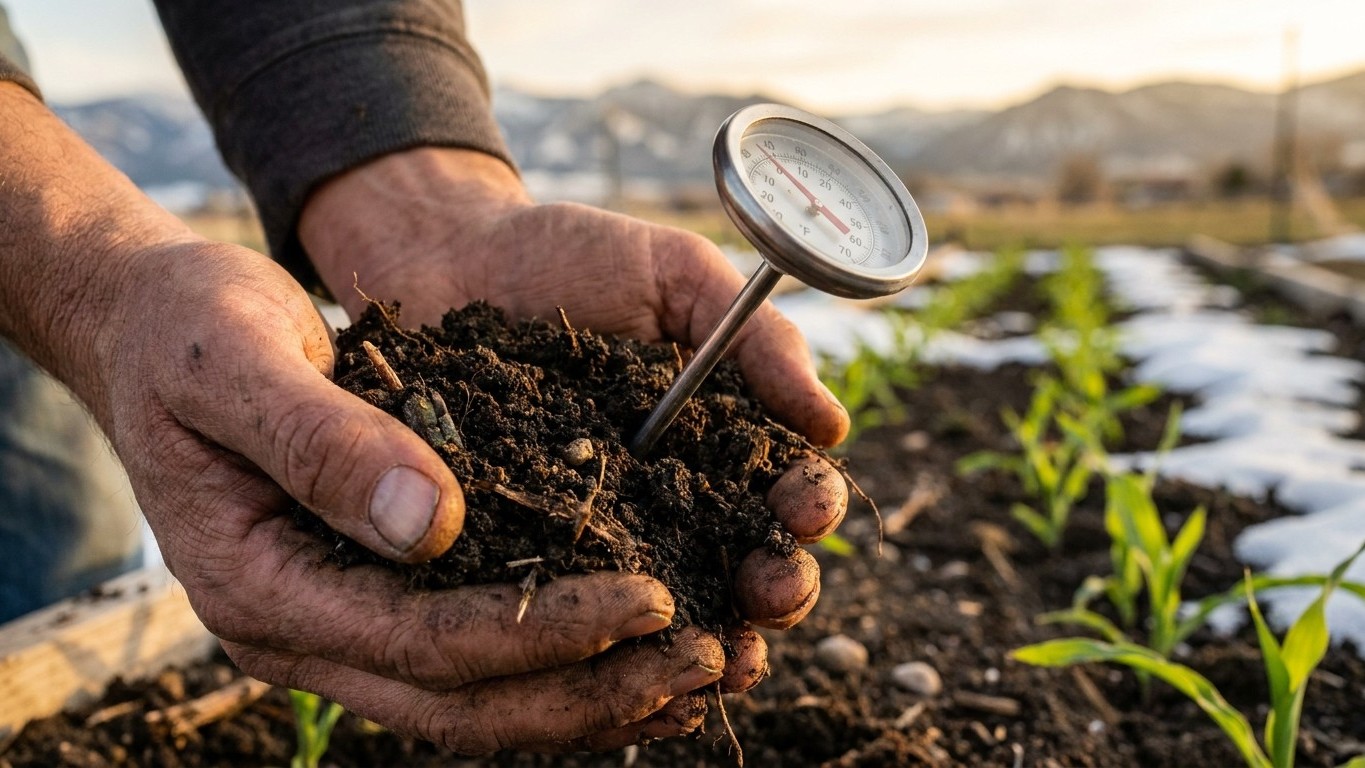
Soil temperature is a separate clock, and it runs later than that frost date, not alongside it. Sweet corn needs soil above 60°F before the seed will germinate reliably instead of rotting in cold, wet ground. Even after the freeze risk has passed, the ground itself needs sustained warm days to climb into that range, so the safe planting window opens weeks after the last frost, not on the same day. There is no published date here for exactly when south Louisiana soil crosses 60°F, so treat the frost date as a floor, not a starting gun, and confirm actual soil warmth with a soil thermometer before you plant.
Once soil is warm enough, the 60 to 90 day maturity clock for sweet corn has to run its course before the first fall frost shows up in mid-December at the earliest. On paper, that gives an enormous window, since the frost-to-frost season in south Louisiana stretches across nearly the entire calendar. But the number that actually limits sweet corn here is not frost at all. It is heat. The reference station near New Orleans averages 70.7 days a year at 90°F or above, and those days cluster hard through the middle of summer. Corn silks and pollen do not tolerate that kind of sustained heat well, and a planting that tassels in the thick of it can fail to fill ears even though it technically had enough days to mature.
So the short answer to Will Sweet Corn Ripen in Louisiana? holds: sweet corn can ripen in Louisiana, and in most years it ripens comfortably. The trick is When to Sow Sweet Corn in Louisiana so that the 60 to 90 day clock finishes its work before the hottest stretch of summer arrives, not chasing the frost dates the way a Northern gardener would.
Does a late variety fit here?
Whether a specific variety fits depends almost entirely on where its maturity window lands relative to the summer heat load, not on whether frost will kill it. That reshuffles the usual advice.
A 60-day variety
A short-season type planted once soil has reliably crossed 60°F has room to spare. Sixty days from a spring planting lands the crop well ahead of the deepest heat of summer, before the days-above-90°F count starts stacking up in earnest. That timing keeps tasseling and silking in a cooler stretch, which gives pollen a better chance of staying viable and silks a better chance of staying receptive long enough to set a full ear. For most home gardens in Louisiana, a 60-day variety planted early in the warm-soil window is the safer bet, and it leaves enough slack in the calendar to try a second planting later in the season if the first one underperforms.
A 90-day variety
A 90-day variety does not fit as comfortably, and it is worth saying plainly that this is the type most likely to disappoint here. Planted at the same time as a short-season variety, it would still be tasseling deep into the hottest stretch of summer, right when the days-above-90°F count is highest. That is exactly the window where heat stress on silks and pollen tends to cut ear fill short, no matter how healthy the plant looks. Shifting a 90-day variety later, aiming for a fall harvest before the December frost window, runs into the opposite problem: working backward from a mid-December frost puts the planting date in late summer, when soil and air temperatures are still firmly in the heat-stress range rather than easing off. Louisiana’s frost calendar is generous enough to let a 90-day variety technically finish before the ground freezes, but the heat calendar in between makes that maturity length a risk rather than a plan, and it is not the variety type to lean on here.
What goes wrong here
- Soil sown too cold. Planting before the ground has actually climbed above 60°F, rather than just after the last frost date, is the most common early failure. Seeds sit in cool, damp soil, rot before they germinate, or come up weak and uneven. The remedy is simple: confirm soil temperature directly with a thermometer rather than relying on the frost calendar, and wait until it holds above 60°F for several consecutive days before planting.
- A variety too late for the season. Choosing a 90-day type and planting it on a spring schedule pushes tasseling into the peak of summer heat, where pollen and silks fail even though the plant otherwise looks fine. The fix is to favor shorter-maturity varieties for the main planting and treat longer-season types as a gamble rather than a default choice.
- Sweetness lost because two types tasseled together. This one has nothing to do with climate. Standard sugary (su), sugary enhanced (se), and supersweet (sh2) types cross-pollinate if they tassel at the same time, and the result is starchy, disappointing corn even though the ears filled out normally. The remedy is timing and separation of plantings so the different types are not shedding pollen and showing silk in the same week, and planting in blocks of three or more rows rather than a single thin row, which improves pollination within a block and helps keep it contained to that block.
Checking this against your own county
The frost and heat figures here come from a single reference station, and Louisiana’s climate shifts meaningfully from the coast to the northern parishes. South Louisiana barely freezes some winters; north Louisiana freezes far more reliably and on a more predictable schedule. Before locking in a planting date, check current conditions and variety recommendations with the LSU AgCenter, Louisiana’s land-grant extension service. They track local frost trends, soil temperature guidance, and variety performance by region, which fills in exactly the gaps a statewide overview like this one can’t cover. A quick call or visit to the parish office is the fastest way to confirm whether your own soil and heat pattern lines up with the general picture described here.
Common questions
When should I plant sweet corn in Louisiana?
Once soil has reliably warmed above 60°F, which comes weeks after the last frost date rather than right after it. Confirm with a soil thermometer rather than the calendar alone.
Does Louisiana ever get a hard freeze that kills corn?
In south Louisiana, a 32°F freeze occurs in only about 86.8 percent of years, meaning roughly one winter in seven has no freeze at all. North Louisiana freezes far more reliably, so the risk profile differs sharply across the state.
Can I grow two types of sweet corn in the same garden?
Yes, but su, se, and sh2 types must not tassel at the same time, or cross-pollination will dull the sweetness of the harvest. Stagger planting dates so tasseling windows don’t overlap, and grow each type in its own block of three or more rows.
How do I know when the corn is actually ripe?
Check for all three signs together: silks turned dry and brown, husks still moist and green, and milky juice when you puncture a kernel. Any one sign alone isn’t a reliable test.