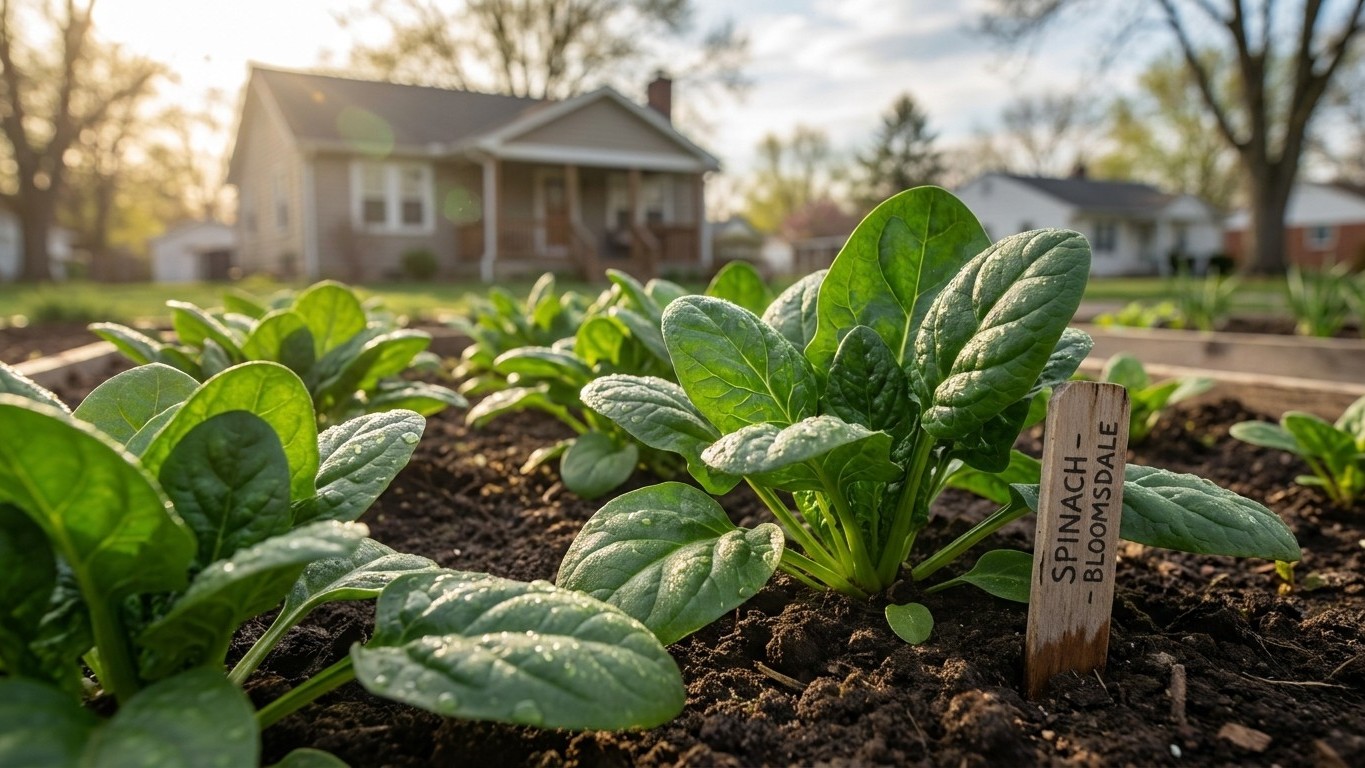

Spinach in Tennessee bolts on two clocks at once: the calendar’s day length and the thermometer’s heat. Sown in spring, it runs to seed once days lengthen and temperatures climb past its comfort zone, typically within eight to nine weeks of sowing. Sown for fall, the plant waits on cooling soil, then races an approaching frost. Neither window is generous, which raises the question: Will Spinach Bolt Early in Tennessee?
The short answer
At the reference city used for Tennessee’s climate normals, the longest day of the year brings 14 hours and 28 minutes of daylight. That number matters more than most gardeners expect, because spinach bolts under long days as well as under heat. A cool summer does not rescue the crop where daylight runs that long; the day length alone is enough to push spinach toward flowering, regardless of how mild the air feels. This is the opposite of what long days do to a bulbing onion, so it is worth saying plainly: nothing about a long Tennessee day helps spinach. It only pushes the plant toward seed.
Heat compounds the problem rather than replacing it. Tennessee’s Nashville reference station logs an average of 40 days a year at 90 F or hotter, a heat load that arrives well before the solstice and lingers into early fall. Spinach grows best where temperatures stay under 75 F, and that ceiling is also the point past which the leaves turn bitter. So the honest answer to what limits spinach here is both factors working together: rising day length ends the spring crop on its own timetable, and rising heat arrives at almost the same moment to make sure the plant does not linger. In fall, the sequence runs in reverse, but heat still calls the shots first, because warm soil blocks germination long before the season’s first frost becomes the concern.
Practically, that means Tennessee gardeners are not managing one bolting trigger but two that overlap. Trying to stretch a spring planting later into May by hoping for a cool June does not work, since the day length keeps lengthening no matter what the thermometer says. Trying to start a fall crop early to beat the frost does not work either, since the soil is often still too warm for good germination well into what feels like fall weather, which is exactly why knowing When to Sow Autumn Spinach in Tennessee matters so much. The two sowing windows below spell out exactly how narrow that leaves things.
How long the spring window really is
- Start from the last frost. NOAA’s 1991-2020 climate normals put Tennessee’s last spring freeze (32 F) between March 31 and April 12, depending on where you sit relative to the reference station. East Tennessee and the Cumberland Plateau tend to run cooler and later than that date, so gardeners there should lean toward the later end.
- Sow two to three weeks earlier. Spinach seed tolerates cool soil, so the recommended sowing window sits two to three weeks ahead of that last frost date, roughly mid-to-late March across most of the state, and closer to early April in the cooler eastern counties.
- Track the growth ceiling. Good growth continues only while temperatures stay under 75 F. Nashville’s spring typically pushes past that mark well before the calendar reaches summer, and the state’s average of 40 days a year at 90 F or higher shows how fast that heat builds once it starts.
- Add the day length trigger. Even where a stretch of cooler weather delays the heat, the lengthening days keep pushing the plant toward bolting on their own schedule, tightening the window from the other direction.
- Total it up. Sown in mid-to-late March and finished before temperatures settle above that 75 F ceiling, Tennessee’s usable spring spinach season runs to roughly eight or nine weeks before the plant turns to seed.
The autumn crop, and when the soil lets you sow
Fall spinach flips the order of obstacles. Instead of racing rising day length, gardeners are waiting on the ground to cool down, then racing the season’s first hard freeze to get a harvest in before it hits.
Waiting for the soil to cool
Spinach seed germinates poorly once soil temperatures climb above 80 F, and Tennessee’s summer heat load, that same average of 40 days a year at 90 F or hotter, keeps soil warm well past what the calendar suggests as “late summer.” A gardener who sows in early August, expecting cooler fall weather to help, is often sowing straight into soil that has not shed its summer heat yet. The practical move is to check soil temperature directly rather than trust the date on the seed packet, and to wait until it has clearly dropped before committing seed to the ground.
Racing the first frost
Tennessee’s first fall freeze arrives between October 28 and November 8 at the reference station, again running later in warmer valley locations and earlier across the cooler Cumberland Plateau. Utah State University Extension recommends sowing fall spinach 50 to 75 days ahead of the date you want to harvest, which gives a working range for Tennessee gardeners once the soil has cooled enough to allow it.
| Target harvest date | Sow 75 days earlier | Sow 50 days earlier |
|---|---|---|
| October 28 (earlier frost bound) | Around August 14 | Around September 8 |
| November 8 (later frost bound) | Around August 25 | Around September 19 |
Laid against the soil-temperature problem above, the real fall window in much of Tennessee often opens later than the earliest of those dates and closes fairly quickly once frost risk climbs. That leaves a workable stretch, but not a long one, and it rewards a gardener who checks soil temperature directly rather than sowing by the calendar alone.
Checking this against your own county
Every date above comes from a single reference station, and Tennessee’s geography, from the Mississippi lowlands to the Cumberland Plateau to the higher elevations near the Smokies, shifts both frost dates and summer heat considerably from one county to the next. Before locking in a sowing date, check current conditions and local guidance through the University of Tennessee Institute of Agriculture Extension, which maintains county offices across the state. A local agent can confirm typical frost timing for your specific area and help you read soil temperature correctly before a fall sowing, rather than relying on a statewide average that may run a week or two off in either direction.
Common questions
Can spinach survive a Tennessee summer if I keep it watered?
No. Bolting here is driven by day length as much as by heat, so even a well-watered, shaded plant will still respond to the long June days by running to seed. Watering and shade help with leaf quality up to that point, but they do not stop the trigger.
What varieties do Tennessee gardeners typically plant?
Bloomsdale, Melody, Teton, and Olympia are commonly grown spinach varieties, though no performance data specific to Tennessee conditions is published for any of them here. Choosing among them comes down to availability and personal preference rather than a documented regional advantage.
Why does spinach taste bitter late in the season?
The same 75 F mark that limits good growth is also the point past which the leaves turn bitter. Once temperatures push consistently above that threshold, both texture and flavor decline even if the plant has not yet bolted.
Is the fall or spring crop more reliable in Tennessee?
Neither has a clean advantage. Spring is limited by lengthening days arriving alongside rising heat, while fall is limited by soil that stays too warm to germinate well into what feels like autumn. Both windows run around eight to eleven weeks at best, and both call for checking actual conditions rather than working strictly off the calendar.