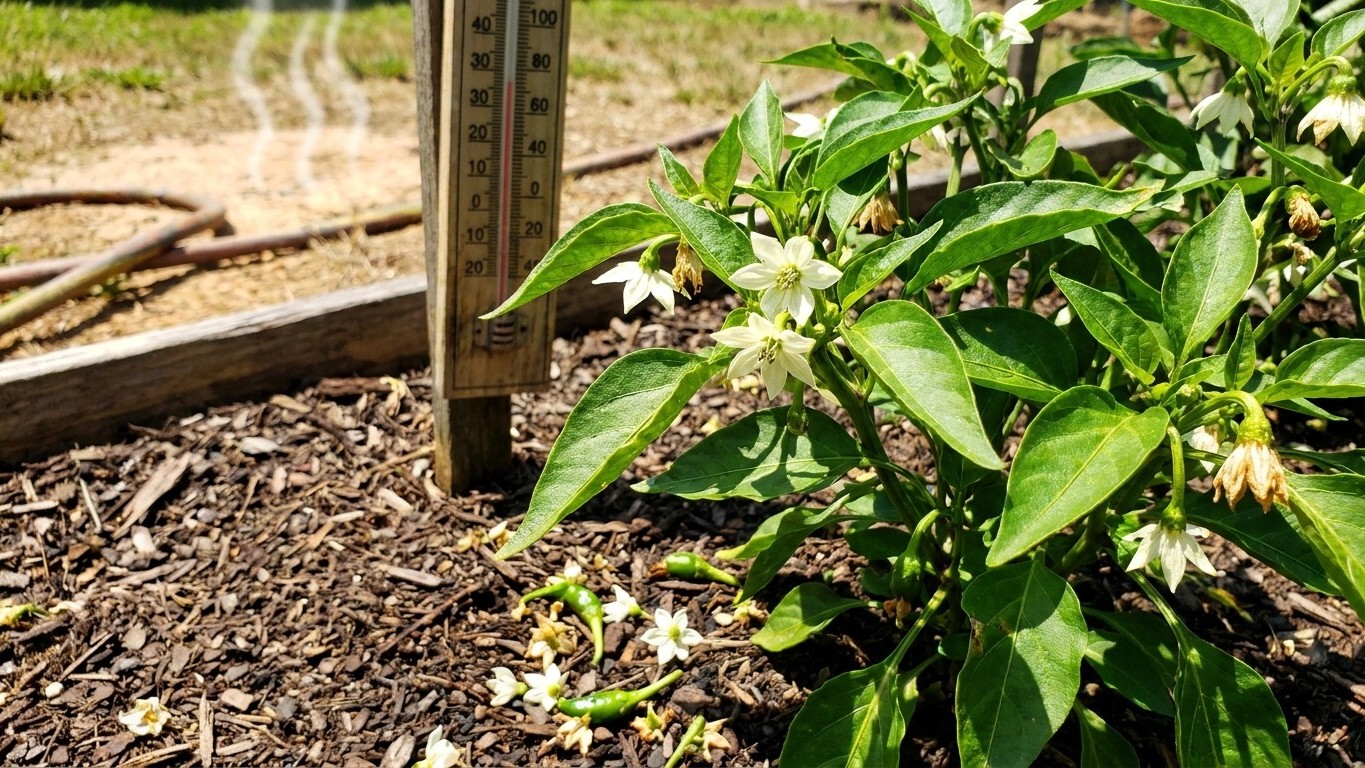

Middle Tennessee averages 40 days a year at 90 F or higher, and that heat alone can strip a pepper plant of its blossoms before a single pod forms. On the other end, nights that drop below 55 F cause the same blossom drop, but summer night lows aren’t tracked for this state on this site, so the fix starts with a thermometer on your own porch, not a map.
The short answer
Forty days above 90 F sounds like a lot until you spread it across a Tennessee summer that runs from late May through September. Those hot stretches rarely land as one brutal week. They come in waves: a string of 92 F afternoons in late June, another push in mid-July, sometimes a final round in early September before things cool off. Each wave matters more than the season average, because pepper pollen starts losing viability once daytime highs climb past 90 F for several consecutive days. The flower still opens. It just doesn’t set fruit. Growers often assume something is wrong with the soil or the watering schedule when the real culprit is sitting in the forecast.
The mechanism is fairly mechanical once you see it. Pepper flowers rely on pollen transferring cleanly from anther to stigma, and pollen grains are fragile. Heat above roughly 90 F during the day, especially when paired with low humidity, dries the pollen out or deforms it before it can do its job. The plant senses the failed fertilization and drops the flower rather than waste energy on a bloom that isn’t going anywhere. That’s why a pepper plant can look loaded with flowers in July and still hand you almost nothing in August. The flowers were never the problem. The air was.
Now for the other end of the range, and this is the part gardeners in Tennessee tend to overlook. Nights below 55 F cause the identical failure: healthy-looking flowers that drop instead of setting. This shows up most often at the shoulders of the season, early plantings in a cool April or a late crop trying to finish in a chilly September. The trouble is that summer night minima for Tennessee aren’t published on this site, and they shouldn’t be guessed from latitude or from how cold January gets. A river valley three miles from a ridge can run five degrees cooler at 4 a.m. for reasons that have nothing to do with where the county sits on a map. The only reliable move is to track your own overnight lows through a thermometer or a weather station near the actual bed, especially during the first few weeks after transplant and again as fall approaches.
So the real answer has two halves. Watch the daytime heat load using the 40-day average as a warning that mid-summer stretches will likely cross 90 F more than once, and watch your own nighttime numbers directly because that data doesn’t exist in a regional average that’s useful at the scale of a single garden bed.
When to start seed here
Working backward from the last frost date gives you a planting calendar that actually fits your county, instead of a generic date pulled from a seed packet printed for the whole country.
- Start with the frost window. NOAA’s 1991-2020 Climate Normals put the last spring freeze for the Nashville reference station between March 31 and April 12. East Tennessee and the Cumberland Plateau run cooler and later than that, so add extra days if you garden east of the Cumberland Plateau or at higher elevation.
- Add a soil-temperature check. Frost date alone isn’t enough. Utah State University Extension advises transplanting peppers only once soil has warmed to 60 F, which in a Tennessee spring often lags a week or two behind the air finally staying frost-free. A soil thermometer pushed 4 inches deep, checked in the morning before the sun warms the surface, gives a fair reading.
- Count back 8 to 10 weeks for indoor seed starting. If your target transplant date lands around April 10 because that’s your local last-frost date and soil has caught up, count back 8 weeks for a faster-maturing variety and 10 weeks for a slower one. That puts seed-starting somewhere in the first half of February for most of Middle Tennessee, and closer to mid-February for cooler pockets of East Tennessee.
- Build in a buffer for a late cold snap. Because the freeze-date range spans nearly two weeks even at a single reference station, treat the early end of your window as tentative. Keep transplants under cover, or hold them indoors a few extra days, if a cold front is forecast right around your planned move-out date.
- Recheck the calendar once temperatures start climbing. If soil hits 60 F earlier than expected during a warm spring stretch, that’s the greenlight to move plants out, provided the frost risk has genuinely passed for your specific location.
None of these steps require guessing. They require a calendar, a soil thermometer, and a willingness to adjust the plan county by county rather than trusting a single statewide date.
What goes wrong here
- Blossom drop during a July heat spike. When daytime highs push past 90 F for several days running, pollen viability drops and flowers fall without setting fruit. There’s no quick fix for the air itself, but light afternoon shade cloth over the hottest rows, and consistent deep watering so the plant isn’t fighting drought stress on top of heat stress, both reduce how many flowers are lost during a given hot stretch.
- Blossom drop during an unseasonably cool night. The same failure shows up when overnight lows fall below 55 F, which is more likely at the start and end of the season than in the dead of summer. Since this site doesn’t track night minima for Tennessee, the practical remedy is to monitor your own overnight temperatures directly, whether with a min-max thermometer or a garden weather station, and delay transplanting or protect late-season plants with row cover when a cool night is forecast.
- Sunscald on exposed fruit. Tennessee’s strong summer sun can scorch pale, papery patches onto pepper skins once fruit loses the leaf cover that normally shades it, often after aggressive pruning or after a storm strips foliage. Keeping a full, leafy canopy intact rather than over-thinning the plant, and avoiding heavy pruning during the hottest weeks, protects developing fruit from direct exposure.
- Blossom-end rot. This shows up as a sunken, leathery brown spot on the bottom of the fruit and traces back to inconsistent watering that disrupts calcium uptake, not a calcium shortage in the soil itself. Even, regular watering, especially through the wave of hot days that also threaten blossom drop, keeps the root zone from swinging between dry and saturated.
Common questions
Do all pepper varieties Fail to Set Fruit at the same temperatures?
Utah State University Extension names six pepper varieties suited to home gardens but does not assign heat tolerance ratings, maturity days, or fruit size to any of them individually. Fruit-set failure above 90 F and below 55 F applies to peppers broadly, so there’s no published figure showing one named variety holds up better than another under Tennessee’s heat waves.
Can I fix blossom drop by fertilizing more heavily?
No. Heavy fertilizing, especially with nitrogen, tends to push leafy growth at the expense of flowering and does nothing to protect pollen from heat damage or cold nights. The fix is timing and temperature management, not feeding.
Should I start seed earlier to beat the summer heat?
Starting seed earlier only helps if the plant is also ready to go into soil that has reached 60 F after the last frost has passed. Pushing seed-starting earlier than 8 to 10 weeks before that transplant window just leaves plants leggy and stressed indoors, without moving up when they can safely go outside.
Is there a set number of days before I should expect fruit after flowering?
That figure isn’t published in the sources behind this article for Tennessee conditions, so rather than guess, treat flowering as the start of a waiting period whose length depends on the variety and the weather that follows, and watch the plant itself rather than counting toward an unverified date.