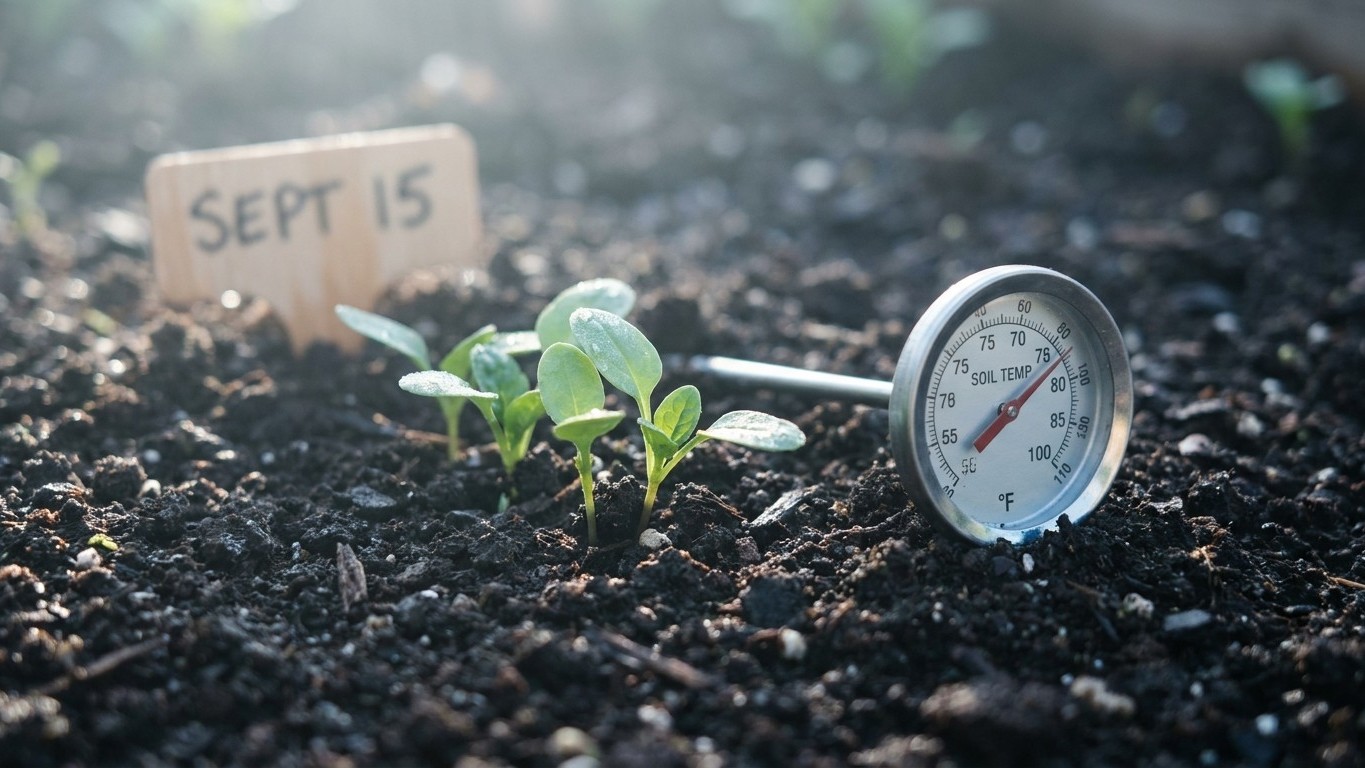

Sow Autumn Spinach in Tennessee once soil temperatures drop below the 80 F germination ceiling, typically from late August into mid-September in most of the state, and count back 50 to 75 days from your target harvest date before the first fall frost. The window shifts later in East Tennessee and on the Cumberland Plateau, where cooler air keeps soil warm longer into the season but also brings frost sooner.
The short answer
Tennessee’s reference city sees 14 hours and 28 minutes of daylight on the longest day of the year. That number matters more than most gardeners realize, because spinach bolts under long days combined with warm temperatures, according to Utah State University Extension. A day length past roughly 14 hours pushes spinach toward flowering no matter how mild the air feels that week. A cool, cloudy June in Tennessee does not cancel this signal. The plant reads the light, not just the thermometer.
Add heat to that equation and the picture gets tighter. The reference station averages 40 days a year at 90 F or hotter. That is not the average summer temperature, it is the heat load, the accumulated stretch of days that push soil and leaf tissue past what spinach tolerates. Utah State University Extension puts the growth ceiling at 75 F, and the same number marks where leaves start turning bitter. So the ceiling has two jobs: past 75 F, growth slows, and past 75 F, flavor suffers even if the plant keeps limping along.
Put those two facts together and the answer is that Tennessee’s summer shuts spinach out on both fronts, day length and heat, not just one. The long days of May through July trigger bolting on their own. The 40 annual days above 90 F make sure that even a shade-tolerant planting cooks before it can recover. Neither factor is optional to work around; they stack. This is why spinach in Tennessee is strictly a cool-season crop grown in two separate windows, spring and fall, with nothing but heat-stressed, bitter leaves in between.
That framing changes how you should plan the calendar. Rather than asking “when does spinach grow best here,” the better question is “how much cool window do I actually get before day length and heat both turn against me.” Spring gives one answer. Fall gives a different one, shaped by a different obstacle entirely: not day length this time, but soil that has not yet cooled off from summer.
How long the spring window really is
Spring sowing follows a simple rule from Utah State University Extension: get seed in the ground 2 to 3 weeks before the last expected frost. For the reference station, that frost falls between March 31 and April 12, which means direct sowing can start as early as mid-March. East Tennessee and the Cumberland Plateau run later, so gardeners there should shift the whole sequence back by a week or two rather than trusting the Nashville-area dates.
- Sowing start: roughly mid-March in the reference area, factoring in the 2 to 3 week lead time before the March 31 to April 12 frost window.
- Early growth: late March through April, while day length is still short of the bolting trigger and air temperatures stay below the 75 F ceiling most days.
- Window closing: once daytime highs start regularly topping 75 F, which in Middle Tennessee typically arrives by mid-to-late May, growth quality drops even before bolting becomes visible.
- Hard stop: by the time day length climbs toward the summer peak of 14 hours 28 minutes, any spinach still in the ground bolts regardless of how the thermometer reads that day.
Stacking those steps against each other, spring usable growing time comes out to somewhere around eight to ten weeks, from mid-March sowing to a late-May cutoff, and that estimate assumes no late cold snap pushes sowing back further. It is a real but narrow window, and it closes from two directions at once, rising heat and lengthening days, which is exactly why a second, autumn-only window exists on the other end of the calendar.
The autumn crop, and when the soil lets you sow
Fall sowing solves the day-length problem automatically. By late summer, day length is already shortening past the point that triggers bolting, so the plant is no longer fighting that signal. But a different obstacle takes its place, and it has nothing to do with cold.
Soil still too warm to germinate
Utah State University Extension reports that spinach seed germination drops once soil temperature climbs above 80 F. Given the reference station’s average of 40 days a year at 90 F or higher, soil in Tennessee routinely holds well above that 80 F mark through most of August. Sowing too early into hot soil is a common reason fall spinach fails to come up at all, not frost, not fertility, just soil that has not cooled off yet. The practical fix is to wait for a stretch of cooler nights, typically once daytime highs start easing below the upper 80s, before putting seed in the ground.
The frost that ends the season
The first fall frost at the reference station falls between October 28 and November 8, again running later in East Tennessee and on the Cumberland Plateau. Utah State University Extension gives no published days-to-maturity figure for spinach, but does state a general planting rule for fall crops: sow 50 to 75 days before the date you want to harvest. Counting back from a harvest target in late October or early November puts the sowing window at roughly mid-August through mid-September, which lines up with when soil has usually cooled enough to germinate reliably. Named spinach varieties such as Bloomsdale, Melody, Teton, and Olympia turn up in extension guidance, so treat variety choice as a separate decision from the timing question.
Common questions
Can I sow spinach in Tennessee in midsummer?
No. Midsummer combines the long days that trigger bolting with the heat load that pushes past the 75 F growth ceiling, so seed sown in June or July bolts and turns bitter before producing a usable harvest.
Why does my fall spinach seed fail to sprout even though nights are cooling?
Soil temperature lags behind air temperature. Even once nights feel cool, soil can stay above the 80 F germination threshold for weeks, especially in a summer with a high number of 90-plus-degree days.
Does a cool, cloudy Tennessee summer let spinach grow longer into June?
No. Bolting is triggered by day length as well as heat, so a cool but long-day summer still pushes spinach to flower on schedule, regardless of cloud cover or a mild temperature reading that week.
Should East Tennessee gardeners use the same dates as Middle Tennessee?
No. East Tennessee and the Cumberland Plateau run cooler and later in spring, and their frost dates shift later in fall too, so both the spring sowing start and the fall sowing window should be nudged back relative to the reference station’s dates.