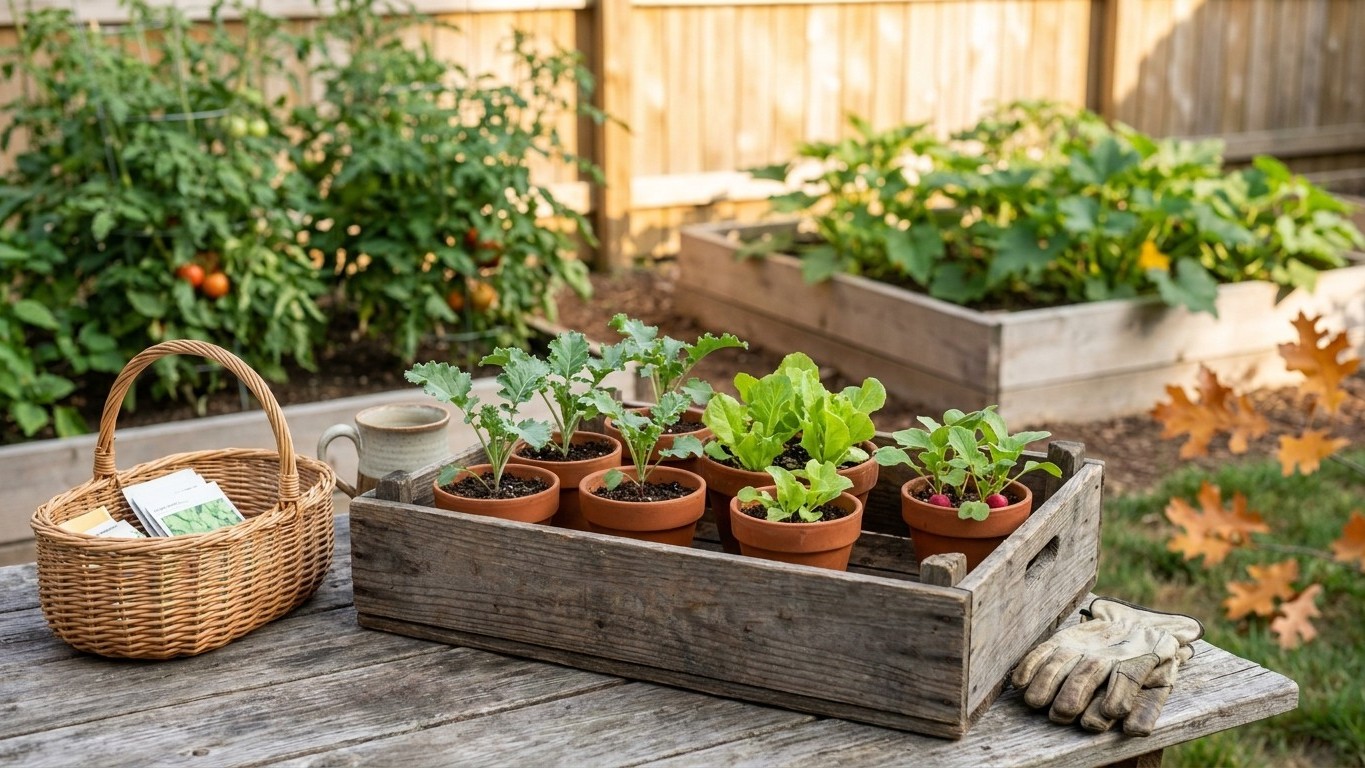

August in Texas is less about planting for right now and more about planting for what comes after the heat breaks. The safest moves this month are heat-tolerant crops sown straight into the ground, southern peas and okra chief among them, plus setting out tomato and pepper transplants that were started indoors weeks earlier. Cool-season crops like broccoli, cabbage, and lettuce belong in trays under cover, not in open soil yet. What decides everything is soil temperature and the distance to first frost, not the date on a calendar.
What goes in the ground in August

Soil temperature is the gatekeeper this month, and in most of Texas it is running well into the 85 to 95 degree range at seed-planting depth. That matters because lettuce, spinach, and most brassica seed go into a kind of dormancy above roughly 85 degrees, a response called thermoinhibition. Sow those directly into August soil and they will often just sit, rot, or fail to germinate at all. That is the gamble to skip.
What actually thrives in that heat is a short list, but a productive one. Southern peas, cowpeas, and black-eyed peas germinate fast in hot soil and shrug off the kind of afternoons that stall everything else. Okra can still go in during the first half of the month across the southern two-thirds of the state, feeding a harvest that runs well into fall. Winter squash and pumpkins sown early in August have enough runway to mature before the season turns, since many varieties need 90 to 100 days to finish.
Transplants for the fall crop
The other big August move is transplanting, not seeding. Tomato and pepper starts grown indoors or in shaded trays through June and July go into the ground now, timed against the local frost window rather than the thermometer outside on any given afternoon. Around Houston, NOAA climate data puts the first fall freeze between December 1 and December 19, based on the 1991-2020 normals at IAH airport. That long runway is exactly why an August-planted fall tomato crop works on the Gulf Coast. Farther north and inland, where frost arrives sooner, that same math tightens considerably, and the decision to transplant now versus waiting a few weeks changes.
Toward the very end of August, as soil finally starts to ease off its peak, broccoli, cabbage, collard, and turnip transplants or seed can go into the ground across the northern half of the state. In the deep south, that window usually opens later, closer to September.
What to start under cover
Indoors, or under shade cloth with some cooling, is where the cool-season fall garden actually begins in August. Broccoli, cabbage, cauliflower, Brussels sprouts, lettuce, and spinach seed all go into trays now rather than open ground, precisely because the same heat that stalls direct-sown seed outdoors will do the same thing to seed started in an unshaded bed.
Count backward from the local first frost to time it. Broccoli and cabbage typically need about 70 to 80 days from transplant to harvest. Using the Houston-area window of December 1 to December 19, seed started indoors in early to mid-August, transplanted out in September, lands a harvest before that frost arrives with room to spare. Move north or inland, where frost comes weeks or months earlier than the Gulf Coast figure, and that whole schedule has to shift earlier by the same margin, or the crop simply runs out of season before it matures.
Cilantro and other cool-season herbs can go into trays alongside the brassicas, since they share the same aversion to hot soil at germination.
Two mistakes bracket this whole exercise. Start too early, keeping seedlings in small trays through the hottest weeks of the month, and they turn leggy and rootbound before there is anywhere cooler to put them, arriving at transplant time already stressed. Start too late, especially in the northern half of the state where frost lands sooner, and the crop never reaches maturity before cold shuts it down. The backward count from frost is the only fix for both.
What is ready to pick
Okra is the workhorse harvest of a Texas August. Heat that stalls almost everything else keeps okra pushing pods, and the only real skill is picking them young, under about four inches, with a clean snap before they turn woody on the plant. Skip a day or two in peak heat and pods that were tender go fibrous fast.
Southern peas planted earlier in the season start filling out now, ready when pods feel plump and full rather than flat. Melons planted back in spring, watermelon and cantaloupe especially, are hitting peak harvest, told ready by a drying tendril near the stem, a dull thump, or a creamy ground spot where the fruit sat on the soil.
Tomatoes and peppers from the spring planting are often winding down by this point. Above roughly 95 degrees, blossoms drop before they set fruit, which is a heat response, not a plant failing. Keep picking what has already set, and watch for blossom-end rot, which shows up as a leathery dark patch on the fruit bottom and traces back to uneven watering under stress rather than a soil deficiency that needs fixing with fertilizer.
Figs, where planted, are also ripening through the month and worth checking daily, since ripe fruit softens and splits fast in the heat and does not hold on the tree the way it might in cooler weather.
The jobs that matter this month

Watering rhythm matters more in August than almost any other month. Deep, infrequent watering pushes roots down where soil stays cooler and moisture lasts longer, while shallow daily watering trains roots to stay near the surface, exactly where they are most exposed to heat stress. Morning watering, rather than evening, also cuts down on the fungal problems that thrive when foliage stays wet overnight.
Mulch does double duty this month. A few inches of straw or shredded bark over beds holds moisture and can measurably lower soil temperature, which matters directly for any seed being asked to germinate in the ground right now.
Pest pressure builds fast in the heat. Spider mites explode on stressed plants, showing up as fine stippling and webbing on leaf undersides. Squash vine borer and armyworms tend to turn up as the fall crop gets going, so scouting transplants and new seedlings every few days catches problems before they spread through a bed.
This is also the moment to clear out spent spring plants, especially anything showing early blight or other leaf disease, before that pressure carries into the fall garden. Working compost into beds that have just been cleared, and ordering seed for fall brassicas before the better varieties sell out, both pay off more now than later. Shade cloth over new transplants for their first week or two in the ground reduces the transplant shock that heat alone would otherwise cause.
What not to do in August
The most common mistake is treating hot air as permission to sow cool-season seed straight into the ground. Lettuce and spinach seed sitting in 90-degree soil is not slowly germinating, it is dormant, and no amount of patience fixes that. Start that seed indoors or under real shade instead, and move it outside once soil has actually cooled.
A single cooler evening or a break in the heat does not mean the season has turned. Transplanting tender fall seedlings out on the strength of one mild night, while soil four inches down is still sitting near 90 degrees, sets them up for the same stress the cover was meant to avoid.
Heavy nitrogen feeding on stressed tomatoes and peppers is another classic misstep. Plants already struggling with heat respond to extra nitrogen with leafy growth, not more fruit, and that push can worsen the stress rather than relieve it. Hold off on heavy feeding until temperatures ease and the plant is actually able to use it.
Shallow, frequent watering rounds out the list. It feels responsive in the heat, but it trains roots toward the surface instead of down into cooler, moister soil, leaving plants more exposed the next time a heat wave hits, not less.
Checking this against your own county
Texas runs from USDA hardiness zone 6a to 10a, according to the USDA Plant Hardiness Zone Map built on 1991-2020 normals, and that range alone should be a warning against treating any single planting date as statewide fact. The Panhandle sits at the cold end of that range, the Gulf Coast and the Rio Grande Valley at the warm end, and the gap between them shifts frost timing by months, not days.
| Region | Position in the 6a-10a range | Frost timing relative to Houston | What that means for August planting |
|---|---|---|---|
| Panhandle | Cold end | Arrives noticeably earlier | Fall transplant and seed windows shift earlier by weeks |
| North and Central Texas | Middle of the range | Arrives somewhat earlier | Backward-count schedules need extra margin |
| Gulf Coast (Houston) | Warm end | Reference point: Dec 1 to Dec 19 | Longest safe window for fall tomatoes and brassicas |
| Rio Grande Valley | Warmest end | Arrives later still, or rarely at all | Widest margin of the whole state |
Elevation and local microclimate move these windows further still, even within a single county. The most reliable next step is Texas A&M AgriLife Extension, which publishes county-level guidance built for exactly this kind of variation: agrilifeextension.tamu.edu.
Gardeners who plant by the Moon can check the August 2027 moon planting calendar, a tradition rather than a proven method.
Common questions
Can you plant tomatoes in Texas in August?
Yes, but as transplants rather than seed, and only if they were started indoors weeks earlier. Setting them into the ground now targets a fall harvest, timed against the local first frost rather than the current heat.
What vegetables can I direct sow in Texas in August?
Southern peas, okra in the first half of the month across southern and central Texas, and winter squash or pumpkins sown early enough to reach maturity before frost are the reliable direct-sow options. Cool-season seed generally fails in soil this warm.
Is it too late to start a garden in August in Texas?
No. August is when many Texas gardeners begin their second, often more productive, season, starting fall brassicas and lettuce indoors while direct-sowing heat-tolerant crops outside.
When should I start my fall garden seeds in Texas?
Count backward from the local first frost using the crop’s days-to-maturity. On the Gulf Coast, where frost lands between December 1 and December 19 based on NOAA data for the Houston area, early to mid-August is typical for starting broccoli and cabbage indoors. Areas with earlier frost need to start sooner.