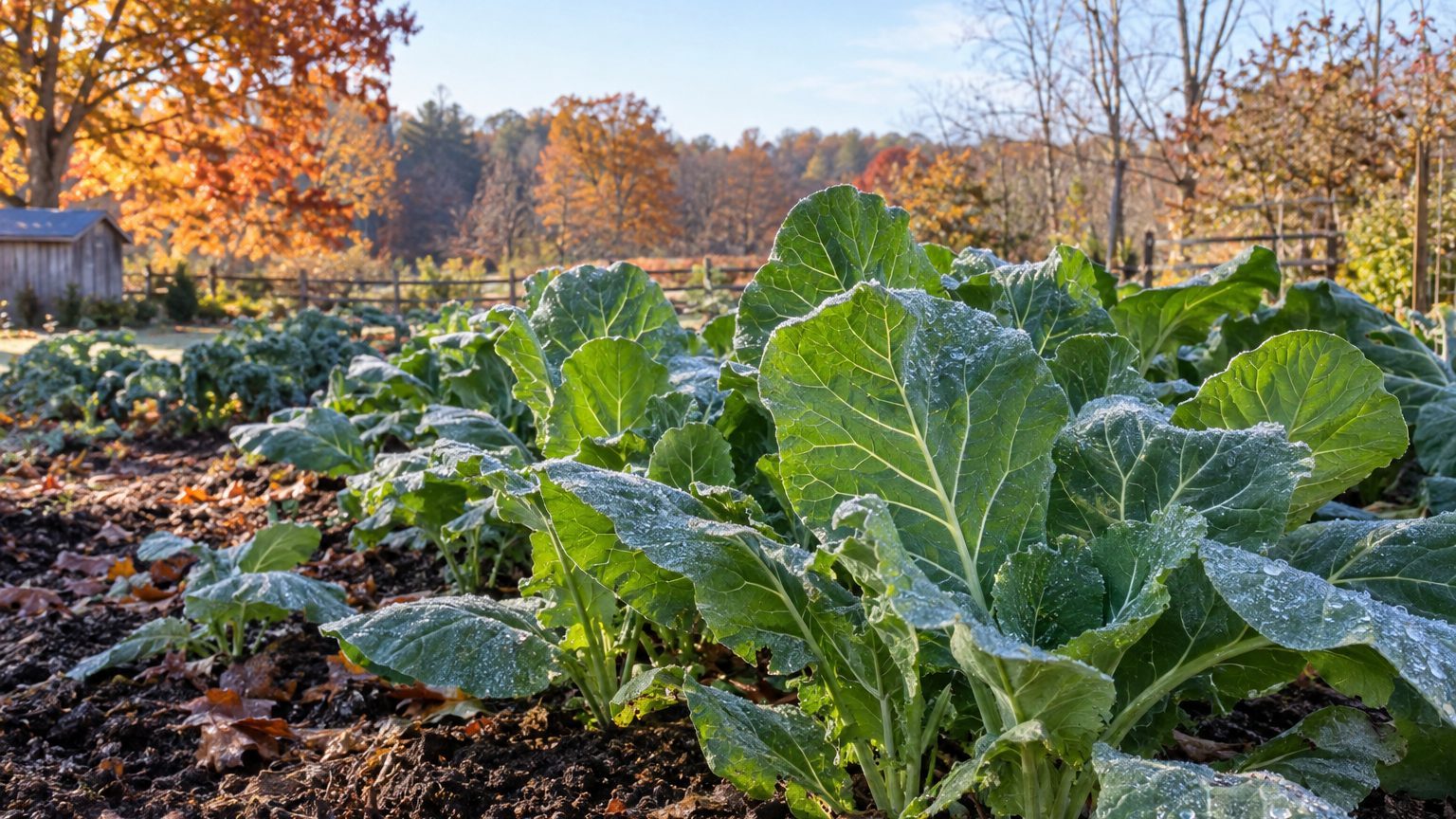

Collards go in the ground twice in Utah: as spring transplants set out near the last freeze, and as a summer sowing that matures in cooler fall weather. The fall crop is usually the better one, because the leaves sweeten after a frost and the worst heat has passed. Exact dates depend on where you garden, and the numbers below come from Salt Lake City, one of the milder spots in the state.
The short answer for Utah
Sow or transplant collards outdoors in spring around the last freeze, which in Salt Lake City falls between April 12 to April 29, then sow again in summer so plants have some size before the first freeze of October 18 to October 29. Both ranges come from the NOAA NCEI 1991-2020 Climate Normals for the Salt Lake City station (station USW00024127).
What the frost dates actually measure
Those dates are probabilities of a 32°F freeze, drawn from the 30 to 70 percent band. A date inside the range does not mean frost is over. It means the odds of another freeze (in spring) or of the first one (in fall) sit somewhere between three in ten and seven in ten. Treat them as the middle of a fuzzy zone, not a deadline.
Collards tolerate light frost, and that changes how you use the numbers. A tomato grower has to wait for the far end of the band. A collard grower can set out hardened-off transplants near the front of it and accept a small risk. Seed sown directly in cold ground is slower to sprout, so many gardeners start transplants indoors and move them out once the beds are workable.
The fall window works backward from October. Plants need weeks of active growth before the freeze band arrives, so the sowing date belongs in midsummer, not in the last warm days of the season. This page does not have a Utah-trialled count of weeks from sowing to harvest for each variety, so the seed packet and your county extension office are the places to get that figure. For the wider picture of soil, spacing and care, see Growing Collards in Utah.
One caution belongs next to the dates. Salt Lake sits in a mild valley. Most of Utah is higher and colder, and southern Utah is warmer. The window above is a reference point, and your own garden may sit weeks away from it.
What will not work here
Copying the Salt Lake dates into a high-elevation garden is the first thing that fails. Because the station sits in a valley, its spring band arrives earlier than it does in most of the state. A gardener in a colder town who sets out plants on April 12 is betting against a freeze that, at that elevation, is far more likely than the 30 to 70 percent odds quoted here.
Slow varieties and late sowings
The stretch between the spring band and the fall band is roughly half a year in the Salt Lake valley, and shorter as you climb. A slow-maturing collard that needs most of a long southern summer will run out of season here, especially if it goes in late. Favor faster types, and read the days-to-maturity line on the packet against your own frost window. The variety choices are laid out in The Best Collards and Greens for Utah.
Late spring sowing fails for a different reason. Collards started too late meet summer heat while still small, and Utah summers are dry. Weekly deep watering, which works fine for an established tomato bed, leaves shallow-rooted seedlings stressed and bitter. The same goes for the midsummer fall sowing: seed needs the top inch of soil kept damp until it sprouts, which can mean watering every day for a stretch, ideally with a little afternoon shade from a taller crop or a piece of cloth.
The winter assumption
Southern gardeners talk about collards standing all winter. That habit does not travel well. The mean daily minimum of the coldest month in Salt Lake City is 24.2°F, and that is an average, so plenty of nights run colder. Plants that come through are a bonus, not a plan. Treat collards as an annual crop in Utah, and if you want winter leaves, protect them with a row cover or plant where you know the microclimate is forgiving.
Skipping the hardening-off week also fails. A transplant that spent March on a windowsill will scorch in April sun and wind. Give it a few days outdoors, in stages, before it goes into the bed for good.
What changes across Utah
Utah has no single answer. The USDA Plant Hardiness Zone Map (2023 edition, built on 1991-2020 normals) places the state anywhere from zones 4a to 9a, one of the widest spreads of any state. Zone 4a gardens and zone 9a gardens do not share a calendar. They barely share a growing season.
Keep in mind what the zone system measures. It rests on one variable, the average annual extreme minimum temperature. That tells you whether a plant survives winter, not when the last spring freeze arrives or how hot July gets. Two towns in the same zone can still have different frost dates, which is why the zone is a starting clue and not a calendar.
In the north and at altitude, shift spring plantings later and fall sowings earlier, and choose the fastest varieties you can find. The gap between the two frost bands narrows, so the fall crop has less room for error. A cold frame or row cover can stretch either end by a little, but it cannot rescue a slow variety in a short season.
Southern Utah runs the other way. Spring can start earlier and the fall freeze arrives later, so the season is longer. Heat becomes the limiting factor there, which pushes collards toward cooler stretches at either end of the year, and the fall crop matters even more. Overwintering is more realistic in the warmest zones than anywhere in the north.
Do not guess your own zone. Look it up on the USDA map by ZIP code, then read this page’s dates as a reference point and move them toward your own conditions.
Where to check this for your own county
Your state land-grant extension service has better information than this page. For Utah, that is Utah State University Extension at https://extension.usu.edu/. Every county has an office, and the staff there know which frost dates and which varieties hold up in local gardens.
Two things are worth looking for. First, your county’s planting calendar, which should give spring and fall windows for cool-season vegetables in your area. Second, any variety trials for collards and other brassica greens, because a variety that did well in your county is a safer bet than one that merely sounds hardy. Local master gardener programs often publish these in the same place.
This page does not cite a USU collard calendar, because the verified data behind it includes none. So it cannot tell you the exact week for Logan versus St. George. Extension can.
A county recommendation beats a state one, every time. This page is the state one: it works from a single Salt Lake City weather station and a hardiness map that spans five full zones. It gives you a frame, and the county office supplies the detail.
Checking this against your own garden
Your own observations outrank every date above. Three are worth watching, and none needs equipment.
Start with soil warmth by feel. Push a bare hand into the bed to the wrist. If it feels cold and clammy, seed will sit and sulk. If it feels cool but crumbly, you can go. Do this in several spots: a bed against a south-facing wall warms sooner than one at the low end of a yard where cold air pools, and the difference tells you how much to adjust the state dates.
Next, watch for the first male flowers on squash or zucchini, in your yard or a neighbor’s. They mark the point where summer has truly arrived, which is a rough cue for the midsummer collard sowing. If yours show up ahead of a friend’s across town, your garden runs warm and your calendar can lean earlier.
Last, look at the seedlings themselves. The first true leaves, the ones that follow the seed leaves, should come along steadily. Seedlings that stall before then usually mean cold soil or too little sun. Tall, thin, leggy ones mean too much heat or too little light. Either way, the plants tell you what your bed is doing, and it is worth writing down the dates in a notebook so next year’s sowing starts from your own record.
Common questions
Can I direct-sow collards in Utah in spring?
Yes, once the soil is workable, and collards tolerate light frost. Transplants give you a head start in a short season, and they are the safer choice in colder, higher areas. In Salt Lake City, the last spring freeze falls between April 12 and April 29 (probabilities of a 32°F freeze), so sowing outdoors near that band is reasonable.
Will collards survive a Utah winter?
Do not count on it. The average daily minimum of the coldest month in Salt Lake City is 24.2°F, and many nights are colder. With zones running from 4a to 9a across the state, overwintering is far more plausible in the warmest southern spots than in the north or at altitude.
Is a spring or a fall sowing better?
Fall usually wins. Plants mature in cool weather, and leaves taste sweeter after a light frost. The first fall freeze in Salt Lake City falls between October 18 and October 29, so the summer sowing has to happen early enough for plants to size up first.
Do these frost dates work for my town?
Only roughly. They come from the Salt Lake City station, in a mild valley, while most of Utah is higher and colder and southern Utah is warmer. The band itself is a 30 to 70 percent probability range, so even at that station the actual last spring freeze can land outside the dates in any given year.