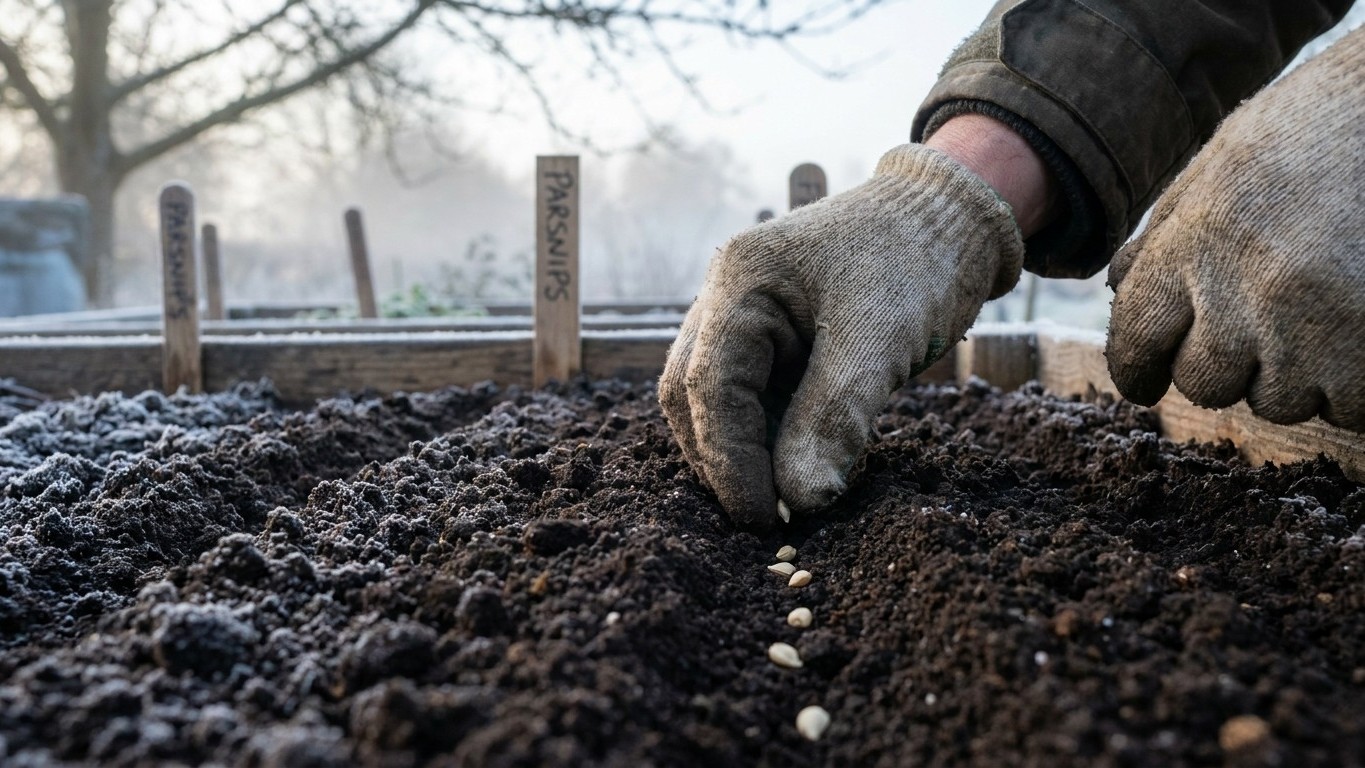

Sow parsnips in Utah two to three weeks before the last spring frost, which lands between April 12 and April 29 depending on where in the state you garden. That puts most seeding in late March through mid-April. With 100 to 120 days needed from seed to a full-size root, and a coldest month that averages 24.2°F at night, Utah gives parsnips both the growing window and the deep winter cold they need to turn sweet.
The short answer
Here’s the question that actually decides whether parsnips are worth planting in your yard: does this place deliver several weeks of hard, sustained frost, or just a few nights that dip below freezing before bouncing back? For Utah, measured at the Salt Lake City reference station, the coldest month averages a nightly minimum of 24.2°F. That’s not a record low or a fluke cold snap. It’s the average low across the entire coldest month, which means freezing nights aren’t the exception here, they’re the routine.
That number matters because parsnips don’t taste like much when they’re just pulled from warm soil. They taste like starch, mild and a little bland, the way a raw potato tastes before it’s cooked. What changes that is prolonged exposure to cold once the root has already reached size. The plant converts stored starch into sugar as a survival response to freezing temperatures, and the process needs weeks, not a single overnight frost. A 24.2°F average low for a full month gives that conversion plenty of time to happen, over and over, through the cold season.
So the answer for Utah splits into two parts, and it’s worth keeping them separate. First, will a parsnip grow here? Yes, comfortably, given the frost window discussed below. Second, will it sweeten? Also yes, and more emphatically than in many other states, because a 24.2°F monthly average isn’t a marginal or borderline number. It sits well below freezing, which means the frosty stretch is long and reliable rather than a near-miss.
One clarification matters more than it might seem. The coldest month minimum is not the same thing as a USDA hardiness zone rating, and the two shouldn’t be swapped for each other. A hardiness zone tells you the extreme minimum a perennial plant might survive over the year. It says nothing about how many weeks of frost accumulate, or how deep that cold runs on an average night. Parsnip sweetening depends on the accumulated exposure to frost, the repeated cold nights across a full month, not on a single zone number that describes the worst night of the year. Utah’s zone rating alone would tell a gardener nothing useful about whether the roots will sweeten. The 24.2°F average does.
It’s also worth remembering that Salt Lake City sits in a comparatively mild valley by Utah standards. Most of the state runs higher in elevation and colder than this reference station, while pockets of southern Utah run warmer. A gardener in a mountain valley or high bench should expect the frosty stretch to be longer and colder than 24.2°F, not shorter. Southern Utah growers, on the other hand, may see a milder version of this same pattern, still enough for sweetening but with less margin.
Does the season fit?
Parsnips are sown directly in the ground where they’ll grow, not started indoors and transplanted, and the clock starts the day seed goes into soil. Here’s how the arithmetic works out for Utah’s frost calendar.
- Start with the last spring frost. At the Salt Lake reference station, that date falls somewhere between April 12 and April 29, based on NOAA NCEI 1991-2020 Climate Normals.
- Sow two to three weeks earlier. That pushes the sowing window back to roughly late March through mid-April, since parsnip seed tolerates cool soil and a light frost on seedlings without much trouble.
- Wait out germination first. Parsnip seed is slow, and 14 to 21 days can pass before anything visible breaks the soil surface. A gardener who doesn’t see sprouts after a week hasn’t failed. Digging up the row and re-sowing at that point usually just wastes a second batch of seed.
- Count 100 to 120 days from seeding, not from germination, and not from an eventual transplant. Sown in late March, a parsnip crop reaches maturity somewhere around late June to late July. Sown in mid-April, maturity lands closer to late July or mid-August.
- Compare that to the first fall frost. The reference station’s first fall frost falls between October 18 and October 29. Maturity in June, July, or even August leaves two to three months of open calendar before that first frost arrives.
- That gap is the season’s real margin, and it’s a generous one here. Instead of racing the clock, a Utah gardener who sows on schedule has room to let the roots sit in the ground well past maturity, so they’re already in place and ready when the first hard frost hits and the sweetening process begins.
Put plainly, the season fits comfortably in Utah, not tightly. The 100-to-120-day requirement lands well inside the frost-free window, and the extra weeks left over aren’t wasted time. They’re exactly the stretch where the roots wait for the first frost, then keep sweetening through the weeks of cold that follow, right up until the ground freezes hard enough to make digging difficult.
What goes wrong here
- Forked, split roots in heavy or stony ground. Parsnips grow one long taproot, and anything that deflects it, a rock, a clay lens, compacted subsoil, sends the root splitting into two or three forked legs instead of growing straight. Utah State University Extension recommends deep, sandy soil for this reason, and where the native ground is heavy, double digging the bed before sowing loosens it enough for a straight root to form.
- Forked roots from overwatering, a separate cause from soil texture. Even in decent soil, keeping the bed consistently soggy encourages the root to branch rather than push straight down, chasing moisture at the surface instead of driving deep. This is a watering habit, not a soil problem, and it calls for a different fix: water deeply but less often, letting the top few inches dry between soakings rather than keeping the bed wet all season.
- A season that runs out before the root sizes up. Sowing late, past mid-April, or losing weeks to poor germination without resowing promptly, can push maturity uncomfortably close to the first fall frost. Utah’s gap between sowing and that frost is generous, but it isn’t infinite, and a late start erodes the very margin that makes this state a comfortable place to grow the crop.
- Roots that grow fine but never taste sweet. This isn’t a soil or watering failure, it’s a timing one. Pulling parsnips right at maturity, before the coldest weeks of the year, gives a mild-tasting root because the frost conversion hasn’t happened yet. Leaving the roots in the ground through the frosty stretch that follows first frost is what produces the sweetness Utah’s climate is well suited to deliver.
Common questions
Can parsnips be started indoors and transplanted in Utah?
Utah State University Extension describes parsnips as a crop sown in place, directly where they’ll grow to maturity. Transplanting disturbs the taproot early, which tends to produce the same forked, misshapen roots that heavy soil causes.
How long does parsnip seed take to sprout?
Expect 14 to 21 days before seedlings appear. This is normal for parsnip seed and isn’t a sign of a failed sowing, so it’s worth resisting the urge to dig up the row and start over during that stretch.
Should parsnips be left in the ground over winter in Utah?
Leaving mature roots in place through the cold weeks after first frost is what allows the starch-to-sugar conversion to happen. Given Utah’s coldest month averages 24.2°F, there’s enough sustained cold for that process to run its course before the ground becomes too hard to dig.
Does elevation change any of this within Utah?
Yes. The frost dates and the 24.2°F figure both come from the Salt Lake City reference station, which sits in a relatively mild valley. Higher elevations across most of the state run colder, with an earlier fall frost and a later spring frost, while southern Utah tends to run milder. A gardener at higher elevation should expect the frost window to open later and close earlier than the reference dates given here.