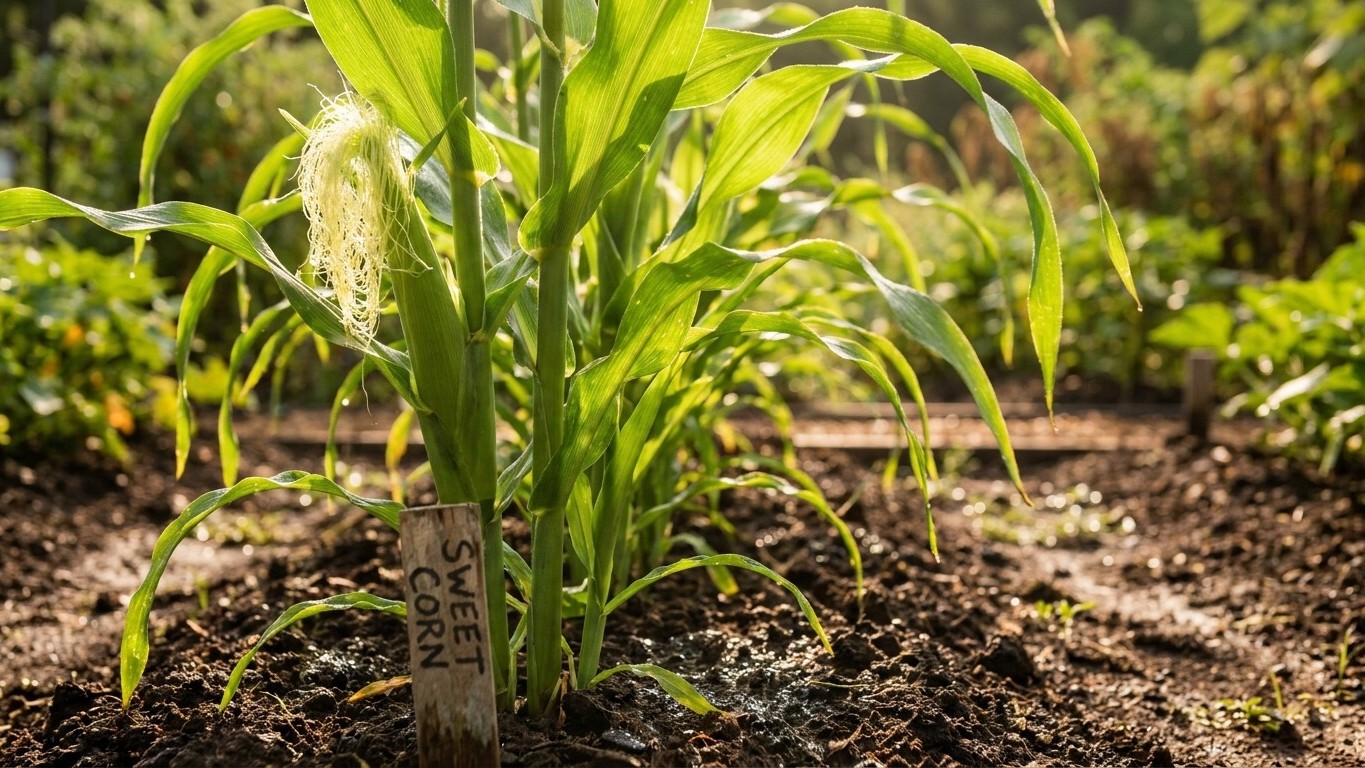

Yes, sweet corn can ripen in Utah, but the growing season here is shorter than most gardeners assume once soil temperature is factored in, not just air temperature. In the mildest valley locations, the stretch between soil warm-up and fall frost runs long enough for even a patient variety. Higher ground cuts that margin fast, and southern Utah stretches it the other way. The real question is not whether Utah gets hot enough in July. It is whether the ground warms fast enough in spring and stays open long enough in fall to carry a full-length ear to maturity.
The short answer
Sweet corn will not germinate reliably until soil temperature holds above 60 F, and that mark arrives measurably later than the last spring frost, not alongside it. At the reference station tracked by NOAA’s 1991-2020 Climate Normals (station USW00024127, in the Salt Lake valley), the last spring frost falls somewhere between April 12 and April 29. The ground itself takes longer to catch up to the air than most gardeners expect, since bare soil holds winter cold well after the last freeze has passed. No specific soil-temperature date is tracked at this station, so the exact week the ground clears 60 F is not published here, but it is a matter of weeks after that frost window closes, not days.
On the other end of the calendar, the same station’s first fall frost arrives between October 18 and October 29. Stack the two windows together and the frost-free season at this reference point runs somewhere between 172 and 200 days, depending on which end of each range actually lands in a given growing season. That is the outer boundary. The corn-specific clock only starts once the soil crosses that 60 F threshold, so subtract the weeks it takes the ground to warm from that outer figure, and there is still a wide stretch of calendar left for the 60 to 90 days sweet corn needs from planting to maturity.
Heat during that stretch is rarely the limiting factor. The same reference station averages 52.1 days a year at 90 F or hotter, a heat load that drives water demand and can stress a plant, but it does not stop corn from ripening the way a late spring or an early fall frost can. The clock that decides whether sweet corn ripens in Utah runs on both edges of the calendar, not the middle.
All of this describes a mild valley floor. Most of Utah sits higher and colder than that reference station, which pushes the last frost later, the first fall frost earlier, and the soil warm-up later still, squeezing the window from both directions. Southern Utah runs warmer than the valley reference point and typically opens more calendar room on both ends. Anyone gardening outside the immediate Salt Lake valley should treat these dates as a starting reference, not a local guarantee, and check local conditions before locking in a planting date.
Does a late variety fit here?
Maturity length is where theory meets the calendar. Utah State University Extension frames sweet corn as needing 60 to 90 days from planting, and where a given variety lands in that range decides how much risk a gardener is taking on.
A 60-day variety
A variety at the short end of that range asks for very little runway. Even after losing several weeks to the soil warm-up lag described above, a 60-day corn planted once the ground is reliably warm still has a comfortable stretch of summer left before the first fall frost arrives in mid-to-late October at the reference station. This is the safer bet almost anywhere in the state, including higher elevations where the season opens later and closes sooner, because 60 days is short enough to start in early summer and still finish with margin to spare.
A 90-day variety
A variety at the long end of that range is a different story. Planting cannot begin until the soil clears 60 F, which already eats into the calendar well past the last spring frost. Add a full 90 days on top of that delayed start, and the harvest date pushes toward the back half of the season, right where the first fall frost begins arriving. In the mildest valley locations the arithmetic might just work in a favorable year, but the margin is thin enough that an early, cool autumn can catch an unripe ear before it finishes. Outside that mild valley floor, on the higher, colder ground that makes up most of Utah, a 90-day variety does not reliably fit the season. Gardeners planning around a full-length variety in this state are planning around a gamble, not a sure thing, and a shorter-maturity choice removes that risk without giving up much else.
What goes wrong here
- Soil sown too cold. Planting on the calendar instead of by soil condition is the most common failure. Seed put in the ground before it holds steadily above 60 F rots or comes up thin and uneven, even well after the last frost has passed. The fix is patience: confirm soil temperature directly rather than counting days from the frost date, since the two events do not arrive together.
- A variety too late for the season. Choosing a 90-day type anywhere outside the mildest valley ground risks a fall frost arriving before the ears finish filling out. The fix is matching maturity length to local elevation, leaning toward the shorter end of the 60 to 90 day range whenever the growing site sits above a mild valley floor.
- Sweetness lost to the neighbor, not the climate. This failure has nothing to do with frost dates or soil temperature. Utah State University Extension notes that su, se, and sh2 sweet corn types lose their sugar quality when they tassel at the same time as each other, since cross-pollination between types dilutes the sweetness the sh2 and se types are grown for. No isolation distance is published for this; the safeguard is timing and layout. Stagger planting dates so different types are not tasseling in the same window, grow only one type per season if in doubt, and plant sweet corn in blocks of three or more rows rather than a single long row, since that shape improves pollination within a single planting without needing distance from anything else.
Common questions
When should sweet corn actually go in the ground in Utah?
Once the soil holds reliably above 60 F, which arrives weeks after the last spring frost rather than right after it. At the Salt Lake valley reference station, that frost falls between April 12 and April 29, but the soil itself needs additional time beyond that date to warm, and no specific calendar date for that soil milestone is published here. Locations above the valley floor will run later on both counts.
How long does sweet corn take to ripen once it is planted?
Utah State University Extension puts the span at 60 to 90 days from planting to maturity, depending on the variety. Shorter-season types fit Utah’s frost windows with far more margin than the longer end of that range.
Does the corn planted nearby affect how sweet mine turns out?
Yes, and this has nothing to do with Utah’s climate. Su, se, and sh2 sweet corn types lose sweetness when they tassel at the same time as each other. Keep tasseling windows separated by staggering planting dates, and grow sweet corn in blocks of three or more rows for reliable pollination.
Is Utah’s summer heat too much for sweet corn?
Not typically. The reference station averages 52.1 days a year at 90 F or hotter, a heat load that raises water needs but does not on its own stop sweet corn from ripening. The dates that decide success or failure sit at the edges of the season, in spring soil temperature and in the timing of the first fall frost, not in the middle of summer’s heat.