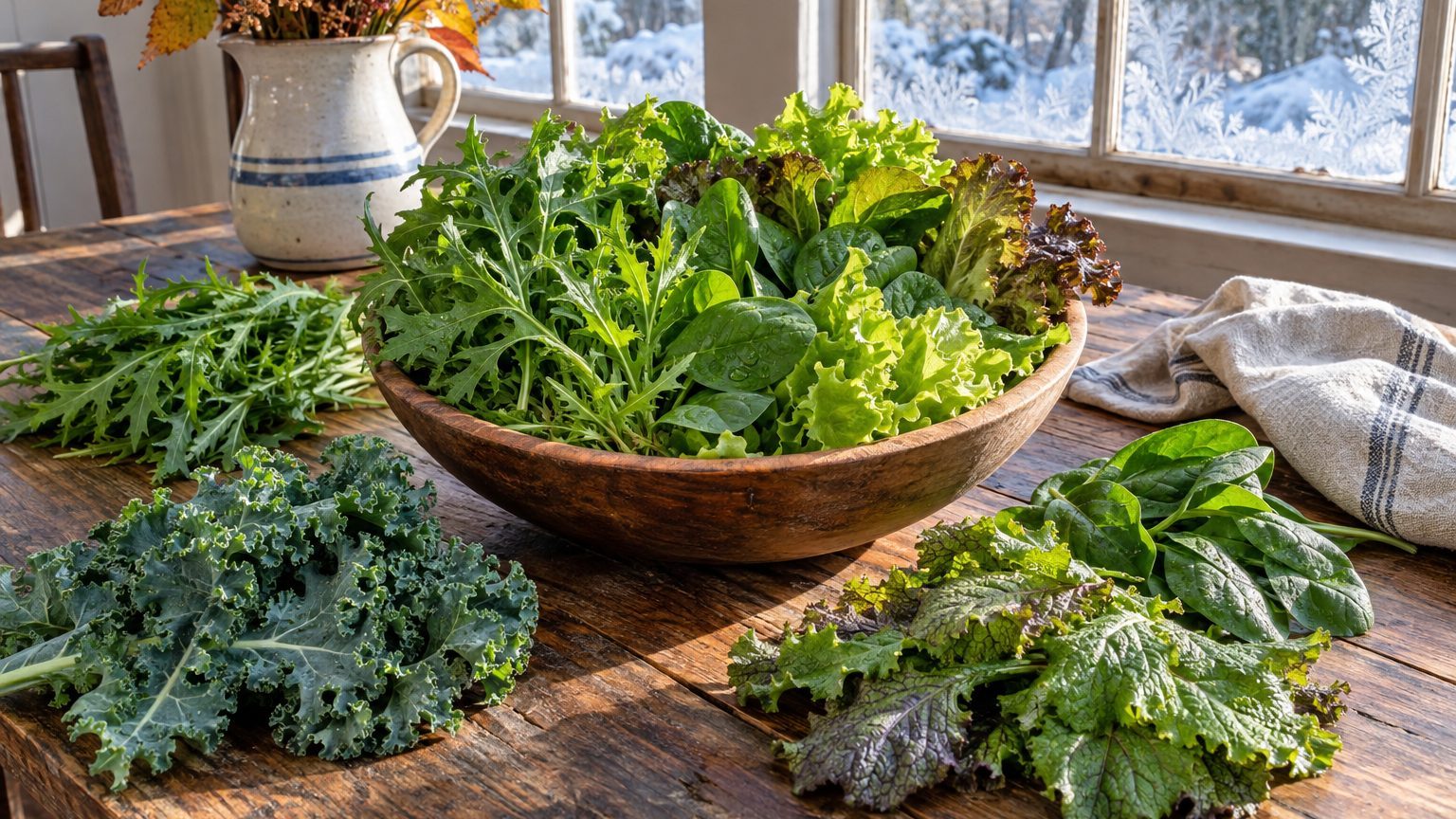

Spinach, mâche, claytonia, kale and the mustards are the best winter salads for most Utah gardens. They shrug off freezing nights that flatten tender lettuce. Sow them in late summer or early fall and add a low cover once deep winter sets in. Utah runs from cold mountain valleys to warm desert basins, though, so the right mix shifts with elevation.
The short answer for Utah
Choose by type, not by seed-packet name. Cold-hardy leaf greens come first: spinach, mâche (corn salad) and claytonia. Hardy brassicas such as kale, mustards and arugula come second. Lettuce and the chicory family are a third tier, worth growing only with protection. The reasoning starts with the cold. At the Salt Lake City reference station, the mean daily minimum of the coldest month is 24.2°F. That is a typical January night low, not a record, so plenty of nights run colder. Hardy greens sit through that without complaint. Soft lettuce leaves bruise and collapse.
The frost dates set the clock. In the NOAA 1991-2020 Climate Normals for that station, the last spring frost falls between April 12 and April 29. The first fall frost falls between October 18 and October 29. Both are probability bands: the dates when the chance of a 32°F freeze sits between 30 and 70 percent. They are not promises. A freeze can arrive before or after the band, and about five and a half to six and a half months separate the two. A winter salad is a fall crop that grows during those last warm weeks and then holds in the bed, so it needs to be well along by the time the first freeze band arrives. For sowing dates, see When to Sow Winter Salads in Utah.
| Type | Examples | Role in a Utah winter bed |
|---|---|---|
| Cold-hardy leaf greens | Spinach, mâche, claytonia | The backbone. Usually the most dependable in the open, with a cover as insurance. |
| Hardy brassicas | Kale, mustards, arugula | Sturdy, and often sweeter after frost. Mustards and arugula add bite to the bowl. |
| Tender salad crops | Lettuce, endive, chicory | Protected beds or milder sites only. Expect more losses in a hard cold snap. |
One caution on the numbers. Salt Lake sits in a mild valley. Most of Utah is higher and colder, and southern Utah is warmer, so treat these figures as a reference point.
What will not work here
Sowing in November and expecting January salad. The first fall freeze band lands in the second half of October, and plants started after it never reach harvest size before growth stalls with the short days. Cold-season seedlings can survive the winter, but they mostly sit there. A bed sown too late gives you a winter of tiny leaves and a spring of bolting.
Tender lettuce in an open bed is the second casualty. With a coldest-month average low of 24.2°F, the valley regularly sees nights well below that. Lettuce survives some of them under cover and fails on others. A plant that looks fine on Monday can be mush by Thursday after a hard clear night.
Weekly watering is the third. Utah is a dry state, and a late-summer seedbed can bake. Salad seed needs a surface that stays evenly damp until it sprouts, and a once-a-week soak leaves it wet one day and crusted the next. Cool-season seeds, lettuce especially, also germinate poorly in hot soil. (This page has no summer temperature figure, so check a local source for your own late-summer heat.) Shade cloth over the seedbed or a start in a cooler corner of the yard often does more than extra water.
Slow-maturing crops are the fourth. A big heading chicory or a full-size cabbage needs more time than a fall window can give if it starts late. Baby-leaf spinach, mâche and quick mustards get to harvest size in a short season, which is why they dominate the list above.
Last, guidance written for mild-winter regions assumes plants keep growing through December and January. Here, they mostly pause. You are harvesting what grew in autumn, not what grows in winter. Many calendars from elsewhere skip that distinction, and it is the one that matters most in Utah.
What changes across Utah
Utah does not have one garden climate. The USDA Plant Hardiness Zone Map (2023 edition, built on 1991-2020 normals) places the state anywhere from zone 4a to 9a. That system rests on a single variable, the average annual extreme minimum temperature, and the span covers roughly 50°F of difference in that number between the coldest and warmest corners. So there is no single answer for the state. A recommendation that suits a Salt Lake valley bed will be too optimistic for a mountain town and too cautious for the south.
Northern Utah and higher elevations
Frost arrives earlier and leaves later than in the valley, so the sowing window moves earlier and the harvest window shrinks. Stick to the hardiest types: spinach, mâche, claytonia and kale. Plan on a sturdy low tunnel instead of a floating cover, because snow load will crush light hoops. Expect to harvest mostly in the fall and early winter, then again when the cover comes off in spring.
Southern Utah
The warm end of the range turns the problem around. Frost comes later, winters are gentler, and lettuce and chicories become reasonable winter crops instead of long shots. Heat at sowing time becomes the main risk, since early sowings can sit in warm soil that stalls germination. Hardiness zones also measure only the cold extreme, not the frost dates, and two places in the same zone can differ in both.
Which zone applies to you is something to read off the USDA map, by ZIP code, not guess from this page.
Where to check this for your own county
Utah State University Extension is the state’s land-grant extension service, and its county offices are the next stop. Look for two things. The first is a local planting calendar for your county or nearest town, with fall and winter vegetable dates if they publish them. The second is a list of vegetable varieties trialled in your area. A variety that grew well in a trial at your elevation is better evidence than any general list, including this one.
This page does not carry a sourced Utah extension calendar for winter salads, so it cannot give you county dates. What it does have is the Salt Lake City reference frost data and the state-level hardiness range. Treat both as a starting frame.
A county recommendation beats a state one. This page is the state one: an overview of types that make sense across a wide, varied territory. A county office knows which side of the valley holds cold air, which towns get early snow, and which greens actually came through last winter. If the two disagree, go with the county. The Winter Salads for Utah Gardens hub lays out how the other pages in this series fit together.
Checking this against your own garden
Your own observations outrank every date here. Three are worth watching, and none needs equipment.
- Soil warmth by feel. Push your hand a couple of inches into the bed in the morning. If it still feels warm, wait before sowing lettuce or spinach. If it feels pleasantly cool, seed will germinate. A bed against a south wall will stay warm longer than one in open shade, which tells you where your early and late spots are.
- The first frost-bitten leaves. Watch when tender plants like basil or squash vines blacken, and compare with the band above. If yours go earlier than your neighbors’ or the forecast, you have a cold pocket and should shift everything earlier or add cover.
- The first true leaves on your seedlings. Seed leaves come up fast, but the first true leaves show whether the plant is growing or just waiting. If they stall in a cold week, that bed is too cold to produce, and a cover or a different spot is the fix.
Keep a few notes from one season: the dates you sowed, the dates of first frost damage, and what survived. A single year of those records is worth more than a regional average.
Common questions
Can I grow salad greens outdoors all winter in Utah?
In the valleys, hardy greens like spinach, mâche, claytonia and kale can stay alive and harvestable through the cold months, especially under a cover. Growth slows to a crawl in midwinter, so you are mostly picking what grew in autumn. At higher elevations, plan on a shorter harvest window and a sturdier cover.
Is lettuce a lost cause in winter?
Not a lost cause, but a gamble in an open bed. Cold-tolerant lettuce can do well in a protected bed or a cold frame in the valley. In warmer southern Utah it is a more reasonable choice. Elsewhere, treat it as a bonus crop and rely on spinach and kale for the bulk of the harvest.
What is the easiest winter salad crop for a beginner?
Spinach and kale forgive the most. Both handle cold and uneven care, and both keep producing through light freezes. Mâche is a good next step if you like a mild, nutty leaf. When to Sow Winter Salads in Utah covers the timing.
Do the frost dates on this page apply to my town?
Only roughly. They come from the Salt Lake City reference station, which sits in a mild valley, and they describe the band where a 32°F freeze has a 30 to 70 percent chance of occurring. A higher or colder town will see frost earlier in fall and later in spring, and a southern Utah town will see it later in fall and earlier in spring. Your county extension office can give a closer local picture.