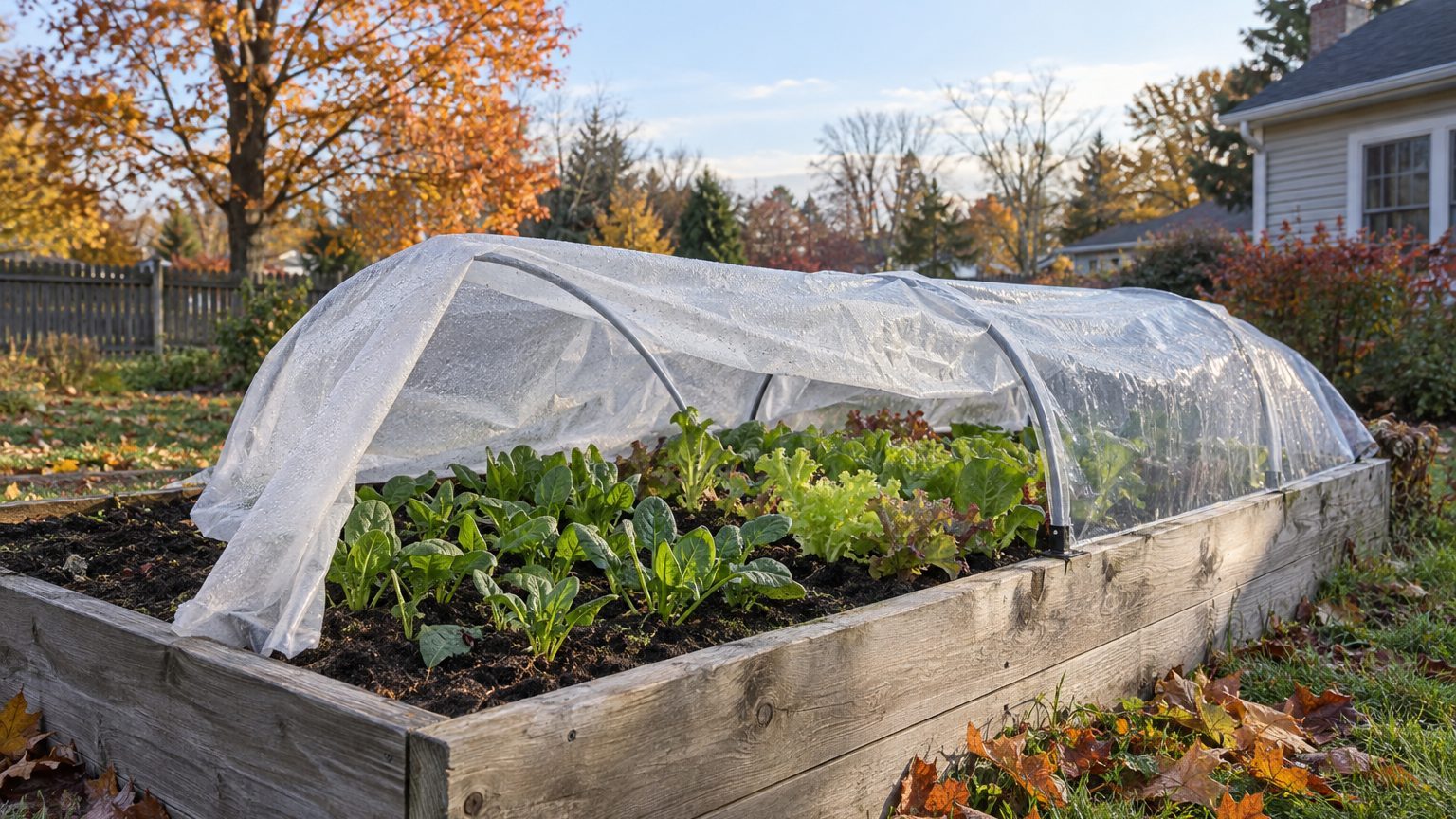

At the Burlington station, the last spring freeze falls between April 30 and May 10, and the first fall freeze between October 3 and October 13. That leaves a frost-free window of roughly 146 to 166 days. Covers can nudge a crop’s start and finish a little on either side of that window. They shift the limit without removing it, and in the Green Mountains and the Northeast Kingdom the whole calendar runs substantially shorter.
When the soil is warm enough in Vermont
The date most Vermont gardeners want is the last spring frost, and the best figure available is a band, not a day: April 30 to May 10, from the NOAA NCEI 1991-2020 Climate Normals for the Burlington station (USW00014742), using the 32 F freeze probabilities in the 30-70% band. Inside that band, the odds of another freeze are still real.
Frost is a proxy, not the goal
Season extension is not waiting for the air to stop freezing. It is waiting for the soil to warm, and soil lags the air. Water-saturated ground that spent the winter frozen needs weeks of sun to shed that cold, which means the soil warms after the frost risk ends, not alongside it.
A soil thermometer settles the argument. Push it a couple of inches down in the morning, check the minimum on your seed packet, and trust the reading over the date. Peas and spinach tolerate cold ground. Beans, squash and tomatoes do not, and no cover turns cold ground into warm ground overnight.
What a cover actually does
The mechanism is simple and entirely passive. During the day, soil soaks up sun. At night it radiates that heat back out, and on a clear, still night much of it escapes straight to the sky. A cover traps part of that outgoing heat and holds the air around the plants still, so it cannot be stripped away by wind.
The gain is real but variable. It depends on the material, the night, the wind, and whether the ground was warm to begin with. No cover makes a crop frost-proof: it shifts the limit, and a hard, clear night can still beat it.
Any closed structure needs ventilation, and that is a matter of keeping the crop alive, not a convenience. A shut cold frame in spring sun can cook its contents within an hour, even when the air outside is cool. Prop the lid on every sunny morning, close it again in late afternoon, and keep everything passive. Never put a heater, lamp or candle inside a covered structure, because the fire and carbon monoxide risks are real.
One caution about the source. Burlington sits on Lake Champlain, the mildest corner of the state. Hill farms, mountain valleys and anyone in the Northeast Kingdom should expect later spring dates and earlier fall ones, so treat these figures as the generous end of the Vermont range.
How long the season lasts here
Both ends of the window come from the same NOAA NCEI 1991-2020 normals at Burlington: the last spring frost between April 30 and May 10, and the first fall frost between October 3 and October 13. Subtract, and the answer depends on which ends of each band you pick.
| Scenario at Burlington | Last spring frost | First fall frost | Days between |
|---|---|---|---|
| Generous | April 30 | October 13 | 166 |
| Middle (either pairing) | April 30 or May 10 | October 3 or October 13 | 156 |
| Tight | May 10 | October 3 | 146 |
So roughly 146 to 166 days. That is arithmetic on probability bands, not a forecast for any single year, and it describes the lake shore. Inland and uphill, the number shrinks.
What that length allows
Around 150 days is enough for a quick crop to be sown, harvested, and followed by a second sowing of something fast in the same bed. Salad greens, radishes and spinach slot in easily, with a late-summer sowing that matures before the October freeze. The succession sowing guide on this site shows how to space those plantings so one finishes as the next begins.
Tomatoes, peppers, winter squash and melons can use most of the window by themselves, so they get one sowing and no second chance. In a tight year, near 146 days, direct-seeding them in late May leaves little margin before October. That is why transplanting earns its keep here: a seedling started indoors arrives with weeks of growth already banked.
Transplanting has a cost, though, called the root check. Crops with a taproot or touchy roots, such as carrots and many melons and cucumbers, can stall for a week or more after being moved. For those, favor direct sowing under a cover once the soil is ready, or an early-maturing variety. Lettuce, brassicas and onions shrug off transplanting and are better candidates for indoor starts.
In short, Vermont’s window is long enough for one full crop of nearly anything a home gardener wants, and for a second sowing of only the quick ones. For a fuller look at what a cover can and cannot do, see Extending the Season: What a Cover Buys, and What It Cannot.
Heat and water in Vermont
The figures this page does not carry
This page does not carry a verified count of days above 90 F or a summer rainfall total for the Burlington station, and guessing at either would be worse than leaving the gap. What can be said is qualitative: Vermont is not a state where heat stress is the governing problem for most gardens, and hill gardens run cooler still.
A cool, damp summer brings a different list of troubles. Mildew spreads on squash and cucumber leaves that stay wet. Tomatoes ripen slowly, so a crop that looks abundant in September may still be green when the October freeze arrives. Blight and other fungal diseases move quickly through crowded beds. The practical answers are plain: space plants for airflow, water the soil rather than the leaves, and water in the morning so foliage dries before night.
Light and cold decide the rest
The governing facts here are light and cold, working together. The Burlington station sits at 44.47 degrees north, and that latitude is the reference city’s, not the whole state’s. A gardener near the edge of Vermont should check their own latitude, because elevation compounds the difference.
After the autumn equinox, daylight shrinks quickly at this latitude. There comes a date in late fall when the days are too short for most crops to put on meaningful growth, no matter how mild the weather turns. After that date, a cover is no longer growing anything. It holds a mature crop alive, such as spinach, kale or carrots, so you can harvest through the dark months. Planting for winter harvest therefore has to be done early enough that the crop reaches size before that light threshold passes.
The coldest month then decides what kind of structure you need. The mean daily minimum of the coldest month at Burlington is 12.9 F (NOAA NCEI Climate Normals 1991-2020), and that is a normal night, not a record. The USDA Plant Hardiness Zone Map (2023) puts Vermont across zones 3b to 5b, a range built on the average annual extreme minimum, so your own zone depends on where you garden. With nights that cold as the norm, a light fabric alone is a tool for the shoulder seasons, protecting seedlings from a late-spring frost or extending fall by a stretch. Holding crops through the winter calls for a framed structure, such as a cold frame or a tunnel, and ventilation again becomes non-negotiable: a sunny winter day can heat a closed frame fast.
Which season extension suit Vermont
Choose by type, because the territory’s facts point in a clear direction. A short season favors the earliest-maturing types, the ones that finish before the October freeze rather than racing it. A cool, humid summer makes disease resistance the first criterion, ahead of yield and ahead of flavor claims on a catalog page. Heat tolerance barely matters here. Cold tolerance and quick maturity do.
The structure follows the same logic:
- Floating row cover over beds for frost nights in spring and fall, removed or lifted for pollination and heat.
- Low tunnels on hoops, for a second layer of still air over young transplants and early direct sowings.
- Cold frames for hardening off and winter greens, always propped open when the sun is out.
- Framed high structures for the gardener aiming at true winter holding, given how cold the coldest month runs.
Everything on that list is passive. None of it needs a heat source, and none should get one.
This page deliberately names no variety, because the only recommendation that means anything is one from trials run in your own conditions. A cultivar that matures early on the Champlain shore may be hopelessly late in a Northeast Kingdom valley. University of Vermont Extension tracks what has actually been trialled and grown in Vermont soils, and it is the source to consult before ordering seed.
Gardeners comparing neighboring northern climates can see the same logic in Extending the Growing Season in Minnesota and Extending the Growing Season in Michigan.
Common questions
Is it safe to plant tender crops outdoors by May 10 in Vermont?
May 10 is the far end of the Burlington band for the last spring freeze, so by then the odds are in your favor, but it is a probability. Tender crops such as tomatoes and squash also want warm soil, which usually arrives later than the air. Check a soil thermometer, watch the forecast, and keep a cover handy. In the hills and the Northeast Kingdom, plan for later dates than Burlington’s.
How long is the growing season in Vermont?
At the Burlington station, the frost-free window runs roughly 146 to 166 days, from the NOAA NCEI 1991-2020 normals. Burlington is the mildest corner of the state, so the Green Mountains and the Northeast Kingdom run substantially shorter.
Can a row cover or cold frame make a crop frost-proof?
No. A cover shifts the limit by an amount that varies with the material, the night, the wind and how warm the ground was, and a hard, clear night can still win. Keep it passive: no heater, lamp or candle inside any covered structure, and always vent a closed frame in sun.
Which varieties should I grow?
Choose by type first: early maturity, cold tolerance and disease resistance. For specific varieties, ask University of Vermont Extension, and tell them your latitude and elevation, which can differ from Burlington’s 44.47 degrees north.