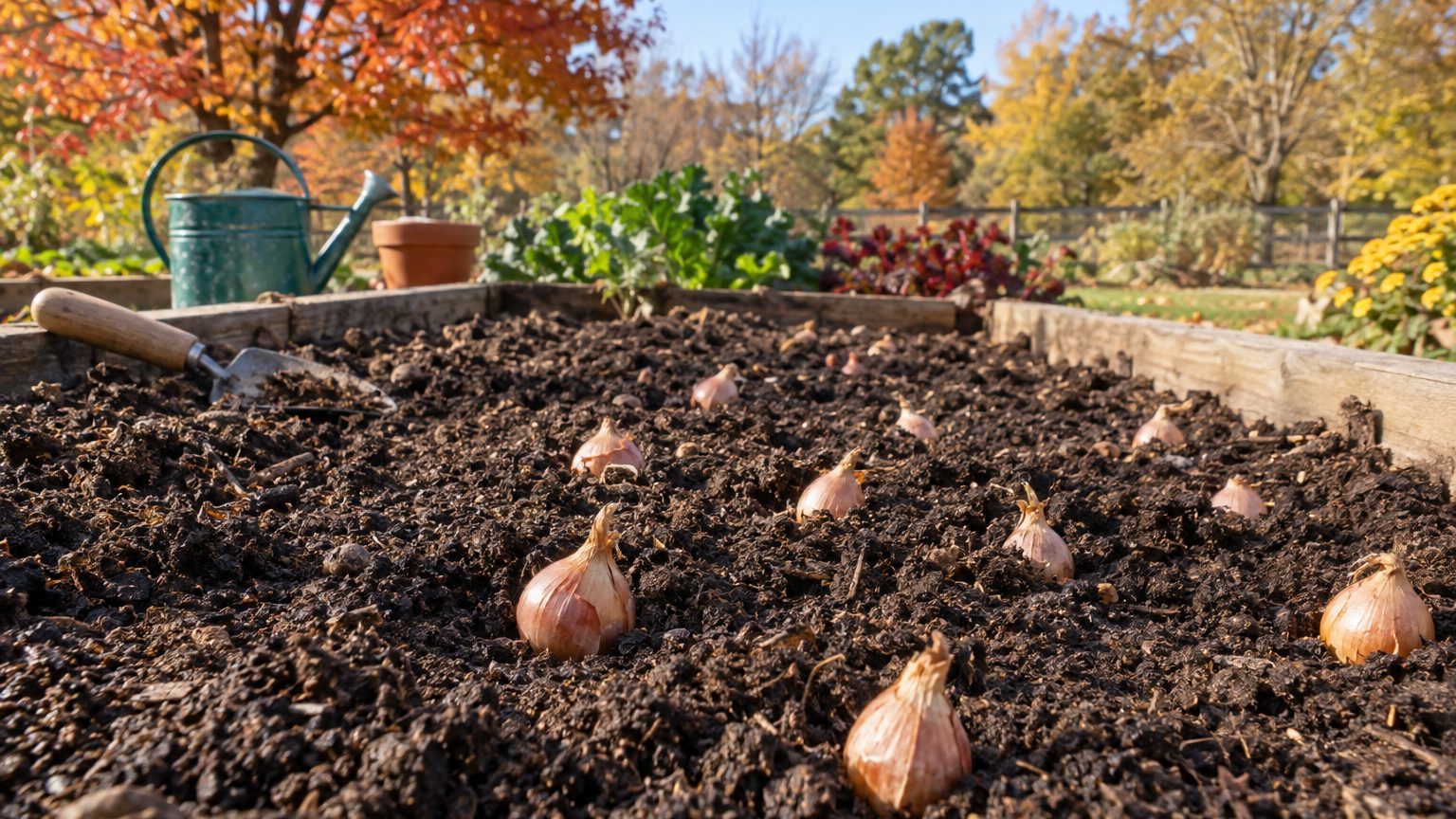

Plant shallots in Vermont in early to mid October for a crop that overwinters under mulch, or in spring as soon as the soil can be worked, usually in April and no later than the first week or two of May. Fall planting tends to give bigger bulbs and an earlier harvest. Spring planting is the safer choice where winters are harshest. Both windows hang on a few frost dates.
The short answer for Vermont
Aim for one of two windows: early to mid October, around the first fall frost, or April through early May, around the last spring frost. Shallots shrug off light frost, so neither window needs a frost-free forecast. The dates below come from the Burlington reference station, which sits on Lake Champlain in the mildest corner of the state.
NOAA’s 1991-2020 Climate Normals put the last spring freeze at Burlington between April 30 and May 10, and the first fall freeze between October 3 and October 13. These are 32°F freeze probabilities. Each date range is the band where the chance of a freeze sits between 30 and 70 percent. In practice, a freeze around those dates is close to a coin flip, and some years bring one earlier or later.
| Planting window | Timing in Vermont | What it depends on |
|---|---|---|
| Fall | Early to mid October, around the first fall frost range of October 3 to October 13 | Roots form before the ground freezes, with little top growth |
| Spring | As soon as the soil can be worked, often April, well before the last frost range of April 30 to May 10 | Bulbs need weeks of cool weather and lengthening days to size up |
When should you plant shallots in the fall in Vermont?
Plant them around the first fall frost, early to mid October at Burlington and earlier in colder places. The goal is a bulb that grows roots but pushes up little or no green before the ground freezes. Once the soil has cooled, cover the bed with a thick layer of straw or shredded leaves. The coldest month at Burlington averages a daily minimum of 12.9°F, so the mulch carries the crop through the winter.
When should you plant shallots in the spring in Vermont?
Plant as soon as a spade turns the soil without it clumping into wet clods. In many years that is April. Shallots start growing in cool soil and tolerate frost, so there is no reason to wait for May 10. The earlier they go in, the more leaf they grow before summer heat and long days tell them to start forming bulbs.
What will not work here

Planting in late May or June will not work. Bulbing is triggered by lengthening days and warming weather, so a shallot planted late has little time to build leaves, and leaves are what feed the bulb. Late spring plantings in Vermont often give small, onion-like bulbs that do not divide into the clusters people grow shallots for.
Fall planting in September is also a mistake. Warm soil pushes green tops that are tender going into winter. Planting after the ground has frozen is no better, because the roots have no time to establish and the bulb can heave out of the soil. Early to mid October is the sweet spot at Burlington. Anywhere colder, move the date earlier.
Bare ground will not hold up either. A mean daily minimum of 12.9°F in the coldest month means hard, repeated freezes, and thaws in between can push shallot bulbs upward. Mulch evens out the soil temperature and keeps the bulbs in place. In an exposed spot without snow cover, fall-planted shallots can die back, which is why spring planting is the safer choice there.
A short season defeats the slowest shallots. With a first fall freeze as early as October 3 even in the mildest corner, and shorter seasons in the hills, varieties that need a long runway to mature will fall short. Shallots grown from true seed need a long start indoors and do poorly if sown late. The The Best Shallots to Grow in Vermont guide covers which types finish reliably.
Cold, waterlogged April soil is another failure. Shallots planted into soggy ground can rot before they root. Waiting a week for the soil to drain costs far less than replanting. In wet summers, crowded rows stay damp and invite fungal disease, so give each bulb room and good airflow.
What changes across Vermont
Vermont is not one garden. The USDA Plant Hardiness Zone Map (2023, built on 1991-2020 normals) puts the state anywhere from zone 3b to zone 5b. That is a wide spread, and no single planting date fits all of it. The zone rating reflects the average annual extreme minimum temperature, so it describes how cold winter can get, not how long summer lasts.
The dates in this article come from Burlington, where Lake Champlain softens the weather. The Green Mountains and the Northeast Kingdom run substantially shorter seasons. In those areas, the last spring frost comes later and the first fall frost comes earlier, so the windows shrink at both ends.
Gardeners in the north or at altitude should make three shifts. Plant in the fall earlier than the Burlington range, because the ground cools and freezes sooner. Mulch more heavily. And lean toward spring planting if winter snow cover is unreliable. Spring planting waits longer for the soil to thaw, so have the bed prepared and be ready to plant the moment it is workable.
To see where your own garden falls, look up your location on the USDA Plant Hardiness Zone Map rather than guessing from a neighbor’s town. Zones can change over a few miles of elevation. For the full growing guide, see Growing Shallots in Vermont.
Where to check this for your own county
University of Vermont Extension is the state’s land-grant extension service, and it is the right place to refine anything written for the whole state. Look for two things: a local planting calendar for your part of Vermont, and the allium varieties that have been trialled in your county or a similar climate.
A county recommendation beats a state one. County advice reflects local elevation, soil type, and frost pockets. The dates here are a state reference built on Burlington data, and they are a starting point. If the extension office suggests different dates for your area, go with theirs.
When you contact them, say whether you plan to plant in fall or spring, and describe your site, such as a hillside or a valley floor. Those details change the advice more than anything else.
Checking this against your own garden
Your own observations outrank every date above. Three things are worth watching, and none needs equipment.
- Soil feel. In spring, squeeze a handful. If it crumbles, it is ready. If it stays a sticky ball, wait. A bed that dries early is warmer and better drained than your neighbor’s.
- Nearby plants. When chives or dandelions start growing, or lilac buds begin to open, the soil is waking up. If they lag behind other yards, yours runs cold and your window is later.
- First green shoots on fall-planted shallots. Green tips appearing in spring tell you the bulbs survived and how early your bed thaws. Several inches of top growth before winter means you planted too early.
Write down the dates you see each year. After two or three seasons, your own notes will be more accurate than any state calendar.
Common questions
Can I plant shallots in Vermont in November?
Only if the ground is not yet frozen, and it is risky. Late-planted bulbs have little time to root and may heave out of the soil. Mulch heavily if you try it. Spring planting is the better fallback.
Is fall or spring planting better in Vermont?
Fall planting usually gives larger bulbs and an earlier harvest. Spring planting is safer in the coldest zones and in exposed spots without reliable snow cover. In the milder Champlain Valley, either works.
Do shallots survive Vermont winters?
Yes, when planted at the right time and mulched. The coldest month at Burlington averages a daily minimum of 12.9°F, and mulch keeps the bulbs from freezing and heaving.
What if I miss the spring window?
Plant as soon as you can anyway, but expect smaller bulbs. If it is already June, wait and plant in early to mid October for next year’s crop.