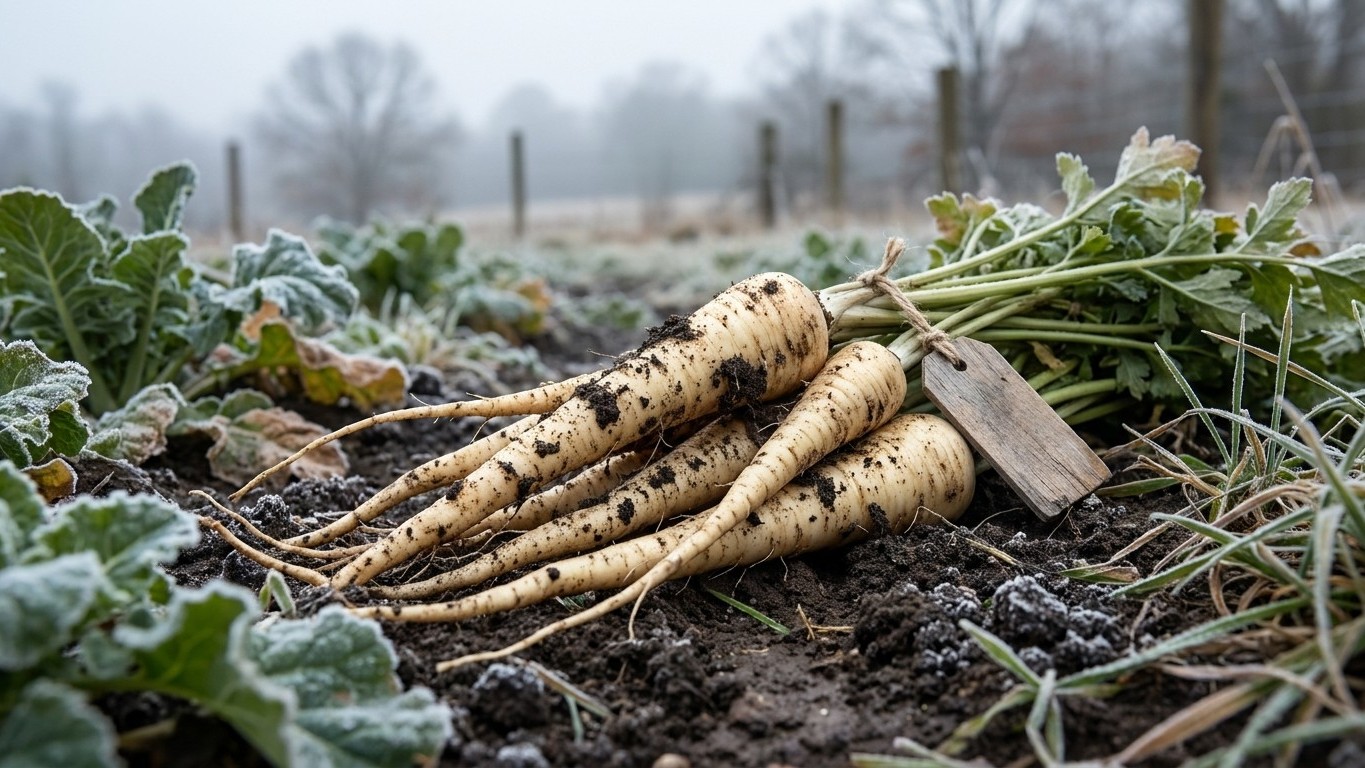

Coastal Virginia won’t hand parsnips a deep freeze. The mean minimum in the coldest month sits at 31.6°F here, according to NOAA NCEI Climate Normals for the Virginia Beach reference station, which means the average night barely dips below the freezing line rather than settling well under it. Parsnips will grow just fine in this ground and this season, but the sustained cold that turns starch into sugar is far from guaranteed on the coast. Move inland or gain elevation, and the odds start to shift in the crop’s favor.
The short answer
That 31.6°F figure is not a hardiness zone rating. It’s the average of daily lows across the coldest month, and it tells a different story than a zone map does. A hardiness zone answers whether a plant survives winter here at all. It says nothing about whether a root vegetable sitting in the ground gets the repeated, sustained frost exposure that triggers the starch-to-sugar conversion parsnips are known for. Those are two separate questions, and confusing them is the single most common mistake gardeners make when they read a seed packet’s zone recommendation and assume it settles the flavor question too.
Utah State University Extension is specific about the mechanism: parsnips taste best after several weeks of cool, frosty weather. Not one cold snap. Not a single night that dips to 28°F and then rebounds. Several weeks, plural, of consistent chill working on the root while it’s still in the ground. A mean minimum of 31.6°F in the coldest month suggests a lot of nights hovering right around the freeze line, with plenty of milder nights mixed in, rather than a stretch of reliably hard, sustained cold. That’s a very different climate signature than what you’d find in, say, the Blue Ridge or far southwest Virginia, where frost arrives weeks earlier in fall and lingers weeks later into spring.
So the honest answer for coastal Virginia is mixed. The soil and season here can absolutely produce a full-sized, well-formed parsnip. Whether that parsnip develops the deep sweetness gardeners are chasing depends on catching enough consecutive frosty stretches after the root matures, and the coastal climate record doesn’t guarantee that the way an inland or mountain location would. Gardeners in the Blue Ridge or southwest Virginia are working with a longer, colder frost season and should expect more reliable sweetening. Gardeners near the coast should treat sweetening as a possibility worth chasing, not a sure thing baked into the local climate.
Does the season fit?
Parsnips are sown in place, directly into the garden bed, not started indoors and transplanted. That matters because every day of the 100 to 120 days Utah State University Extension cites for maturity is counted from the seeding date itself, not from when seedlings finally show above the soil. Here’s how the timing works out against Coastal Virginia’s frost window, station USW00013769 (NAS Oceana):
- The last spring frost at this station falls between March 20 and April 3. Sowing 2 to 3 weeks before that date puts seed in the ground sometime around early to mid-March.
- Parsnip seed is slow to germinate, taking 14 to 21 days to emerge. A gardener who sows in early March won’t see seedlings until closer to late March or early April, and shouldn’t dig up the bed and re-sow before then out of impatience.
- Counting 100 days forward from an early March seeding date lands maturity around mid-June. Counting the full 120 days pushes that into early July.
- The first fall frost at this station arrives between November 10 and November 24, well over four months after that mid-June to early-July maturity window.
- That gap, four to five months between a mature root and the first real frost, means the growing season itself fits with plenty of room to spare. The clock isn’t the constraining factor in coastal Virginia.
- The practical wrinkle is what to do with that gap. Roots that mature in June won’t get any sweetening benefit sitting in warm summer soil for months. Many gardeners handle this by timing their planting so maturity lines up closer to the fall frost window rather than sowing at the earliest possible date, leaving the root in the ground through autumn and into the first cold snaps rather than pulling it in midsummer.
What goes wrong here
- Forked roots from heavy or stony ground. Parsnip roots push straight down, and anything that blocks that path, compacted clay, rocks, buried debris, splits the root into forks as it searches for the path of least resistance. Utah State University Extension points to deep sandy soil as the crop’s preference, and specifies that heavy soil needs to be double dug before sowing so the root has a clear, loosened path well below the surface.
- Forked roots from overwatering. This is a separate cause from soil texture, and it’s easy to blame the ground when the real culprit is a hose. Consistently soggy soil encourages the root to branch rather than drive straight down, so even a well-worked bed can produce forked parsnips if it’s watered too heavily or too often. The fix is steady, moderate moisture rather than frequent soaking.
- A season that runs out before maturity. This isn’t a real risk in coastal Virginia given the four-to-five-month cushion between maturity and first frost, but gardeners who sow later than 2 to 3 weeks before the last frost date narrow that cushion unnecessarily. Sticking to the recommended sowing window keeps the full 100 to 120 days available with room left over.
- A winter too mild to sweeten. This is the coastal Virginia problem specifically. With a coldest-month mean minimum of 31.6°F, a mature root left in the ground may see plenty of nights that flirt with freezing without stacking up the sustained, several-weeks stretch of frosty weather that actually converts starch to sugar. The remedy is patience rather than technique: leave mature roots in the ground as long as possible into the coldest stretch of the season, and treat any sweetening as a bonus of that particular winter’s weather rather than something guaranteed by the calendar.
Common questions
How many frosty weeks does coastal Virginia actually get?
The published figures here don’t give a count of frosty weeks directly. What’s on record is a coldest-month mean minimum of 31.6°F, which points to a winter that hovers near the freeze line rather than staying reliably below it for extended stretches.
Can I still grow parsnips if I’m inland or in the mountains?
Yes, and the frost math actually works in your favor there. The Blue Ridge and southwest Virginia see their last spring frost later and their first fall frost earlier than the coastal station referenced here, which stretches the cold season and improves the odds of the sustained frosty stretch parsnips need to sweeten.
When should I harvest for the sweetest flavor?
Leave mature roots in the ground as long into the cold season as practical, since the sweetening comes from several weeks of frost exposure after the root reaches size, not from the calendar date of maturity itself.
What if my soil is heavy clay?
Double dig the bed before sowing. Utah State University Extension identifies deep sandy soil as ideal and heavy soil as something that needs that extra preparation, since a shallow or compacted planting bed is a direct path to forked, misshapen roots.