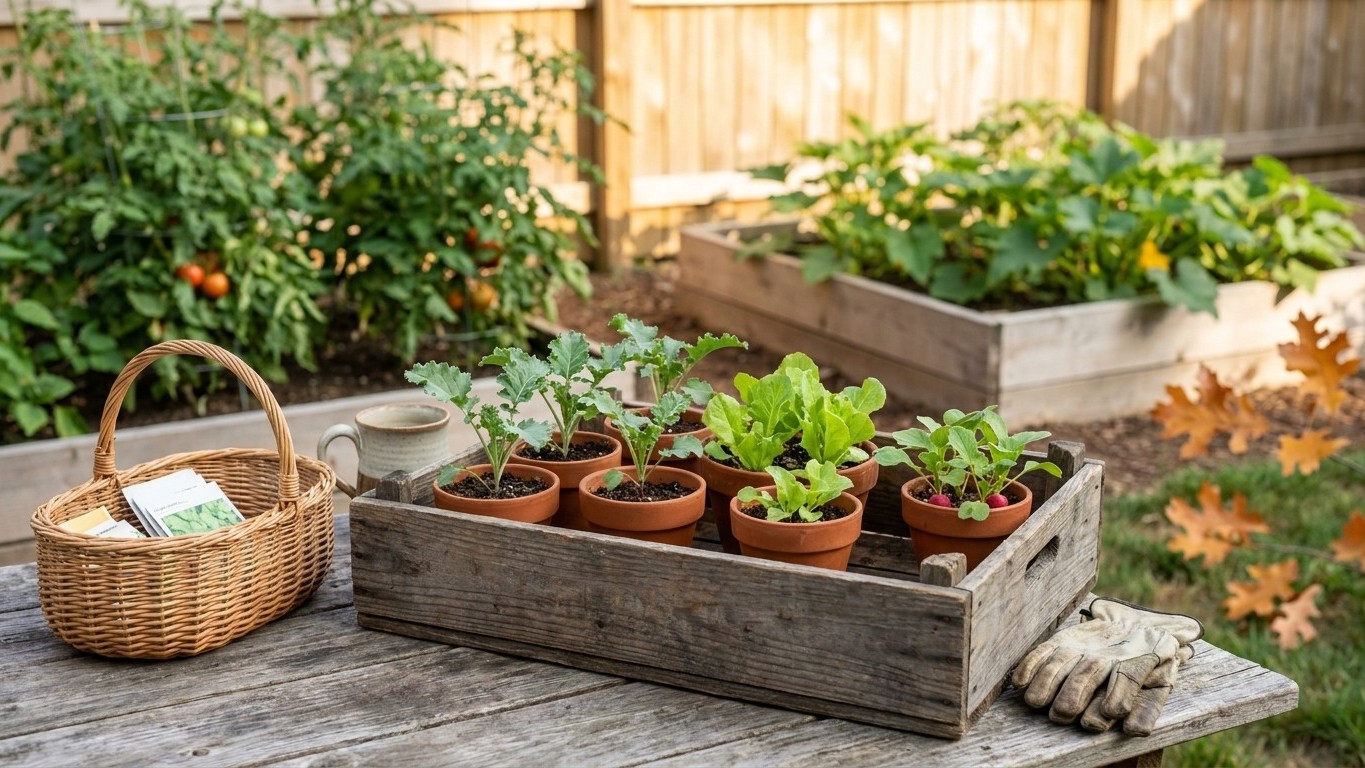

August in Virginia sits in the sweet spot for a second growing season. Direct-sow bush beans, summer squash, cucumbers, and the first fall roots and greens, while setting transplants of broccoli, cabbage, and kale into the ground for a harvest that beats the first frost. Coastal Virginia’s frost window runs November 10 to 24, which leaves roughly ten to fourteen weeks if you count backward instead of guessing by feel.
What goes in the ground in August

The math that matters this month isn’t the calendar, it’s the frost window. With first fall frost landing between November 10 and November 24 near the coast, a bush bean sown in early August (needing about seven to eight weeks to first harvest) has room to spare. Push it past mid-month and the margin gets thin, especially away from the coast where frost arrives earlier.
Summer squash and cucumbers planted now give you a fresh, borer-free succession right as the spring-planted vines start to fade under mildew and pest pressure. Both germinate fast in warm soil and can still ripen a full crop before cool weather slows them down.
Fall greens and roots are the real headline. Turnips, rutabaga, beets, carrots, collards, kale, and mustard greens all go directly into the soil through the month, with the exact week depending on how far you are from the coast. Broccoli, cabbage, and cauliflower transplants, started from seed weeks earlier, get set out now for a fall crop that often outperforms the spring one, since the plants mature into cooling weather instead of a heat spike.
Where soil temperature works against the calendar
Lettuce and spinach seed are the trap. Soil baked by August sun can be too warm for either to germinate reliably, no matter how textbook-perfect the date looks. Gardeners who wait for the tail end of the month, or who shade the row for the first week after sowing, get a far better stand than those who sow into full afternoon sun on a 95-degree day.
The reference point here is Virginia Beach, the mild end of the state’s range. In the Blue Ridge and southwest Virginia, where the USDA hardiness zone drops toward 5a to 6a instead of the coastal 7b to 8b, frost arrives earlier in fall, so the whole fall-planting window in August needs to shift a week or two earlier, not later.
What to start under cover
Counting backward from a November 10 to 24 frost window is the only reliable way to time August seed-starting, and it works from any county once you know your local range. A fall broccoli or cabbage transplant needs roughly eight to ten weeks from seed to a plant sturdy enough to set out, plus another eight to ten weeks in the ground to head up. Stack those together and the seed-starting deadline for a big fall brassica crop actually falls earlier in summer, which means August is really the month for the second, faster wave: lettuce, spinach, and quick Asian greens started in flats or under light shade cloth rather than direct in scorched soil.
Starting too early in August heat produces the same problem every year: leggy, heat-stressed seedlings that bolt or stall the moment they hit the garden, because the soil and air are both working against a cool-season crop’s instincts. Starting too late is the quieter failure. A lettuce sown in early September might never size up before short days and cold nights stop growth cold, even without a hard freeze.
The safest approach is a rolling batch: a small flat of lettuce or spinach every ten days through the second half of the month, started under light shade and moved to full sun once the seedlings have their first true leaves. That spreads the risk instead of betting the whole fall salad bed on one sowing date.
What is ready to pick
August is peak harvest for the crops planted back in spring. Tomatoes, peppers, eggplant, summer squash, cucumbers, sweet corn, melons, and okra all come in heavy this month, and the pace of picking is itself a job (okra and squash both turn tough within a day or two of the ideal size).
Ripeness cues are worth knowing cold. A tomato is ready when the color break at the blossom end has spread most of the way up the fruit and it gives slightly to a gentle squeeze. Peppers can be picked green or left to color fully, but they should be firm and glossy either way. Corn is ready when the silks have browned and dried and a punctured kernel releases a milky, not clear or thick, liquid. Melons tend to slip free from the vine with a light tug when fully ripe, rather than needing to be cut.
Garlic and onions harvested earlier in the season should already be curing in a dry, airy spot. Check that stash now for any bulb that’s gone soft at the neck; those need to be used first, before they take down their neighbors in storage.
The jobs that matter this month

Watering rhythm decides more August outcomes than any other single factor. Deep, infrequent watering (soaking the root zone rather than misting the surface daily) keeps tomatoes from cracking and squash from wilting in the afternoon heat, and a two- to three-inch mulch layer cuts evaporation enough to stretch the interval between waterings.
Pest scouting earns its keep this month. Squash vine borer, Japanese beetles, tomato hornworm, and stink bugs all build populations through August, and a five-minute walk through the beds every few days catches an infestation while hand-picking or targeted treatment still works, before it turns into a wholesale crop loss.
Succession sowing ties directly back to the frost window: every ten days to two weeks, another short row of beans, squash, or fall greens keeps the harvest coming instead of arriving all at once and then stopping. Staking and tying up sprawling tomato and melon vines before they collapse under their own fruit load saves fruit from rot and makes the pest check above actually possible.
Fall garlic doesn’t go into Virginia soil until October or November, but August is when seed garlic sells out from suppliers, so ordering it now is the difference between planting the variety you want and settling for whatever’s left. Clearing spent bean and pea vines, working compost into the freed-up bed, and testing soil ahead of fall plantings round out a month that’s as much about maintenance as new planting.
What not to do in August
The most common mistake is sowing lettuce or spinach seed straight into hot, dry soil because the calendar says it’s time. Seed that sits in soil above the germination comfort range for a cool-season crop simply won’t sprout evenly, no matter how good the seed is; shade cloth or a wait until the back half of the month solves it.
Heavy nitrogen feeding on tomatoes and peppers late in their season is the second trap. A dose meant to push growth instead pushes leafy vine at the expense of fruit set, right when the plant should be finishing, not starting over. A balanced or lower-nitrogen feed, or none at all, serves better once fruit is already set.
Inconsistent watering causes blossom end rot and fruit cracking that gardeners often blame on disease or variety instead of the real cause: a dry stretch followed by a heavy soak. Keeping the interval steady, even if that means a simple drip line on a timer, prevents both.
Waiting too long to start fall brassica transplants is the last one. Once the eight-to-ten-week seed-to-transplant window collides with the eight-to-ten-week transplant-to-harvest window, there’s no slack left before frost, and a crop started even a week late can miss the harvest entirely.
Checking this against your own county
Everything above is a starting point, not an instruction specific to any one yard. The USDA hardiness zone across the state runs from 5a in the highest parts of the Blue Ridge to 8b along the coast, and that spread alone shifts planting windows by several weeks between regions. Elevation, local frost pockets, and how close a property sits to the Chesapeake Bay or the mountains all move the safe dates further.
The reliable next step is the Virginia Cooperative Extension, which publishes county-level guidance built for exactly this kind of local variation, rather than a single statewide date.
Common questions
Can I still plant tomatoes in August in Virginia?
Direct-seeded tomatoes won’t have time to mature before frost in most of the state. A transplant of a fast-maturing variety set out in the first week or two of August can still produce near the coast, where frost holds off until November, but it’s a tight window and much less reliable in the mountains or southwest.
When should I start fall broccoli in Virginia?
Fall broccoli transplants need to go into the ground with enough time to mature before frost, which usually means the seed gets started indoors well before August and the transplant goes out in the first half of the month. Starting seed from scratch in August is generally too late for a full head to form before cold weather stops growth.
Is it too late to plant beans in August?
Not in the first half of the month, especially near the coast. Bush beans typically need seven to eight weeks to first harvest, which fits comfortably inside the ten-to-fourteen-week gap before the November 10 to 24 frost window. Planting after mid-August cuts that margin close, more so inland.
What vegetables can I direct sow in Virginia in August?
Bush beans, summer squash, cucumbers, and fall roots and greens (turnips, beets, carrots, collards, kale, mustard) all direct-sow well this month. Lettuce and spinach do better sown late in the month, or under light shade, since hot soil suppresses their germination.
Gardeners who plant by the Moon can check the August 2027 moon planting calendar, a tradition rather than a proven method.