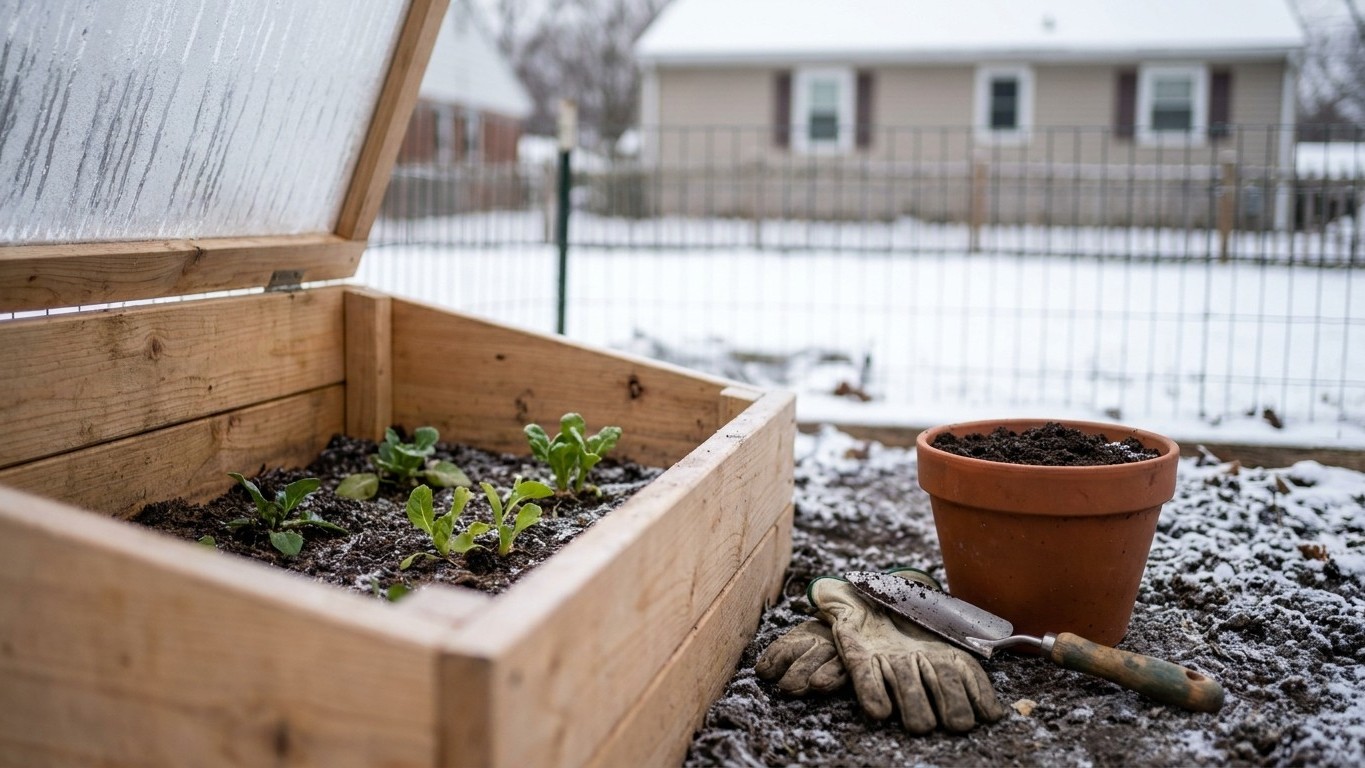

January puts almost nothing new into open Virginia soil. Garlic and shallots still go in where the ground hasn’t locked up, bare-root fruit trees and canes can go in during dormancy, and cold frames keep a handful of hardy greens alive. The real work this month happens indoors: seed starting, pruning, soil testing, and the planning that decides how the rest of the season runs.
What goes in the ground in January

Coastal Virginia’s last spring frost, based on the 1991-2020 climate normals for the Oceana station in Virginia Beach, falls between March 20 and April 3. That puts January roughly ten to twelve weeks out from that window, which is too far ahead for anything but the toughest crops and too close to bud break for some dormant work to wait much longer. Inland and mountain gardens run behind that coastal timeline by weeks, so the same calendar month means a colder soil profile the farther west and higher up you go.
Garlic and shallots are the one true outdoor planting still open this month, provided the ground isn’t frozen solid or waterlogged. Push cloves in wherever fall planting got missed or where a bed is still workable; garlic tolerates a late start better than almost anything else in the garden. Bare-root fruit trees, brambles, and dormant perennials can also go into prepared holes now, since they’re not actively growing and won’t be shocked by cold snaps the way a leafed-out transplant would.
Cold frames and low tunnels extend the list slightly: spinach, mache, and claytonia sown under cover in fall will often still germinate or hold in a protected frame through a January thaw. Some gardeners force rhubarb crowns or chicory roots indoors in the dark for a pale, tender harvest, a trick that costs nothing but a spare bucket and a dark corner. Everything else, tomatoes, beans, squash, peppers, stays off the calendar entirely until soil and air both warm well past this point.
| Region | Typical January ground conditions | What’s realistic now |
|---|---|---|
| Coastal / Tidewater | Soil often workable between cold snaps | Garlic, shallots, bare-root plantings, cold frames |
| Piedmont / Central | Frozen mornings, thawed afternoons common | Garlic if ground is soft, dormant pruning, bare-root only on mild days |
| Blue Ridge & Southwest | Ground frozen for extended stretches | Mostly indoor prep; outdoor planting waits weeks longer than the coast |
What to start under cover
Seed starting in January is arithmetic, not guesswork. Count backward from a local last-frost window instead of from a date on a packet. Onions and leeks, which need ten to twelve weeks of indoor growth before transplanting, land almost exactly in January for coastal Virginia gardens working off that March 20 to April 3 frost window. Move that math ten to twelve weeks earlier or later for a colder inland county, and the onion-starting date shifts with it.
Peppers and eggplant want eight to ten weeks under lights before they go outside, which for the coast puts their start a few weeks behind the onions, closer to late January into February. Cole crops destined for an early spring transplant, broccoli and cabbage in particular, run on a six-to-eight-week clock and can be started indoors now for gardeners planning an aggressive early setout under cover.
The two ways this goes wrong are opposite failures. Start too early and the plants sit under grow lights for weeks longer than they should, turning leggy, rootbound, and stressed before the ground is even ready for them. Start too late and there’s no runway left. A pepper started the same week as an onion will be badly behind schedule; a broccoli transplant started in early January for an inland garden with a late-April frost window will be oversized and stunted by the time it can safely go out. Match the crop’s own lead time to your own frost date, not to the calendar page.
What is ready to pick
January harvests are thin, and calling them anything else would be dishonest. Overwintered kale and collards, especially where they got a layer of mulch or a blanket of snow, keep producing edible leaves through the cold, often sweeter after a hard frost than they were in fall. Leeks left in the ground do the same, holding in place until the soil is workable enough to dig them.
Cold-frame greens, spinach, mache, arugula, are the most reliable January pick for gardeners who set them up in fall. Brussels sprouts left standing on the stalk continue to improve with cold exposure, and a light frost is generally considered to sweeten their flavor rather than ruin it. Indoors, sprouts and microgreens fill the gap for anyone missing fresh greens on the counter, ready in a week or two with no outdoor exposure at all.
The other January job on the harvest side is inspection, not picking. Stored winter squash, potatoes, and onions all need a periodic check for the ones starting to soften, sprout, or spot. A single soft squash left in a bin can spread rot to its neighbors within days, so pulling and using the compromised ones early saves the rest of the stash.
The jobs that matter this month

Dormant pruning is the single biggest job on the January list. Fruit trees, brambles, and grapevines are cut back while they’re fully dormant and before buds swell, which reduces disease spread and shapes the plant before spring growth takes over. Wait too long and the pruning cuts into new growth instead of old wood, costing the plant energy it needed for the season ahead.
Seed ordering belongs on this month’s list for a plain reason: popular varieties sell out early, and a gardener who waits until February is choosing from what’s left rather than what they wanted. Pairing that order with a rotation plan, deciding which beds grew tomatoes or brassicas last season so they don’t repeat in the same spot, prevents the soil-borne disease buildup that comes from planting the same family in the same ground year after year.
Soil testing is easiest to schedule now, before the spring rush hits extension labs, and the results guide any amendments added before planting begins in earnest. Compost piles benefit from a turn even in cold weather, keeping the decomposition process moving rather than stalling out. Tools get cleaned and sharpened while they’re not in daily use, beds and fencing get repaired before the growing season demands attention elsewhere, and any stored crop showing early rot gets pulled before it spreads. None of this is filler. Skip the pruning window and the harvest suffers; skip the seed order and the good varieties are gone; skip the soil test and amendments go in blind.
What not to do in January
A stretch of unusually mild days is the most common trap this month. Air temperature can climb into the 60s for a day or two while soil temperature, which changes far more slowly, stays cold several inches down. Direct-sowing warm-season seed, or setting out tender transplants, on the strength of one warm afternoon almost always ends with rotted seed or a frost-killed transplant days later.
Uncovering cold frames, row covers, or mulched beds too early after a warm spell carries the same risk in reverse. The protection was doing real work holding soil temperature steady; pulling it back exposes crowns and roots to the next cold snap, which often follows a mild stretch within a week or two. Leave winter protection in place until the frost window itself has genuinely passed for your area, not until one comfortable afternoon suggests it has.
Nitrogen fertilizer applied now is largely wasted or actively harmful. Dormant plants aren’t taking up nutrients the way they will once active growth resumes, and any nitrogen that does spur growth produces soft, tender tissue with no cold hardiness at all, tissue that a hard freeze will kill outright. Hold nitrogen applications until growth is visibly underway in spring, and use January instead for the soil testing that tells you what’s actually needed before you add anything.
Checking this against your own county
A statewide January guide is a starting point, not an instruction sheet for a specific yard. Coastal Virginia Beach sits at the mild end of the state’s frost calendar, while the Blue Ridge and southwest Virginia run weeks later in spring and weeks earlier in fall, which shifts every date and every under-cover countdown in this article by a meaningful margin. Elevation alone can move a frost date by more than a week between two spots just a few miles apart.
The Virginia Cooperative Extension publishes county-level guidance and planting calendars that account for these regional differences far than a single statewide frost window can. Checking a local office there before committing to a January planting date is the more reliable move.
Common questions
Can I plant garlic in Virginia in January if I missed the fall window?
Yes, as long as the ground is workable and not frozen or waterlogged. Late-planted garlic tends to size up smaller than fall-planted cloves, but it still produces a usable harvest.
Is it too late to start onion seeds indoors in January?
No. Onions typically need ten to twelve weeks of indoor growth before transplanting, which lines up well with a January start for coastal Virginia’s March 20 to April 3 frost window. Inland gardeners with a later frost date have more room and can start slightly later.
Should I prune my fruit trees in January if it’s been unusually mild?
A mild spell doesn’t change the pruning window. Dormant pruning is timed to the plant’s dormancy, not the day’s temperature, so January pruning is appropriate regardless of a warm stretch, as long as the wood itself isn’t actively pushing new growth.
What outdoor vegetables can I actually harvest in Virginia in January?
Overwintered kale, collards, and leeks, along with anything held in a cold frame such as spinach or mache. Brussels sprouts left standing on the stalk are also typically ready. Everything else at this point is stored produce or indoor sprouts and microgreens.
Gardeners who plant by the Moon can check the January 2027 moon planting calendar, a tradition rather than a proven method.