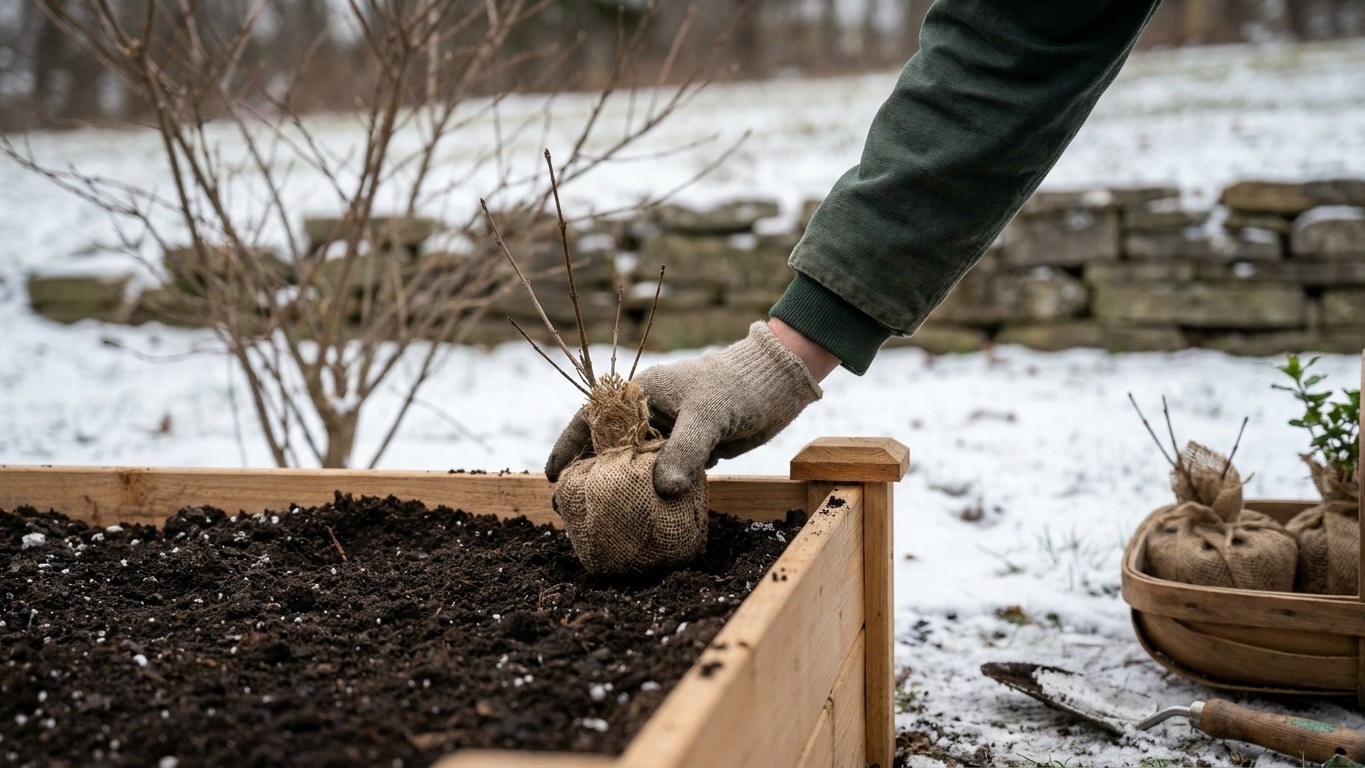

December in Virginia sits deep inside the dormant season for almost the entire state. The first fall frost has already passed everywhere (November 10 to November 24, per NOAA), and the next planting window doesn’t open until spring. Open-ground planting is essentially over. What’s left is dormant work, cold-frame maintenance, and indoor starts aimed at spring.
What goes in the ground in December

By December, Virginia has moved past its first fall frost window statewide. That window, November 10 to November 24 according to NOAA’s 1991-2020 climate normals for the Oceana station near Virginia Beach, marks the mild end of the state’s frost calendar. Inland and mountain areas cross that threshold earlier. So the honest answer for this month is that new open-ground seeding of anything tender, and most things that aren’t tender, is not on the table.
Garlic and shallots are the exception, and even they’re borderline. The usual fall planting window for garlic runs through October and into November, well before the ground firms up. If a gardener missed that window and the soil in a warmer pocket, coastal Virginia in particular, is still workable and unfrozen, cloves can still go in during December. Expect smaller bulbs at harvest. This is a late gamble, not a recommended plan.
Virginia’s USDA hardiness zones run from 5a in the mountains to 8b along the coast, based on the 2023 USDA Plant Hardiness Zone Map built from 1991-2020 averages. That range matters here because a mild December in Virginia Beach can look nothing like a frozen December in the Blue Ridge, even though the calendar page is the same.
What is realistic this month
- Bare-root fruit trees, roses, and shrubs, planted dormant on any day the ground isn’t frozen solid
- Cold frames and low tunnels holding spinach, mache, and claytonia that were established earlier in fall
- Forcing rhubarb crowns or chicory roots indoors in the dark for a winter harvest
- Late garlic and shallot cloves in mild coastal soil, accepting a smaller bulb
Nothing else new should be seeded outdoors. Anything tender planted now simply won’t survive the weeks ahead.
What to start under cover
The right way to plan December seed starting is to count backward from the last spring frost window, March 20 to April 3 for the Virginia Beach area and later inland, rather than from a date on the wall calendar. Onions and leeks are the classic December-to-January indoor start because they tolerate ten to twelve weeks under lights before transplanting outdoors, and they don’t get leggy the way tomatoes or peppers do if held too long.
Peppers and eggplant, by contrast, are a poor fit for December starting almost everywhere in the state. Counted backward from even the earliest edge of the spring frost window, an eight-to-ten-week peppers start lands in January or February for most of Virginia, not December. Start them now and you’ll be nursing rootbound, stretched seedlings for months before the ground and air are warm enough to receive them.
The two failure modes to watch are mirror images of each other. Start too early and the plants outgrow their pots, get leggy under indoor light, and stall out from stress before they ever see soil. Start too late and there isn’t enough runway left before the last frost window closes, so transplants go out undersized and struggle to catch up.
December’s safer indoor projects are lower-stakes: parsley and chives on a bright windowsill, sprouts and microgreens that finish in days rather than months, and onion or leek seed under grow lights for a spring transplant. Save the tomato and pepper trays for later in winter, timed to each crop’s own count from the frost window, not from this month’s date.
What is ready to pick
Fresh harvest straight from open ground is thin in December across Virginia, and that’s worth saying plainly rather than dressing it up. The plants still producing are the ones built for cold: kale, collards, and Brussels sprouts that have been through several frosts and, in most cases, taste better for it. Leeks left in the ground can be pulled as needed, since the soil itself is their storage.
Cold frames and unheated hoop tunnels keep a slow trickle of lettuce, spinach, and mache coming through the coldest weeks, especially in the milder coastal zones near 8a and 8b. Growth slows to a crawl but doesn’t stop entirely.
Indoors, sprouts and microgreens are the most reliable fresh crop of the month, ready in a week to ten days from seed with no outdoor risk involved.
The other harvest job in December is checking what’s already in storage. Winter squash, potatoes, and onions need a hands-on inspection now, not a wait-and-see approach. A soft spot on a squash, a sprouting eye on a potato, or a soft neck on an onion is a sign to use that piece first, before it takes the rest of the bin down with it. One overlooked potato really can spread rot to its neighbors within a couple of weeks in a warm cellar.
The jobs that matter this month

December carries plenty of real work, even with almost nothing new going into the ground. Dormant pruning of apple, pear, peach, and blueberry plants is best done now, while the plants are fully asleep and the structure is easy to see without leaves in the way. Cutting now, before sap starts moving in late winter, reduces stress on the plant and lowers the risk of disease entering fresh cuts.
Seed catalogs are worth ordering from now rather than in late winter. Popular varieties, particularly disease-resistant tomatoes and any seed tied to a short regional growing window, sell out well before spring planting starts.
Soil testing through Virginia Cooperative Extension is a job that pays off specifically because of its timing: results take a few weeks to come back, and knowing what a bed needs now means amendments like lime can be worked in over winter instead of scrambled in right before spring planting.
Maintenance that’s easy to skip and shouldn’t be
- Turning the compost pile to keep it breaking down through the cold months
- Cleaning and sharpening pruners, loppers, and shovels, then oiling metal parts against rust
- Repairing raised bed frames, cold frame glazing, and garden fencing before the spring rush
- Mulching garlic beds and perennial roots to buffer against freeze-thaw heaving
- Planning next season’s crop rotation while the beds are empty and easy to map
None of this shows up as a harvest. All of it shows up in how the garden performs come spring.
What not to do in December
The most common mistake this month is treating a warm afternoon as permission to plant something tender. Air temperature is not soil temperature, and neither one erases the fact that Virginia is sitting well outside its frost-free window until at least March 20 on the mild coastal end, later inland. A 60-degree day in the middle of December doesn’t mean the season has turned.
A close second is pulling row covers or cold frame lids off during a mild stretch and leaving them off. Established greens under cover have adjusted to a buffered environment; strip that protection and the next cold snap, which is never far away in a Virginia winter, hits them at full force.
Fertilizing with nitrogen right now is also a mistake, and a common one. Nitrogen pushes soft, leafy growth, exactly the kind of tissue that frost damages fastest. Garlic, overwintering greens, and dormant perennials don’t need a growth push in December; they need to sit still. Save nitrogen applications for the actual spring green-up, when new growth has a season ahead of it instead of a freeze.
Finally, don’t let stored crops go unchecked because it’s cold outside and the harvest feels finished. Rot in a bin doesn’t pause for winter, and a five-minute check now saves a full bin later.
Checking this against your own county
A statewide month is a starting point, not an instruction. Virginia’s hardiness zones span 5a to 8b, and its frost windows shift by weeks between the coast and the mountains. Coastal Virginia Beach sits at the mild end of the state; the Blue Ridge and southwest Virginia run their spring frost later and their fall frost earlier, which compresses the whole growing season.
| Region | General frost pattern | Approximate USDA zone |
|---|---|---|
| Coastal (Virginia Beach area) | Mild end of the state; frost window closes latest in spring, opens latest in fall | 7b to 8b |
| Piedmont / Central | Noticeably earlier spring warm-up cutoff and earlier fall frost than the coast | 6b to 7a |
| Blue Ridge / Southwest mountains | Latest spring frost, earliest fall frost; shortest frost-free season in the state | 5a to 6a |
For a county-level read, check Virginia Cooperative Extension and its local planting calendar before relying on any single statewide date.
Common questions
Can I still plant garlic in Virginia in December?
Only in mild coastal soil that hasn’t frozen, and only as a late option. The regular fall window closes well before December, so bulbs planted now will likely come in smaller than a properly timed October or November planting.
Is it too late to start onion seeds indoors?
No. Onions and leeks tolerate ten to twelve weeks under indoor light without becoming leggy, which makes December a reasonable start for a March or April transplant, especially in the milder parts of the state.
What vegetables actually survive a Virginia winter outdoors?
Kale, collards, Brussels sprouts, and leeks are the most reliable, along with lettuce and spinach growing under a cold frame or low tunnel for extra protection.
When is the right time to prune fruit trees in Virginia?
While they’re fully dormant, which is exactly where December sits. Pruning before sap starts moving in late winter reduces stress on the tree and lowers disease risk at the cuts.
Gardeners who plant by the Moon can check the December 2026 moon planting calendar, a tradition rather than a proven method.