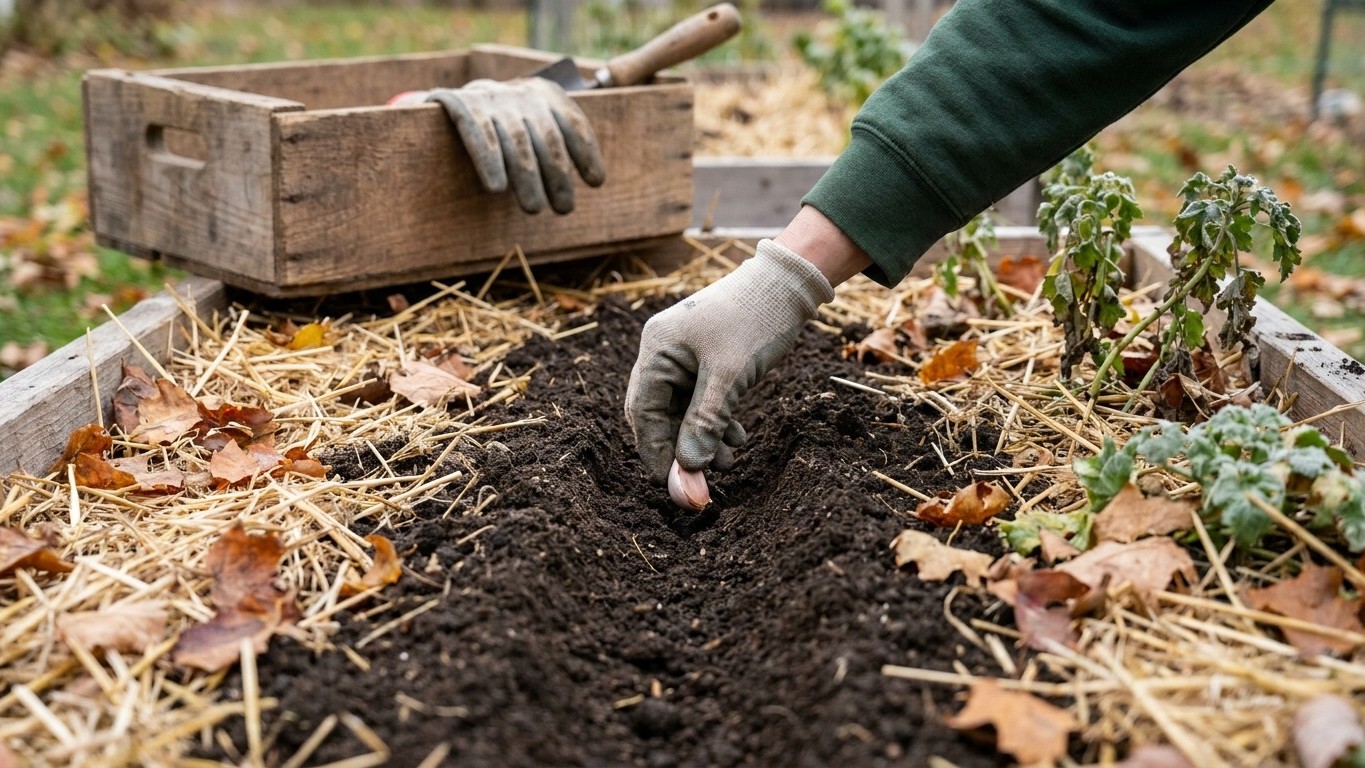

By November, Virginia’s window for planting new vegetables has mostly closed. The state’s first fall frost lands between November 10 and November 24 at the coastal reference station, so most of the month sits right at or past that line. What still goes into the soil: garlic cloves and shallot sets, a last round of cover crops on cleared beds, and bare-root trees and shrubs while the ground stays workable. Everything tender is already done for the season.
What goes in the ground in November

The calendar says November, but the soil doesn’t care what the calendar says. What matters is whether the ground is still workable and whether the crop can handle the cold that’s coming. In Virginia, that comes down to two numbers: the first fall frost window of November 10 to November 24, and a statewide hardiness range of 5a to 8b under the USDA system. Those numbers explain why a gardener near the coast might still be setting out cold frame greens while someone in the Blue Ridge already has frozen ground.
Garlic is the one crop that’s actually supposed to go in now. Cloves planted in early-to-mid November have several weeks to push roots before the ground locks up, which sets up a stronger bulb come summer. Shallots follow the same logic. Both go dormant above ground once hard frost hits, then resume growth in spring, so a late planting date isn’t a death sentence, it’s a smaller bulb.
Cover crops on any bed that’s finished for the season, winter rye, crimson clover, hairy vetch, still make sense through the first half of the month. They need enough soil warmth to germinate and get a few inches of growth before dormancy, so waiting until the ground is already cold wastes the seed.
Everything else on the “can I still plant it” list is a gamble. Lettuce and spinach transplants set out now, without cover, are betting against a frost date that may already be behind them. That’s a bet most gardeners lose.
| Region | First fall frost timing | Where it sits in the state’s zone range |
|---|---|---|
| Coastal Virginia (reference station) | November 10 to November 24 | Milder end, closer to zone 8b |
| Blue Ridge and southwest highlands | Several weeks earlier than the coastal window | Colder end, closer to zone 5a |
Bare-root and dormant plantings
Fall is the classic window for bare-root fruit trees, berry canes, and dormant shrubs across most of the state’s zone range. The plant isn’t trying to grow top growth in cold soil, it’s building roots through late fall and into any mild stretch of winter, which gives it a head start before spring pushes new leaves.
What to start under cover
Anything started under cover this month has to be measured against the last spring frost window, not the first fall one. That window runs from March 20 to April 3 at the coastal reference station, and it’s the number to count backward from for anything meant to go outside in spring.
Quick, cold-hardy greens are the exception that works right now. Mâche, spinach, and mesclun mixes sown into a cold frame or under a low tunnel typically reach a pickable size in five to seven weeks, which puts a November sowing on track for a harvest in the dead of winter rather than spring. That’s a short enough turnaround that the calendar math is forgiving.
Onion and leek seed for spring transplanting is a different story. Those crops need ten to twelve weeks of growth before they go outside, and outside means after the last frost window closes. Counting back from March 20 to April 3 puts the real sowing date in the heart of winter, not now. Start alliums this early and the result is leggy, rootbound seedlings sitting in trays for months before the ground is even close to ready.
That’s the trap worth naming directly: starting too early produces plants that outgrow their pots and stall out, weak and stretched, long before transplant day. Starting too late means the seedling never builds enough root mass to handle the shock of the garden. Both failures come from ignoring the frost window and going by the feel of the season instead.
Fava beans are one crop that splits the difference. Sown into a cold frame in November, they tolerate real cold and can carry through winter for an early spring crop, without the tight timing that alliums demand.
What is ready to pick
Frost has already touched most of the state by the time November is underway, and that’s good news for a handful of crops. Kale, collards, and Brussels sprouts all sweeten after a freeze, as the plant converts starches to sugars in response to cold. Leeks left in the ground hold well through repeated frosts and can be pulled as needed rather than all at once.
Root vegetables, carrots, beets, turnips, store perfectly well right where they grew, especially under a thick layer of mulch that keeps the ground from freezing solid around them. Pulling a few at a time as meals require them beats digging the whole bed early.
Cold frames and low tunnels started earlier in fall should be producing lettuce, spinach, and other quick greens by now. Check them on any stretch of mild weather to keep growth from bolting or rotting in trapped humidity.
Indoors, sprouts and microgreens fill the gap for anyone missing fresh greens on the table. They need no soil to speak of and reach a harvestable stage in a week to ten days from a windowsill tray.
Storage crops need a look-over now too. Winter squash, potatoes, and onions brought in earlier in fall should get checked for soft spots, sprouting, or the sweet smell that signals early rot. One bad potato in a bin spreads decay to its neighbors fast, so pulling suspect ones out early saves the rest of the batch.
The jobs that matter this month

November’s real value isn’t in what gets planted, it’s in what gets done before the ground freezes for good. Dormant pruning on fruit trees and berry canes can begin once leaves have dropped, cutting out dead, crossing, or diseased wood while the plant’s structure is easy to see without foliage in the way. Waiting until the depths of winter works too, but starting the cleanup now spreads the job out instead of stacking it all into one cold weekend later.
Seed catalogs and suppliers start moving popular varieties out of stock earlier than most gardeners expect. Ordering seed now, while the full list is still available, beats discovering in February that the variety that did well last season is sold out.
Soil testing fits this month well, since amendments like lime take months to fully adjust pH, and a fall test gives that lime time to work before spring planting. Turning the compost pile one more time before it goes dormant for winter keeps the pile breaking down instead of just sitting cold and inert.
Tools deserve the same attention. Cleaning soil off blades, oiling wood handles, and sharpening pruners and hoes before they sit unused for months prevents rust and makes spring work easier from day one.
Raised beds, fencing, and cold frame frames are worth inspecting and repairing now, while the ground is still soft enough to reset a post or patch a corner. Doing that work after a hard freeze means fighting frozen ground for a job that would have taken minutes in November.
Planning next season’s crop rotation on paper, while this year’s layout is still fresh in memory, avoids the common mistake of planting the same family in the same bed two seasons running, which builds up soil-borne pests and disease.
What not to do in November
A stretch of unusually warm days in November convinces some gardeners the season has more life in it than it does. Setting out tomato or pepper transplants because the air felt like September is the single most common mistake, and cold soil, not warm air, is what actually kills those roots.
Tender bulbs and tubers left in the ground past frost are a quieter version of the same error. Dahlias, cannas, and gladiolus need to come up and into storage once their foliage blackens with frost, not weeks later once the ground has gone cold and wet around them.
Cold frames and row covers get opened on mild afternoons and then, easy to forget, left open into a night that drops well below freezing. A forgotten cover undoes weeks of protected growth in a single hard freeze.
Nitrogen fertilizer applied now pushes soft, leafy growth at exactly the wrong moment. That new growth has no time to harden off before winter and gets damaged by the first real freeze, weakening the plant rather than helping it. Save the nitrogen for spring, when new growth actually has a season ahead of it.
Garlic planted too late is the last trap. Cloves need real time in the ground before it freezes solid to establish roots. Pushed past that window into frozen or waterlogged soil, they often rot instead of overwintering.
Checking this against your own county
A statewide frost window is a starting point, not an instruction for a specific backyard. Elevation, local cold pockets, and the long stretch between the coast and the mountains move these dates by weeks in either direction. The coastal reference station’s November 10 to November 24 frost window and its 5a-8b hardiness range describe the state as a whole, but the Blue Ridge and southwest Virginia routinely see frost land earlier in fall and linger later in spring than that range suggests.
For a planting date tied to an actual county, the Virginia Cooperative Extension is the source built for that job, with local offices that track frost data and planting guidance down to the region.
Common questions
Is it too late to plant garlic in November?
Not necessarily. Garlic planted in early-to-mid November still has time to root before the ground freezes solid across most of the state, though a bulb planted later in the month, especially in the Blue Ridge or southwest, may end up smaller by harvest.
Can I still start a vegetable garden from seed outdoors in November?
Direct-sown vegetables are a poor bet this month across nearly all of Virginia, since the first fall frost window of November 10 to November 24 has usually already passed or is imminent. Cold frames and low tunnels are the workaround for quick greens.
What should I do with tender bulbs like dahlias in November?
Dig them once frost blackens the foliage and store them somewhere cool and dry, rather than leaving them in the ground where cold, wet soil invites rot.
Why does my garden zone matter for what I plant in November?
Virginia spans USDA zones 5a to 8b, and that range shifts frost timing and cold tolerance from one end of the state to the other. A planting date that works near the coast can be weeks too late for the mountains, which is why local extension guidance matters more than a single statewide date.
Gardeners who plant by the Moon can check the November 2026 moon planting calendar, a tradition rather than a proven method.
Related guides
Elsewhere? See what to plant in November in every state and province.