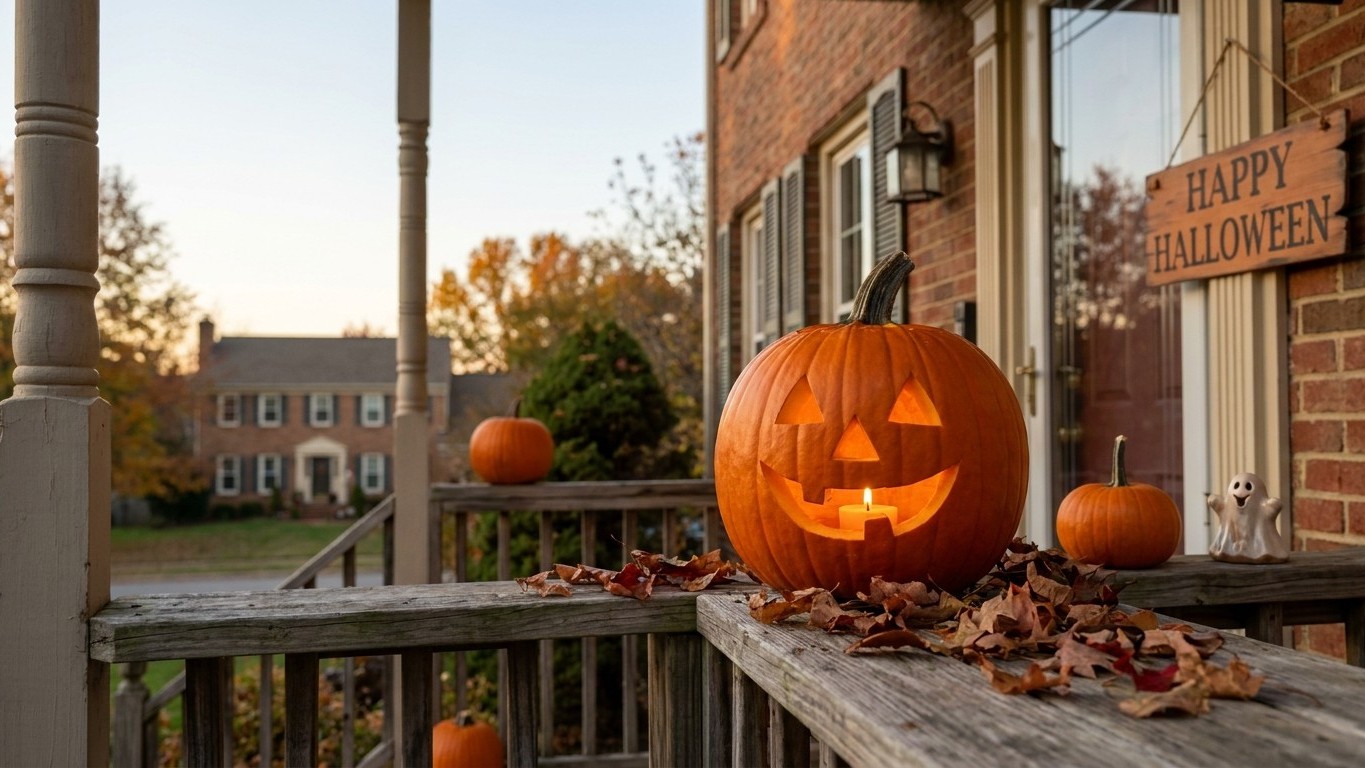

In Virginia, frost is rarely the reason a jack-o-lantern goes bad. Around the coastal reference station near Virginia Beach, the average first fall frost lands between November 10 and November 24, well past Halloween. That means most of the state stays too warm, not too cold, for carving timing to be an issue. Carve close to October 31, pick a pumpkin with its stem intact, and keep it cool and dark until then.
The short answer

At the NOAA reference station near Virginia Beach (Oceana), the mean first fall frost falls somewhere between November 10 and November 24, based on 1991-2020 climate normals. That’s an average built from three decades of data, not a promise stamped on this year’s calendar, so treat it as a rough marker rather than a hard deadline. Even allowing for the date to shift a week in either direction, it puts the first frost roughly 10 to 24 days after Halloween across this part of the state.
That timing flips the usual pumpkin-carving worry on its head. In much of the country, the question is whether frost will arrive before trick-or-treaters show up. In coastal and central Virginia, frost isn’t the obstacle. October 31 typically arrives while the region is still solidly frost-free, so a whole, uncarved pumpkin sitting on a porch faces essentially no freeze risk through Halloween night.
The real constraint here is warmth, not cold, and that changes how you should think about timing. The window for carving isn’t dictated by an approaching freeze the way it might be farther north. It’s dictated by how long a cut pumpkin can hold its shape while temperatures stay mild. Since no extension service publishes a shelf life for a carved pumpkin, the safest approach is to carve as close to Halloween as your schedule allows, within a few days of October 31 rather than a week ahead of it.
If you live away from the coast, closer to the Blue Ridge or into southwest Virginia, shift this thinking earlier. Elevation and inland location push frost dates weeks ahead of what the coastal station records, so a pumpkin sitting outside in the mountains could see its first light frost before Halloween even arrives. That’s not necessarily a problem for a whole pumpkin, since a light frost on the rind doesn’t ruin it the way it would a tender vegetable, but it’s a sign the calendar looks different depending on where in the state you are.
So, region by region: in Tidewater, Richmond, and most of central Virginia, carve within a few days of October 31, since frost isn’t a factor here and warmth is. Farther west and south, in the mountains and southwest counties, expect frost earlier and plan around that instead, checking your local extension office for specifics.
Frost or heat: which one gets it here
A whole pumpkin is best stored between 45 and 50 F, according to University of Illinois Extension. That’s a narrow band, and it’s worth checking against what Virginia actually does in the back half of October, because the answer determines which threat you should actually plan around.
The cold end
Even in the coldest month of the year, the mean daily minimum temperature at the Virginia Beach reference station is 31.6 F, just barely at freezing. That’s the average low for January, the coldest stretch of the entire year, not for October. Halloween sits weeks before that coldest window, and well before the mean first frost date of November 10 to 24. the cold end of the scale simply isn’t in play for most of the state at carving time. A hard freeze isn’t lurking behind Halloween night in Tidewater, Hampton Roads, Richmond, or most of the Piedmont.
The warm end
Late-October afternoons in Virginia’s lowlands often still climb into the 60s, sometimes higher, and overnight lows frequently sit in the mid-40s to 50s rather than dropping into the 45-50 F storage sweet spot consistently. A porch, a stoop, or a sunny front step can easily run warmer than that recommended band for stretches of the day. That’s the mechanism working against your pumpkin here: not ice crystals forming on the rind, but ambient warmth speeding up the natural softening that happens to every cut squash. In Virginia, heat is what gets it, and that’s the risk to manage, not frost.
Where to keep it until you carve
Getting close to the 45-50 F storage window matters more in this climate than watching for frost. Here’s where that band is realistically achievable around a Virginia home in late October.
- An unheated garage or an enclosed but unheated porch. These spaces track closer to outdoor lows without catching full afternoon sun, which keeps daytime warming to a minimum.
- A basement, especially an older, unfinished one. Many Virginia basements sit naturally in the mid-to-upper 50s or lower, which is closer to the target range than most rooms in the house.
- A shaded, north-facing spot outdoors, if garage or basement space isn’t available. Direct sun on a black porch step or south-facing stoop can push surface temperatures well past 50 F even on a mild fall afternoon.
- Away from apples, potatoes, and tomatoes. Ripening fruit releases a gas that speeds up aging in nearby produce, and a pumpkin stored next to a bowl of apples or a bin of potatoes ages faster than one kept on its own.
- Out of standing water and off bare concrete. A slightly elevated, dry surface, even a piece of cardboard or a wooden board, keeps moisture from softening the bottom of the pumpkin before you’ve even picked up a knife.
None of this changes once the pumpkin is carved. There’s no published research from extension services on how long a carved jack-o-lantern lasts, and no verified preservation method, whether bleach dips or petroleum jelly, comes from a research source rather than a content farm. The dependable strategy is simpler: choose a good pumpkin, keep it whole as long as possible using the steps above, and carve it close to the day you plan to display it.
Checking this against your own county
The frost window and storage guidance here come from a single coastal reference station, which is the mild end of Virginia’s climate range. If you’re in the Blue Ridge, the Shenandoah Valley, or far southwest Virginia, your actual first frost could land weeks earlier than what’s cited above, and your October temperatures may sit closer to that 45-50 F band outdoors than they would near the coast.
For a local read, contact Virginia Cooperative Extension, which operates offices in nearly every county across the state. Extension agents can speak to frost timing and growing conditions specific to your elevation and region, which is a more reliable check than applying one coastal station’s numbers to the whole state.
Common questions
How long will a carved pumpkin last in Virginia?
There’s no published figure from a university extension source for how long a carved pumpkin holds up, in Virginia or anywhere else. The reliable guidance covers whole pumpkins only: three to six months in a cool, dark spot between 45 and 50 F. Once cut, carve close to when you plan to display it.
Can I Carve a Pumpkin two weeks before Halloween in Virginia?
You can, but in most of the state’s mild late-October climate, warmth rather than frost is what shortens how good a carved pumpkin looks. Carving closer to October 31 gives you more margin against that warmth.
Does frost ruin an uncarved pumpkin?
A light frost on the rind of a whole pumpkin typically isn’t damaging. And in coastal and central Virginia, frost usually doesn’t arrive until well after Halloween anyway, based on the mean first fall frost of November 10 to 24.
What should I look for when picking a pumpkin that will carve well?
Look for one with 1 to 2 inches of stem remaining, since the stem acts as a seal and a broken one leaves that spot open to premature spoiling. Avoid soft spots and blemishes, and pick it up by the base, never by the stem. Weight matters more than shape.