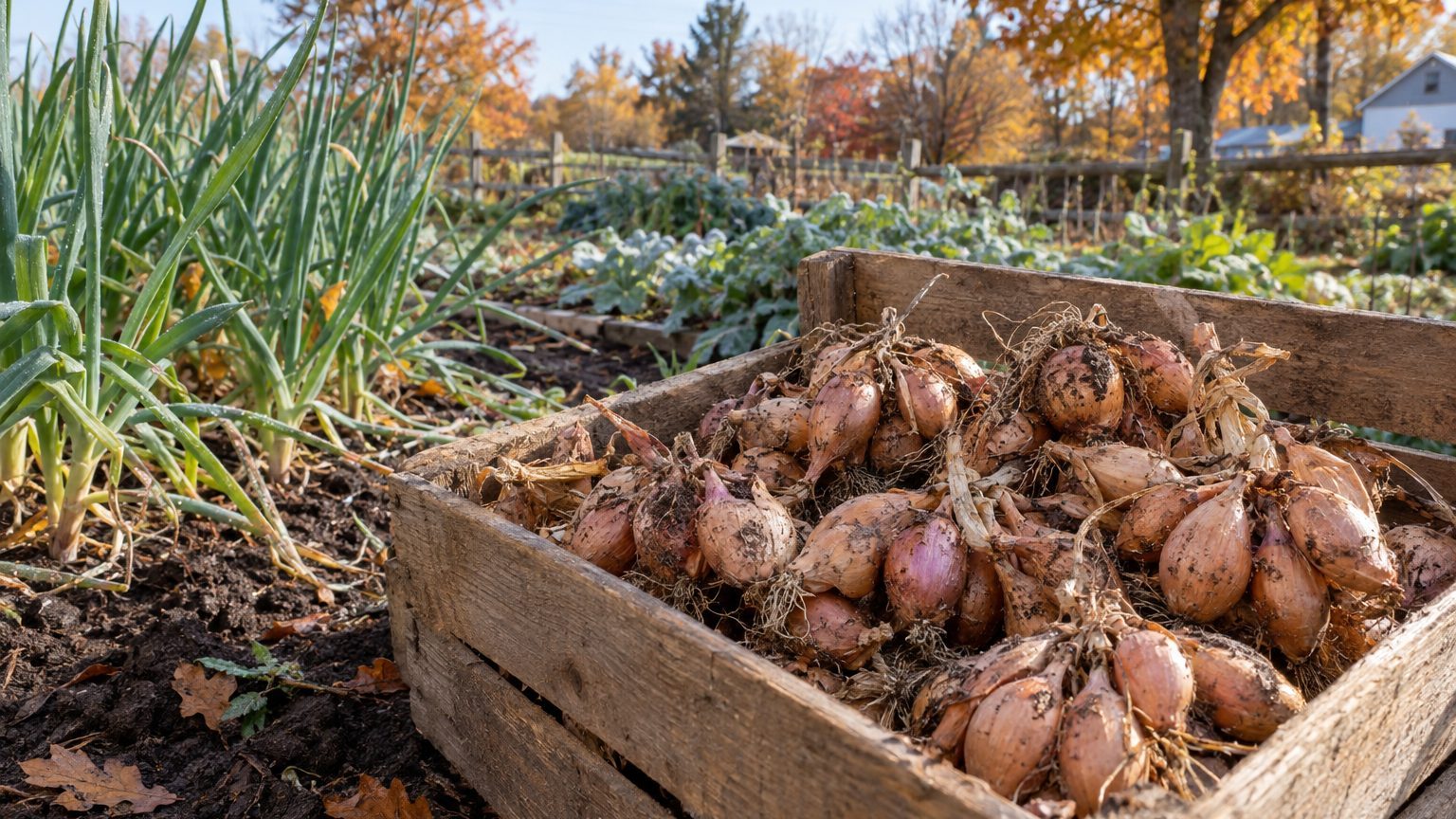

The best shallots for Virginia are multiplier types, planted as bulbs in fall and pulled in early summer. Seed-grown shallots, started indoors in late winter, are the backup for anyone who misses the fall window. Both suit a long, mild growing season. In this state, the planting date and a bed that drains after summer storms matter more than any variety name.
The short answer for Virginia
Plant fall-set multiplier shallots first, the kind grown from small bulbs that split into clusters. Seed-grown shallots set out in early spring come second, and spring-planted bulbs come third.
Shallots form bulbs as days lengthen in late spring, and the size of the bulb depends on how many healthy leaves the plant has built by then. A bulb planted in fall puts roots down through winter and has a full set of leaves ready when the long days arrive. A bulb planted in late spring has only a few weeks of cool weather before heat takes over.
The frost dates show how long that fall runway is. At the reference station on the coast (NAS Oceana, near Virginia Beach), the last spring freeze at 32°F falls between March 20 and April 3. That is the band where the chance of a freeze is between 30 and 70 percent. The first fall freeze falls between November 10 and November 24, using the same probability band. Coastal Virginia is the mild end of the state, so the mountains run later in spring and earlier in fall. The coldest month at Virginia Beach has a mean daily minimum of 31.6°F. Winters there dip below freezing on an average night, and shallots handle that without any help.
Which type of shallot fits Virginia best?
| Type | Planted | Harvest | Fit for Virginia |
|---|---|---|---|
| Multiplier bulbs, fall-planted | Mid-October to early November, before the ground gets cold | Early summer | Best overall. Strong roots, biggest bulbs, harvest before the worst heat |
| Multiplier bulbs, spring-planted | As soon as the soil can be worked | Midsummer | Good in the mountains, smaller bulbs on the coast |
| Seed-grown hybrids | Started indoors in late winter, set out in early spring | Midsummer | Reliable second choice, cheap, no stored seed bulbs to keep |
Shallots grown from bulbs cost more per plant than seed but give a cluster of bulbs from each one set in the ground. Seed-grown types give one larger bulb per plant. Match the type to your calendar first and look at named varieties second. For the planting dates by region, see When to Plant Shallots in Virginia, and for the full routine from bed prep to curing, Growing Shallots in Virginia.
What will not work here

Virginia’s season is long, so a slow shallot is rarely the problem. The usual failures come from heat, humidity, and a bad planting date.
Why do shallots rot in Virginia’s humid summers?
Summer in most of the state is warm and damp, and shallots ripen right into it. Crowded plants hold moisture in the leaves, and that invites fungal leaf disease and neck rot. A row with bulbs 3 inches apart might look efficient in March. By June, the foliage is a wet mat that never dries. Space bulbs apart in rows, and the leaves dry out between rains.
Weekly deep watering does the same damage. Virginia gets rain through every season, so a schedule that suits a dry western state will keep the soil soaked here. Stop watering as the tops begin to yellow and lean over, which usually happens in early summer. Heavy clay, common across the Piedmont, makes it worse. If water stands in the bed for a day after a storm, build a raised row 4 to 6 inches high or choose another spot.
What happens if you plant at the wrong time?
Fall planting has a narrow sweet spot. Bulbs set in September go into warm soil and may send up lots of top growth before winter. Bulbs set after the ground is cold, which is late November on the coast and earlier in the mountains, do not root well. In the coldest parts of the state, poorly rooted bulbs can heave out of the soil during freeze and thaw cycles.
Spring planting fails differently. Bulbs that go in during April or May meet warm weather before they have built enough leaves. The result is small bulbs, often no larger than a walnut. Seed started too late has the same problem. Plan to have transplants in the ground within a few weeks of the last freeze, not in May.
Thick mulch can also backfire on the coast. Winters there stay mild and wet, and a deep layer of mulch keeps the soil soggy around the bulbs. A light cover of straw is plenty at the coast. Varieties bred for cool, dry regions, such as many French gray types, tend to be fussier about heat and humidity. Choose the type first, then ask your county office what has actually worked locally.
What changes across Virginia
Virginia spans USDA hardiness zones 5a through 8b. That is a wide spread, and no single answer fits the whole state. The USDA system rests on one variable, the average annual extreme minimum temperature. The coastal reference city, Virginia Beach, sits at the mild end. High ridges in the Blue Ridge and southwest Virginia sit at the cold end, where winter lows run far lower than at the coast.
Cold itself is rarely what harms shallots, since they are hardy. The shift is in timing. In the mountains, spring arrives weeks later and fall comes earlier, so the window for planting bulbs ahead of a hard freeze closes sooner. Gardeners at altitude should plant bulbs earlier in fall, in the weeks before the ground freezes, and cover them with loose straw once it does. Where winters are severe, spring planting is the safer plan. Set bulbs out as soon as the soil is workable and crumbles in your hand.
On the coast and in the southeast, the shift goes the other way. The planting window opens later and runs longer, and harvest comes earlier because heat arrives sooner. Seed-grown shallots are worth a try there because transplants can go out in late winter.
Hardiness zone says nothing about summer humidity, so two gardens in the same zone can behave differently. To find the zone for your own address, use the USDA Plant Hardiness Zone Map and enter your ZIP code. Treat it as a starting point and not as a planting schedule.
Where to check this for your own county
Your county office at Virginia Cooperative Extension is the best next stop. Virginia has local offices across the state, staffed by agents and trained Master Gardener volunteers who know the soil and weather in your area.
Look for two things there. The first is a local planting calendar for shallots, onions, and garlic, which tells you the fall and spring dates that work in your county. The second is any list of varieties trialled locally, or recommendations from nearby growers, since a type that does well in the Tidewater may struggle in Highland County, and the reverse. Many offices also run soil testing, and results will tell you whether your bed needs lime or fertilizer before you plant. Shallots do best in a loose, well-drained bed, and a soil test is the way to know where yours stands.
A county recommendation beats a statewide one. A statewide answer averages places as different as Virginia Beach and the southwest highlands, and it can only describe the middle. The county office knows your frost pockets, your clay or sandy soil, and which fungal problems showed up last summer. Treat anything written for the whole state as a starting point, and let your county calendar settle the dates.
Checking this against your own garden
Your garden’s own signals outrank every date in a guide. Three are easy to watch and need nothing more than your hands and eyes.
- Soil warmth by feel. In spring, push your hand into the bed. If the soil crumbles and does not feel cold or sticky, it is ready for bulbs or transplants. In fall, wait until the soil has cooled and no longer feels warm. A bed that crumbles early in spring is a warm, well-drained spot.
- The first green shoots. Note the day green tips appear after fall planting, and again when growth restarts in late winter. A bed that greens up early is sheltered or sunny, and you can plant a little ahead of the calendar there.
- When the tops yellow and fall over. This is the signal to stop watering and start harvesting. If it happens in early June in one corner and a week later in another, you have found two different microclimates.
Write the dates down, even on a calendar by the back door. Two seasons of notes will tell you more about your own bed than any statewide table.
Common questions
Can you grow shallots from seed in Virginia?
Yes. Start seed indoors in late winter and set transplants out in early spring once the soil can be worked. Seed-grown types make one larger bulb per plant, and they ripen in midsummer. They are a good second choice when fall planting did not happen.
Should I plant shallots in fall or spring in Virginia?
Fall gives the largest bulbs across most of the state, because roots grow all winter and the plant has leaves ready when long days arrive. In the coldest mountain areas, spring is the safer option. Your county extension office can tell you which applies where you live.
How far apart should shallots be planted?
Set bulbs apart in rows. Wider spacing keeps the foliage dry in humid weather, which cuts the risk of leaf disease and neck rot. Plant the bulb with the tip just at or slightly above the soil surface.
Can I plant shallots from the grocery store?
They will often sprout, but they may be a type poorly suited to Virginia’s humid summers, and their disease history is unknown. Bulbs from a garden source or local grower are the better bet. If you do use store shallots, grow a small test row first and compare it with a row of bulbs bought for planting.