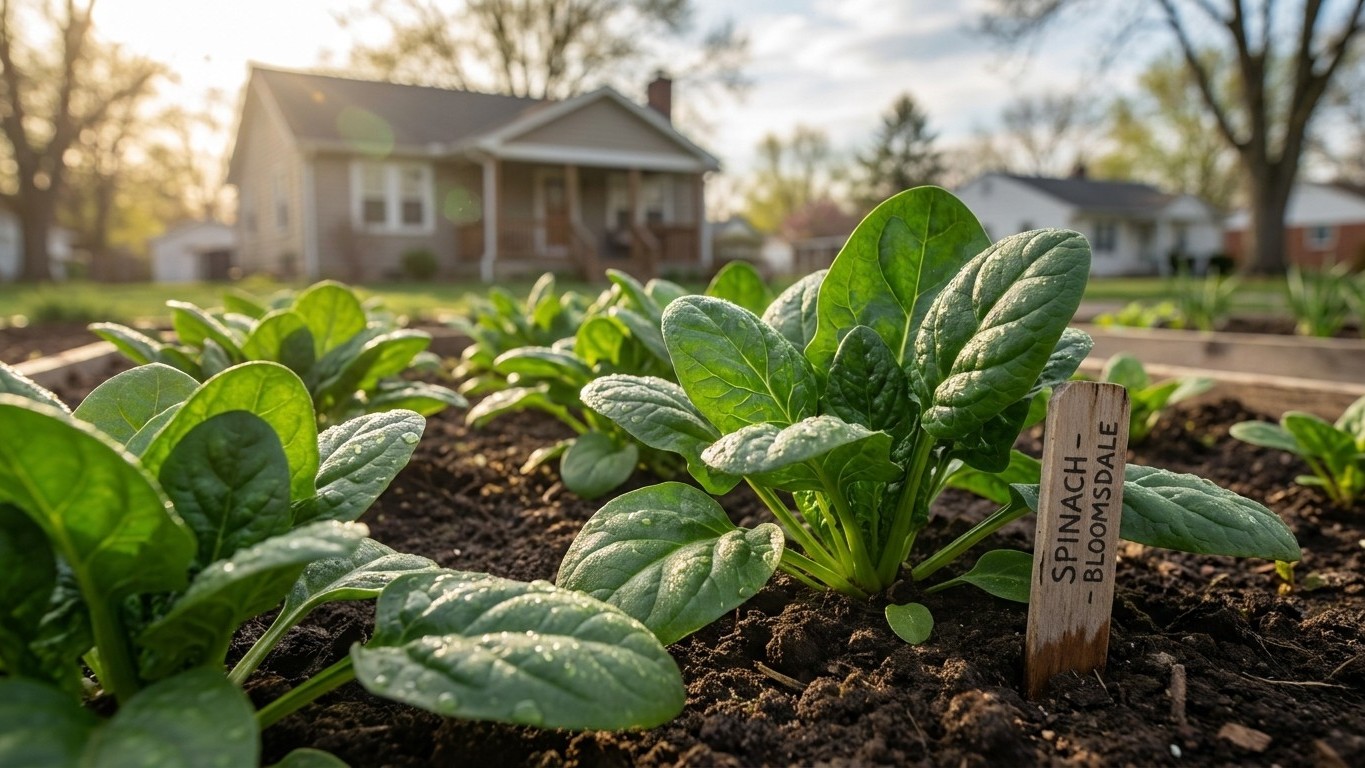

Spinach in Virginia bolts for two reasons at once: the region’s long summer days flip the flowering switch, and the heat that rides along with those long days pushes the plant past the point where it grows well. Near the coast, close to Virginia Beach, that combination leaves only a short stretch of spring before the plant sends up a seed stalk. Will Spinach Bolt Early in Virginia? The fall planting is more forgiving, but only once the soil finally cools enough for spinach seed to sprout at all.
The short answer
On the longest day of the year, the Virginia Beach area logs 14 hours and 32 minutes of daylight. That number matters more than most gardeners assume. Spinach bolts during long days and warm temperatures together, and it grows best where temperatures stay below 75°F. A cool, cloudy summer will not buy extra weeks here, because the trigger is not just warmth. It is light. Once the days stretch past a certain length, the plant starts moving toward seed whether the thermometer cooperates or not.
So which one actually ends the spinach season here, the day length or the heat? The honest answer is both, and they arrive on the same calendar. As spring rolls toward the June solstice, daylight climbs steadily toward that 14-hour-32-minute peak, and at the same time the region’s heat load starts building. Virginia Beach averages 26.0 days a year at 90°F or hotter, almost all of them packed into summer. Spinach never has to survive that full heat load, because it bolts and quits well before the hottest days arrive. But the ramp-up toward those 90-degree days still overlaps with the lengthening daylight, and the two work together to close the spring window fast.
The 75°F figure deserves a second look, because it does two jobs at once. It is the ceiling above which spinach stops growing well, and it is also roughly where the leaves start turning bitter. There is no separate “bitterness date” on a calendar. It is the same number, doing double duty as both a growth limit and a flavor limit. Once daytime temperatures start hovering near or above it, whatever spinach is left in the ground is already past its best, even if it has not fully bolted yet.
None of this is unique to spinach as a species. It is unique to how far south this reference location sits. Farther north, summer daylight runs even longer at the peak, but the heat load that piles on top of it builds more slowly, which can stretch the usable window by a week or two. Here, the heat catches up to the daylight fast, so the two pressures land close together rather than one trailing the other by a month. That is the whole story behind why Virginia gardeners talk about spinach in weeks, not months, and why so many turn their attention instead to When to Sow Autumn Spinach in Virginia.
How long the spring window really is
Working out the real spring window means lining up two numbers that come from different places: the frost calendar and the 75°F growth ceiling. Here is how that plays out, step by step, for the Virginia Beach area.
- Sowing date. Spinach seed goes in the ground 2 to 3 weeks before the last spring frost. NOAA climate normals for this station put the last spring freeze between March 20 and April 3, which pushes the sowing window back to roughly the first two weeks of March.
- Early growth. Those first weeks after sowing are the easy part. March and early April temperatures sit comfortably below the 75°F ceiling, and daylight is still well short of its summer peak, so the plant just grows leaves without any pressure to flower.
- The squeeze begins. As April turns into May, daylight keeps climbing toward that 14-hour-32-minute peak, and afternoon temperatures start brushing up against 75°F on the warmer days. This is when the two triggers, long days and rising heat, start stacking on top of each other.
- Effective cutoff. By the back half of May, most springs here have crossed both lines closely enough that spinach still in the ground is bolting or turning bitter. Counting from an early-March sowing to a late-May cutoff gives a usable spring window of roughly eight to ten weeks, and that window shrinks in a warm spring or stretches slightly in a cool, cloudy one.
Seed catalogs for this crop tend to mention a handful of variety names, including Bloomsdale, Melody, Teton, and Olympia. None of the sources behind these numbers publish days-to-maturity or heat-tolerance ratings for any of them, so there is no verified way to say one holds up longer against bolting than another. Treat variety choice as a separate question from the calendar math above, not a way to stretch the window itself.
The autumn crop, and when the soil lets you sow
Fall spinach in Virginia runs into the opposite problem from spring. Instead of racing daylight and heat forward, the gardener has to wait for the ground to cool down before seed will even sprout.
Soil still too warm to germinate
Spinach seed struggles to germinate once soil temperature climbs above 80°F, and Virginia Beach’s summer heat load, that average of 26.0 days a year at 90°F or higher, keeps soil well above that mark through most of July and August. Sowing into that warm ground is largely wasted seed. The practical fix is to wait until the ground has had a real stretch of cooler nights, which typically does not happen with any reliability until late summer.
The frost that ends the season
On the other end, NOAA climate normals put the first fall frost for this station between November 10 and November 24. Working backward from that date using the published guidance of planting 50 to 75 days before the target harvest gives a sowing window that lands in late August through early September, depending on how close to first frost the gardener is comfortable cutting it. Sow too early and the seed sits in ground that is still too warm to sprout well; sow too late and the plant runs out of season before frost shuts things down. The realistic sweet spot sits in that narrow stretch where the soil has finally cooled but eight or more weeks of decent growing weather still remain before the first freeze.
Checking this against your own county
Every number above comes from a single coastal station near Virginia Beach, the mildest corner of the state. Inland and mountain counties run their calendars differently. The Blue Ridge and southwest Virginia see their last spring frost weeks later and their first fall frost weeks earlier, which shifts both the spring sowing date and the fall sowing window in the opposite direction from what is laid out here.
Before committing seed to the ground, it is worth checking local frost data and soil conditions through Virginia Cooperative Extension, which publishes county-level guidance built for exactly this kind of variation across the state. A gardener in Roanoke or Wise County working off Virginia Beach dates alone could easily sow spinach two or three weeks off from what actually works on the ground.
Common questions
Does shade slow down bolting in Virginia?
Shade can lower the temperature spinach experiences, but it does nothing to change day length, and day length is one of the two triggers behind bolting. Afternoon shade may help slightly with the heat side of the equation, but it will not stop the plant from responding to long daylight hours as the solstice approaches.
Can spinach survive Virginia summers if watered constantly?
Extra water helps with heat stress but does not touch the day-length trigger. Once daylight crosses the point that pushes spinach toward flowering, no amount of irrigation reverses that signal. Summer is simply outside the window for this crop here.
Is fall spinach less likely to bolt than spring spinach?
Yes, because by the time fall sowing is possible, daylight is already shortening rather than lengthening toward the solstice. The obstacle in fall is warm soil blocking germination, not the bolting trigger itself, which is why the fall crop tends to hold in the ground longer once it gets going.
What happens if spinach is left in the ground after it bolts?
Once spinach sends up a flower stalk, leaf quality drops fast and the remaining leaves tend to turn bitter, tied to the same 75°F threshold that limits growth. At that point, the plant is putting its energy into seed production rather than leaves, so there is little to gain by leaving it in place.