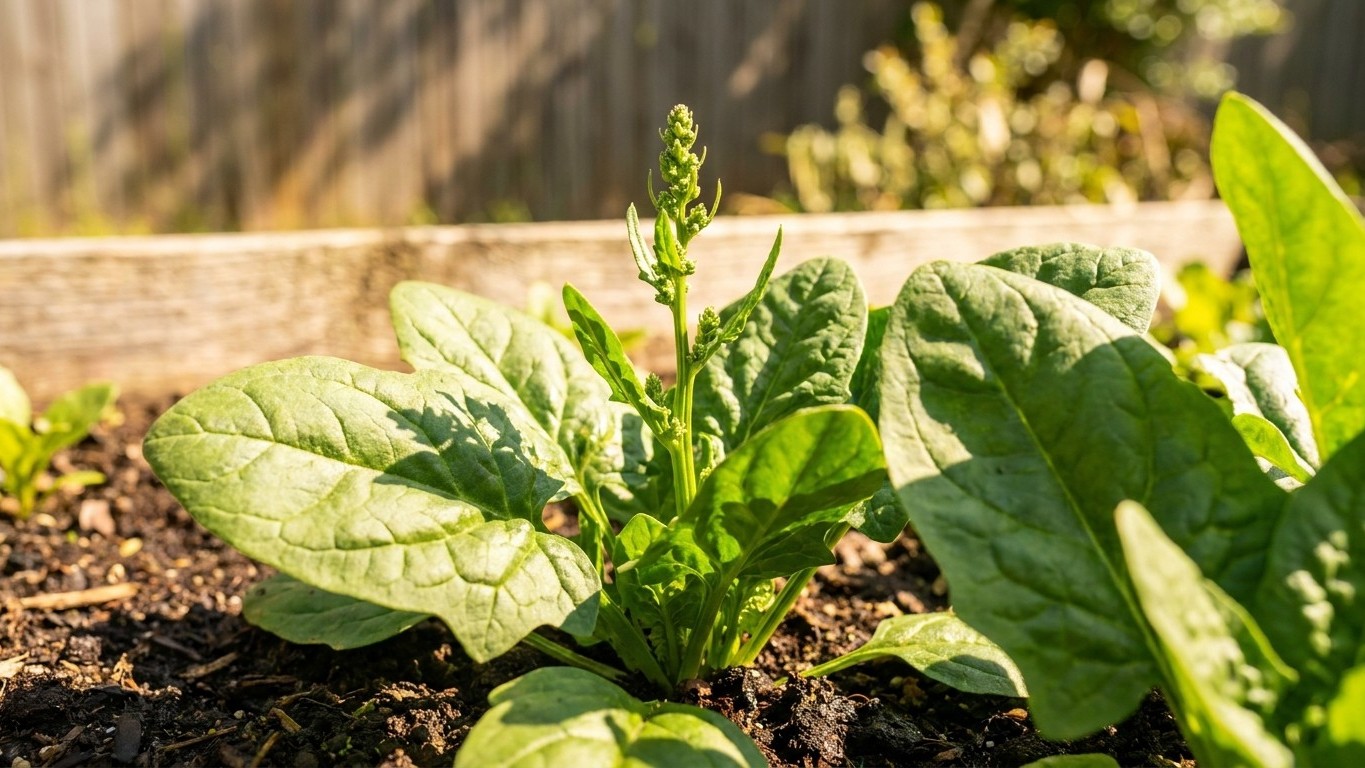

Spinach will bolt early almost everywhere in coastal Virginia, and the reason has less to do with a hot afternoon than with how much daylight falls on the plant each day. The reference station near Virginia Beach logs 14 hours and 32 minutes of daylight on the longest day of the year, and that day length alone pushes spinach toward flowering. Add in 26 days a year that reach 90 degrees or hotter, and the crop is fighting on two fronts before summer even settles in.
The short answer
Start with the number that matters most: 14 hours and 32 minutes of daylight at the June solstice, measured at the coastal reference station. That figure has nothing to do with temperature. Spinach flowers in response to long days as well as heat, so once the days stretch past a certain point in spring, the plant begins moving toward seed regardless of how mild the air feels. A cool, cloudy June in Virginia does not buy extra weeks of harvest the way it might for a heat-sensitive crop that has nothing to do with day length. The clock is running the moment the days get long, full stop.
Layer the heat on top of that, and the picture gets tighter. Virginia Beach averages 26 days a year at 90 degrees or above, and spinach stops growing well once temperatures climb past 75 degrees. That 75-degree mark is not a single bad afternoon either; it is both a growth ceiling and the point where leaves start turning bitter. So the honest answer to whether spinach bolts early here is both: day length starts pushing the plant toward flowering in mid-spring, and rising heat finishes the job within weeks, often before the day-length effect alone would have ended things.
This matters more inland. The Blue Ridge and southwest Virginia see day length that is nearly identical to the coast, but their frost dates run later in spring and earlier in fall, which shifts the whole growing calendar without changing the underlying trigger. Gardeners there still lose the spring crop to the same combination, just on a slightly different schedule.
Seed catalogs list a handful of spinach varieties commonly grown in home gardens, including Bloomsdale, Melody, Teton, and Olympia. None of them get around the day-length trigger. Choosing a variety is a matter of leaf shape and personal preference, not a way to buy extra weeks.
How long the spring window really is
Working out the real spring window means stacking a few numbers together rather than guessing from a seed packet.
- Last spring frost at the coastal reference station falls between March 20 and April 3. Sowing spinach 2 to 3 weeks before that date puts seed in the ground somewhere between late February and mid-March, depending on where in that frost window a given spring lands.
- Cool soil in late February and March favors germination and slow, steady leaf growth. This is the best stretch of the whole spring crop, and it is short.
- By mid-to-late April, day length is climbing fast, and the plant is already responding to it even if the air still feels mild.
- Once afternoon temperatures start regularly pushing past 75 degrees, usually as spring turns toward early summer, growth quality drops and bitterness sets in, then the plant bolts.
- Counting from a late-February or early-March sowing to the point heat and day length combine to end things cleanly, the usable spring window in coastal Virginia runs roughly eight to ten weeks. Inland and mountain gardens gain a little time on the front end because frost lingers longer, but they are working with the same daylight clock.
That is a narrow harvest season for a crop many gardeners expect to hold for a couple of months. Succession sowing every week or two through that window, rather than one large planting, is the practical way to stretch usable harvest days without fighting the plant’s own biology.
The autumn crop, and when the soil lets you sow
Fall Spinach in Virginia is a different problem than spring spinach. Instead of racing lengthening days and rising heat, the autumn crop has to wait out summer’s leftover warmth in the soil, then finish before frost shuts things down. Utah State University Extension gives no fixed days-to-maturity number for spinach, only a planting guideline: sow 50 to 75 days before the date you want to harvest.
Soil still holds summer heat
Spinach seed germinates poorly once soil temperature climbs above 80 degrees, and Virginia’s coastal soil holds onto summer heat well past the point the calendar suggests fall has arrived. With 26 days a year at 90 degrees or hotter baked into the ground through July and August, soil often stays too warm for reliable germination well into September. Sowing into hot soil is the most common way fall spinach fails before it even sprouts. Waiting for soil to actually cool, rather than sowing by a fixed date, is the more reliable approach here.
Frost sets the finish line
First fall frost at the coastal reference station arrives between November 10 and November 24. Counting back 50 to 75 days from that window puts a realistic sowing date somewhere between late August and early October, with the earlier end of that range only workable once soil has actually cooled below the 80-degree germination threshold.
| Region | First fall frost | Practical sowing window |
|---|---|---|
| Coastal Virginia (reference station) | November 10 to November 24 | Late August to early October, once soil cools |
| Blue Ridge / southwest Virginia | Earlier than coastal | Shifted earlier by weeks, soil cools sooner too |
Inland and mountain gardens catch a break here that spring sowing does not offer: earlier frost means less time overall, but cooler nights arrive sooner too, which brings the soil below 80 degrees earlier in the season and opens the sowing window without the same standoff between hot soil and a ticking calendar.
Common questions
Does shade slow down spinach bolting in Virginia?
Shade can lower leaf temperature somewhat, but it does not change how many hours of daylight reach the plant each day, and day length is one of the two triggers behind early bolting here. Shade helps more with the heat side of the equation than the day-length side.
Is fall spinach easier to grow than spring spinach in Virginia?
Fall sowing avoids the lengthening days that push spring spinach toward flowering, since day length is shrinking rather than growing through autumn. The tradeoff is warm soil that can block germination if seed goes in before the ground actually cools.
Do Bloomsdale, Melody, Teton, or Olympia resist bolting better than each other?
Selection among them is generally a matter of leaf texture and taste rather than a documented difference in day-length or heat tolerance.
Why does 75 degrees matter twice for spinach?
That single temperature marks both the point where growth quality declines and the point where leaves start tasting bitter. It is not a calendar date, it is a threshold that can arrive early or late depending on how a given spring or fall behaves.