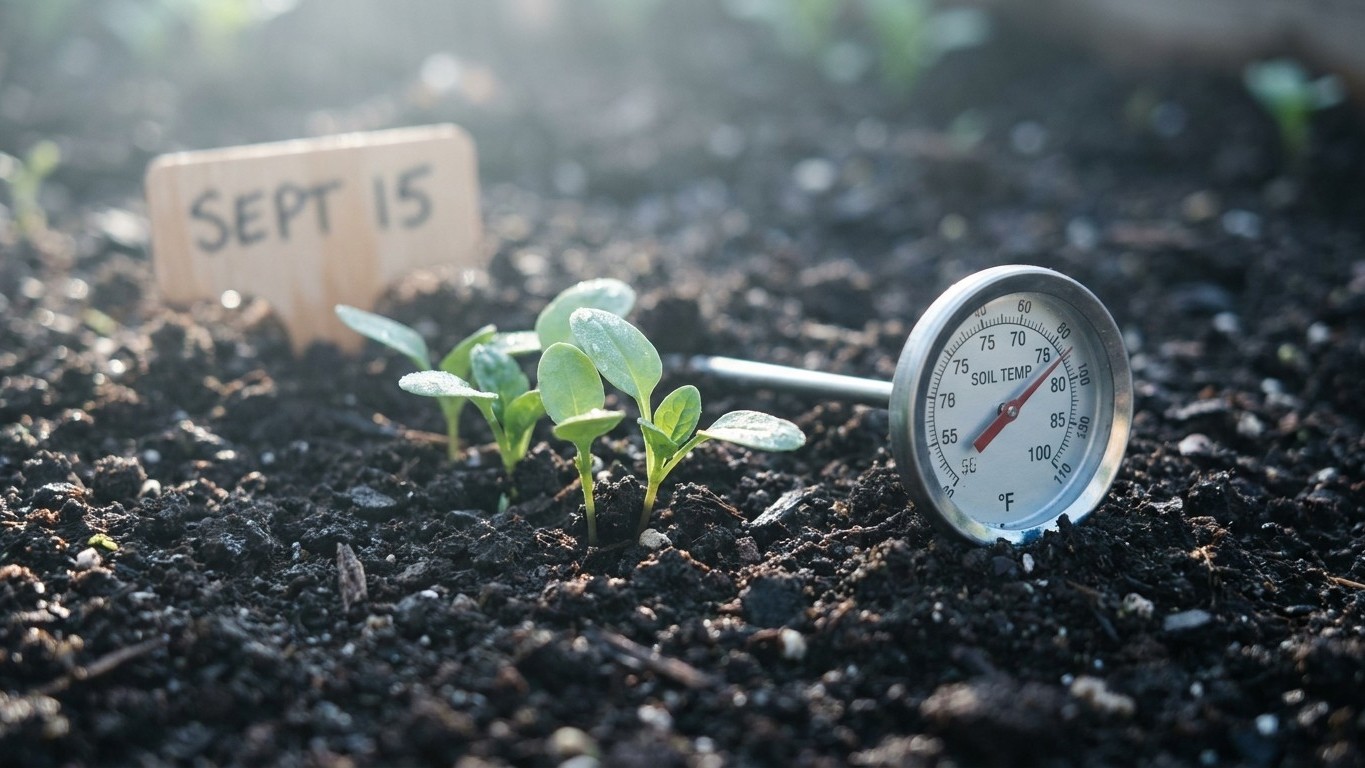

Fall spinach goes into Virginia soil once the ground cools below that 80 F germination ceiling, which for most of the state means late August into September. Count backward 50 to 75 days from the frost that will end your harvest, and you land on a sowing window that starts earlier inland and later along the coast. Heat, not cold, decides when you can start.
The short answer
Virginia Beach sees 14 hours and 32 minutes of daylight on the longest day of the year. That number matters more than most gardeners realize, because spinach flowers in response to long days as much as it does to warm weather. A stretch of cool, cloudy weather in June doesn’t slow that clock down. The plant reads the calendar through daylight hours, and once the days stretch past a certain length, it starts pushing up a seed stalk whether the thermometer cooperates or not.
So a mild coastal summer, one without much heat, still won’t buy Virginia gardeners extra spinach weeks in June and July. The days are long everywhere in the state at that point in the season, and that alone is enough to trigger bolting in most varieties. This is the piece people miss: they wait for a heat wave to blame, and the plant has already bolted from day length days before the mercury climbed.
Heat piles on top of that. Virginia Beach averages 26.0 days a year at 90 F or hotter, and spinach growth quality falls apart above 75 F. That’s a growth ceiling and a flavor problem at the same time. Leaves that mature once temperatures push past that mark turn bitter and tough, even on plants that haven’t fully bolted yet. So the limiting factor here isn’t one single thing. It’s both. Day length forces the flowering response starting in late spring, and heat finishes the job by degrading leaf quality and eventually stopping germination altogether once soil temperatures climb.
What that means practically: spinach in Virginia is a two-season crop, not a summer one. You get a narrow spring run before the days get too long and the heat sets in, and then a second run in fall once the soil finally cools back down and the days start shortening again. There is no version of a Virginia summer, coastal or inland, where spinach sits happily in the ground from June through August. The plant simply isn’t built for that combination of daylight and warmth, and no amount of shade cloth changes the day-length trigger even if it helps with the heat.
This is why timing matters more with spinach than with a lot of other vegetables. Miss the window by two weeks in either direction, spring or fall, and you’re either fighting bolted plants or watching seed rot in soil that’s still too warm to let it sprout.
How long the spring window really is
- Start from the last spring frost. At the reference station near Virginia Beach (NAS Oceana), the last spring freeze falls between March 20 and April 3. Spinach seed goes into the ground 2 to 3 weeks ahead of that date, meaning a coastal sowing window that opens around the very start of March and runs through the third week of that month.
- Watch the soil, not just the calendar. Spinach seed germinates in cool soil just fine, that’s the opposite problem from fall sowing, so early sowing isn’t blocked by cold ground the way it would be for a warm-season crop.
- Count forward to when growth quality collapses. Growth stops being good once temperatures climb past 75 F, and daylight length keeps building toward that mid-June peak of 14 hours 32 minutes the whole time. Both pressures arrive together, typically by mid-to-late May along the coast.
- Add it up. From an early-March sowing to a late-May cutoff, Virginia’s usable spring spinach window runs roughly ten to eleven weeks along the coast, and noticeably less than that further inland or at higher elevation, where the last frost lingers weeks longer but the day-length trigger and early heat still arrive on schedule.
- Inland adjustment. The Blue Ridge and southwest Virginia see later spring frosts than the coast, which pushes the sowing start back, but it doesn’t push the bolting trigger back at all, since that’s tied to daylight, not local frost dates. The practical result is a shorter spring window inland, not a longer one.
The autumn crop, and when the soil lets you sow
Fall spinach flips the whole problem around. Instead of racing daylight and heat forward, you’re waiting for both to retreat, and that waiting period is what actually sets the sowing date across Virginia.
Soil still too warm to germinate
Spinach seed germination drops once soil temperature climbs above 80 F, and Virginia soil holds heat well into late summer. With an average of 26.0 days a year reaching 90 F air temperature at the coastal reference station, the ground itself stays warm long after the calendar says summer is winding down. That’s the real obstacle to an early fall sowing, not any lack of daylight. Sow too early and the seed just sits in soil that’s still too hot to trigger sprouting, no matter how carefully you water it.
The frost that ends the season
The other boundary is the first fall frost, which arrives between November 10 and November 24 along the coast. Work backward from a harvest target near that frost date using the 50-to-75-day window the source gives for fall spinach, and you land on a sowing range from roughly late August through late September for coastal Virginia. Sow on the earlier end and you risk hitting soil that hasn’t cooled enough yet; sow too late and you’re racing a frost that could shut things down before the crop fills in.
Inland and mountain gardeners work from an earlier frost date, since the Blue Ridge and southwest Virginia see their first freeze weeks ahead of the coast. That pushes the whole fall sowing window earlier by a comparable stretch, even though the soil-temperature obstacle behaves the same way everywhere in the state.
On variety selection, four names come up again and again in extension literature for fall planting: Bloomsdale, Melody, Teton, and Olympia.
Common questions
Can I sow spinach in Virginia through the summer if I use shade cloth?
Shade cloth helps with the heat side of the equation but does nothing about day length, and day length alone is enough to trigger bolting once Virginia’s summer daylight stretches toward that 14-hour-32-minute peak. Shade buys some leaf quality, not a longer window before flowering starts.
Why does my spinach bolt even during a cool, cloudy week?
Because the trigger is long days, not necessarily hot weather. A cloudy, mild stretch in late May or June still has the same long daylight hours as a sunny one, and that’s the signal spinach responds to.
Is the fall sowing window the same across Virginia?
No. Coastal Virginia Beach sits at the mild end of the state’s climate range, with a later first frost, which pushes its fall sowing window later than what gardeners in the Blue Ridge or southwest Virginia would use, since those regions see frost weeks earlier.
Does soil temperature or air temperature matter more for fall sowing?
Soil temperature is what actually blocks germination once it climbs above 80 F. Air temperature and the 26 days a year above 90 F at the coastal reference station explain why that soil stays warm so long into late summer, but it’s the ground itself you need to track before sowing.