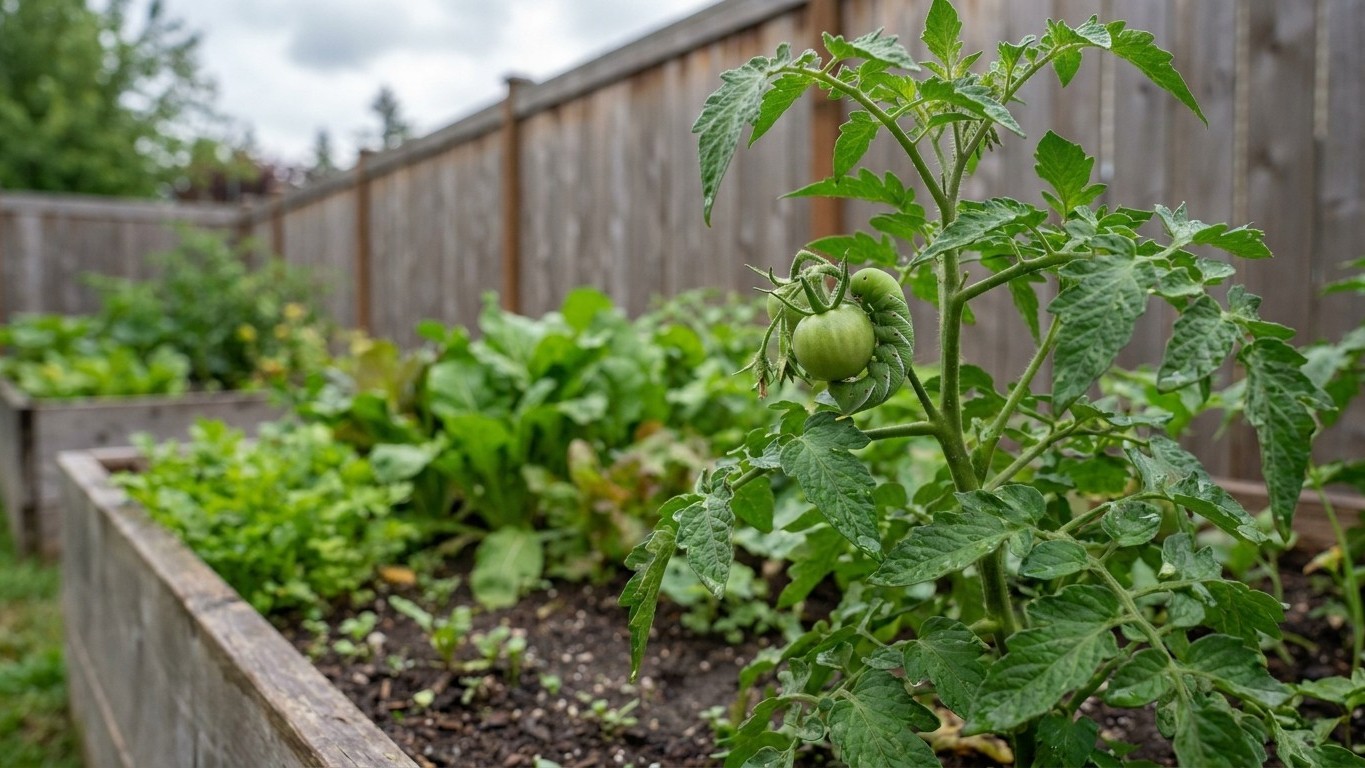

Washington tomato growers mostly deal with cutworms and flea beetles early in the season, aphids and hornworms through the heart of summer, and spider mites and whiteflies once a stretch of hot, dry weather sets in. NOAA’s 1991-2020 climate normals put Seattle’s last spring freeze at February 27 to March 18 and the first fall freeze at November 13 to November 30, and that long, mild, damp season is exactly the kind of window that lets several of these pests get two or three generations in before you pull the plants. Walk your rows weekly, checking the soil line and the undersides of leaves, starting the week you transplant.
What this comes down to in Washington

Cool, wet springs around Seattle mean tomato transplants sit in the ground a while before they’re growing fast, and a slow-growing seedling is a soft target. That’s the window when cutworms and flea beetles do their damage, before the stems have thickened up and before the plant has enough leaf area to shrug off a few chewed holes. Once the weather warms and the plants are cranking out new growth, aphids and hornworms move in, feeding on the tender tissue that keeps arriving all summer. By late summer, if you’ve had a run of hot, dry days, spider mites and whiteflies show up on the plants that have been under any kind of drought or heat stress.
None of this is unique to any one neighborhood in the Puget Sound area, but it’s worth saying plainly: this rundown describes what happens in a mild, marine-influenced climate with a frost-free season on the long side for the state. If you garden east of the Cascades, some of this shifts, and the next section covers how.
Cutworms

Cutworms are a spring problem, showing up right after you set transplants out. The first sign is usually a seedling toppled overnight with the stem chewed clean through at ground level, as if it had been snipped with scissors. A cardboard or foil collar pushed an inch into the soil around each stem stops them cold, and it costs almost nothing.
Flea Beetles

Flea beetles turn up on young transplants in spring, riddling the leaves with small round holes that make the foliage look like it’s been hit with fine buckshot. Mature plants tolerate this damage fine, so the real risk is on seedlings still building their first true leaves. Floating row cover over young plants keeps the adults off until the plants are big enough to outgrow the damage.
Aphids

Aphids build up steadily from late spring through summer, clustering on stem tips and the undersides of leaves where new growth is softest. Look for curled or puckered leaves and a sticky film of honeydew, sometimes with a black sooty mold growing on top of it. A strong jet of water knocks most colonies down, and insecticidal soap handles the rest without hurting the beneficial insects that often show up on their own to clean up an aphid problem.
Tomato Hornworm

Hornworms show up in mid to late summer, and they’re easy to miss until the damage is already extensive because the caterpillar’s green color blends in almost perfectly with tomato foliage. You’ll usually spot the dark, pellet-shaped droppings on the leaves below before you spot the caterpillar itself. Hand-picking works well once you know to look, and it’s the most reliable control most home gardeners use.
Spider Mites

Spider mites favor hot, dry stretches in mid to late summer, and they’re a classic problem on stressed or drought-stricken plants. The tell is a fine, dusty stippling on the leaves along with delicate webbing between the leaflets, visible if you look closely at a stem tip. Keeping plants evenly watered goes a long way toward preventing an outbreak in the first place, and a forceful hosing-off of the foliage disrupts the population if you catch it early.
Whiteflies

Whiteflies are a late-summer pest here, most common on plants that have been under some stress. Shake a leaf and a small cloud of tiny white insects lifting off is the giveaway. Yellow sticky traps placed near the plants help you monitor how bad an infestation is getting, and insecticidal soap applied to the leaf undersides is the usual home-garden response.
Working it out for your own garden
Most tomato pest questions from Washington gardeners boil down to one thing: which of these six is actually on my plant. The season is the first clue. A chewed-off seedling in April is a cutworm, not a hornworm, because hornworms haven’t hatched yet at that point in the year. A stippled, dusty-looking leaf in a hot dry week in August is far more likely to be spider mites than aphids, because aphids prefer the cooler, wetter stretch of the season and mite populations explode specifically under heat and drought stress.
A quick comparison
| Pest | When it shows up | Where to look | Fastest tell |
|---|---|---|---|
| Cutworms | Right after transplanting, spring | Soil line at base of stem | Stem chewed clean through overnight |
| Flea beetles | Spring, on young transplants | Whole leaf surface | Shot-hole pitting |
| Aphids | Late spring through summer | Leaf undersides, new growth | Curled leaves, sticky honeydew |
| Hornworms | Mid to late summer | Upper foliage and stems | Dark droppings on leaves below |
| Spider mites | Hot, dry stretches, mid to late summer | Leaf undersides, stem tips | Fine stippling and webbing |
| Whiteflies | Late summer, on stressed plants | Leaf undersides | Small white cloud when disturbed |
The second clue is your plant’s own recent history. A plant that has just come through a long dry spell without regular watering is a much likelier spider mite candidate than a well-watered plant nearby. A transplant that went into cold, still-wet soil right after you set it out is exactly the kind of slow-starting seedling that cutworms and flea beetles pick off, which is one more reason the timing questions covered on Tomato Planting Dates in Washington: Counting Back From Your Frost Window matter for pest pressure and not just for frost risk. Get the transplant date right and you get a sturdier plant faster, which is itself a form of pest control.
If you’re still not sure what you’re looking at, a hand lens and a slow walk through the row, checking leaf undersides one by one, settles most of these questions in under ten minutes. Do this before you spray anything: treating for aphids when the actual problem is spider mites wastes the product and the week you lose waiting to see results.
What changes across the state
Everything above describes a mild, marine-influenced climate typical of the Puget Sound lowlands. Cross the Cascades and the growing conditions change enough that pest timing shifts with them. Eastern Washington is high desert, with hotter, drier summers and a shorter, more sharply defined frost-free season than the western side of the state. That kind of heat arrives earlier and harder, so gardeners there tend to see spider mite pressure build sooner in the summer than gardeners around Puget Sound, simply because the hot, dry stretch that favors mites starts sooner and lasts longer.
Elevation matters too. Gardens higher up, whether in the foothills of the Cascades or in the drier interior valleys, run cooler at night even when days are warm, and that slows the buildup of aphids and whiteflies, both of which multiply faster in warm, still conditions. Coastal areas and anywhere close to the open water of Puget Sound tend to stay cooler and more humid through summer, which keeps spider mites in check longer but can extend the window when slugs and other moisture-loving pests are active instead.
North-to-south differences within the state matter less than the east-west split, but they’re not nothing. Southern parts of the state generally warm up a little earlier in spring and stay warm a little longer into fall than northern parts at a similar elevation, which shifts the whole pest calendar described above a bit earlier or later without changing which pests show up. The USDA’s Plant Hardiness Zone Map puts the state anywhere from zone 4a to zone 9a, and that spread alone tells you how differently spring arrives depending on where in Washington you’re gardening. None of this changes which six pests you’re watching for. It changes when in the season you start watching.
The mistakes this state punishes

The biggest mistake in western Washington is treating a warm stretch in late winter as a green light. A few sunny days can fool a gardener into transplanting early, but the soil is still cold and wet under the surface, and a slow-starting seedling sitting in that cold ground is exactly the kind of weak plant that cutworms and flea beetles take out fast. Wait until the soil itself has actually warmed, not just the air.
The second mistake is picking a tomato variety whose season doesn’t fit what the local frost window actually allows, then wondering why the plant is still struggling and pest-prone into a wet fall. A stressed, slow-ripening plant sitting in cool, damp conditions late in the season is more vulnerable to whiteflies and disease than a plant that finished and was pulled while the weather was still decent. The named cultivars and their days-to-maturity figures on Tomato Varieties That Ripen in Time in Washington are worth checking against your own frost window before you buy seed, not after.
The third is spraying before identifying. Broad insecticides applied for a hornworm problem, when you actually have aphids, or applied for aphids when you actually have beneficial insects working the aphids over for you, do more harm than the pest itself by knocking out the predators that would otherwise keep things in check. Identify first, using the leaf-underside and soil-line checks above, and treat only the pest you’ve actually confirmed.
Checking this against your county
The pest calendar above is a starting point built around Seattle’s frost dates, and Washington is too large and too climatically split, coast to high desert, for one page to cover every county’s exact timing. Your county extension office tracks local pest emergence and can tell you what’s actually being reported in your area this season, and WSU Extension publishes tomato pest guidance you can cross-check against what you’re seeing in your own garden. If you’re still working out the basics of the crop itself, the overview on growing tomatoes in Washington is the place to start before you get deep into pest management.
Common questions
Do I need to worry about tomato hornworms if I only have a few plants on a patio?
Yes, container plants get hornworms too, especially if they’re near other tomato plants or nightshade relatives in the neighborhood. Check the leaves for chewed edges and dark droppings the same way you would in a garden bed, and hand-pick anything you find.
Are ladybugs going to take care of my aphid problem on their own?
Sometimes, but not reliably enough to count on. Ladybug adults and larvae do eat aphids, but they show up on their own schedule, and by the time they arrive in numbers the aphid colony may already have curled and damaged the leaves. A water spray or insecticidal soap gives you control in the meantime without wiping out the ladybugs that do show up.
Why do my tomato leaves have tiny white specks that fly away when I touch the plant?
That’s almost certainly whiteflies, not spider mites. Spider mite damage looks like dry stippling on the leaf surface and the mites themselves barely move, while whiteflies are visibly flying insects that lift off in a small cloud when disturbed.
Can I just spray a general insecticide early in the season to prevent all of this?
That usually backfires. An early broad-spectrum spray, applied before you have an actual pest to treat, kills off the predatory insects that would otherwise keep aphids and mites in check later in the season, often leaving you worse off by midsummer than if you’d sprayed nothing at all.